California earthquake: Risk of tripartite rupture in 'critically loaded' fault lines at a 1,000-year high

&imwidth=600&imheight=450&format=webp&quality=medium "California earthquake: Risk of tripartite rupture in 'critically loaded' fault lines at a 1,000-year high")
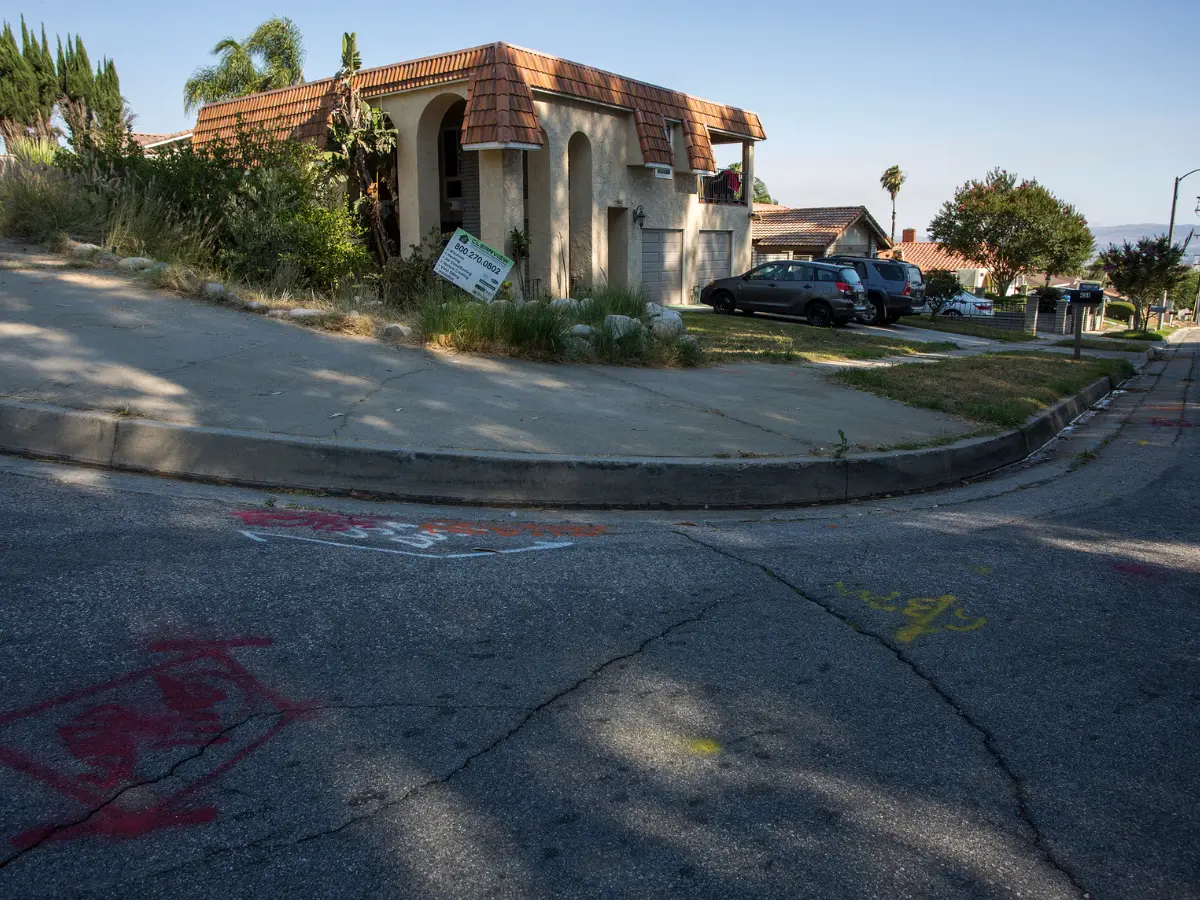
The San Andreas Fault and the San Jacinto have a similar amount of built-up stress and both of them are at high risk of rupturing. Photograph: (AFP)
The levels of stress in the San Andreas and San Jacinto fault systems are at an all-time high. Scientists have warned that if two branches of the San Andreas fault and the San Jacinto rupture at the same time, the event will unleash a monster earthquake.
Southern California is facing the greatest threat of a major earthquake as scientists have revealed that two big fault lines are at their highest levels of tectonic stress in 1,000 years. The San Andreas and San Jacinto fault systems are carrying more pent-up stress than in the past 1,000 years. If even one of them ruptures, the effects could propagate to the others. The findings were published in the Journal of Geophysical Research on June 3. The study authors state that the two fault lines meet at a junction called the Cajon Pass, which acts like an earthquake gate - it can both prevent and facilitate a rupture from passing through. Stress levels dictate when the gate opens or closes. If the stress and pressure levels are the same on both the San Andreas and the San Jacinto, a rupture on one fault can easily break right through the gate and trigger the other fault. The result is a massive, combined earthquake.
Which places would be affected by this earthquake in California?
Worryingly, this is exactly what is happening at both fault lines at the moment. The researchers said that both of them have comparable, extremely elevated stress levels at the moment, or are "critically loaded". They warned that the resulting earthquake would affect Los Angeles, San Bernardino, Riverside and the Coachella Valley. "Our results show that stress levels on multiple fault segments are now at or above the highest values seen in the past millennium and that the region may be capable of a large through-going rupture involving both fault systems," first author Liliane Burkhard said in a statement.
Also Read: Scientists warn 86,000 people could die in devastating earthquake in little-known US seismic zone
History of major earthquakes in California
A magnitude-7.9 earthquake devastated San Francisco on 18 April 1906. It occurred from a rupture in the northern San Andreas Fault. However, the southern portions remained unaffected. The researchers said that if pressure is relieved on one part of the fault network, the others do not undergo any changes. In this case, the southern fault systems continued to accumulate energy, and some portions have been doing this for centuries. The San Andreas and San Jacinto faults have together caused 36 earthquakes in the past 1,000 years. A 7.9-magnitude quake slammed Southern California in 1857. The gates at the Cajon Pass did not open at this time, but they did when a similar megaquake hit in 1812. So the last Big One happened nearly 170 years ago.
Trending Stories
)
)
&im=FitAndFill=(700,400))
)
)
)
&im=FitAndFill=(700,400))
)
)
)
)
)
)
)
)
)
)
)
)
)
)
)
)
)
&im=FitAndFill=(700,400))
)
)
)
)
)
)
&im=FitAndFill=(700,400))
)
)
)
Model created a history of tectonic stress in California
Burkhand, a planetary geologist at the University of Bern in Switzerland and at the University of Hawaii at Manoa, and his team built a model showing the last 1,000 years of major earthquake activity along the southern San Andreas and San Jacinto fault systems. Tree-ring records and age data from sediments were incorporated into the model, which simulated the accumulation, release and propagation of tectonic stress. Burkhard said that they cannot estimate the chances and timing of either of the two branches of the San Andreas fault rupturing, or of a tripartite rupture where these two, plus the San Jacinto fault, are involved.
However, understanding how much pressure is accumulating can help officials and policymakers plan for such an event before it hits. "What we can say is that the system is critically stressed, and that physics-based models like this one give us a clearer picture of the range of scenarios we should be prepared for," she said.

