

&imwidth=800&imheight=600&format=webp&quality=medium "Analysis: Economic toll of heatwaves and droughts on India amid Europe heatwave")
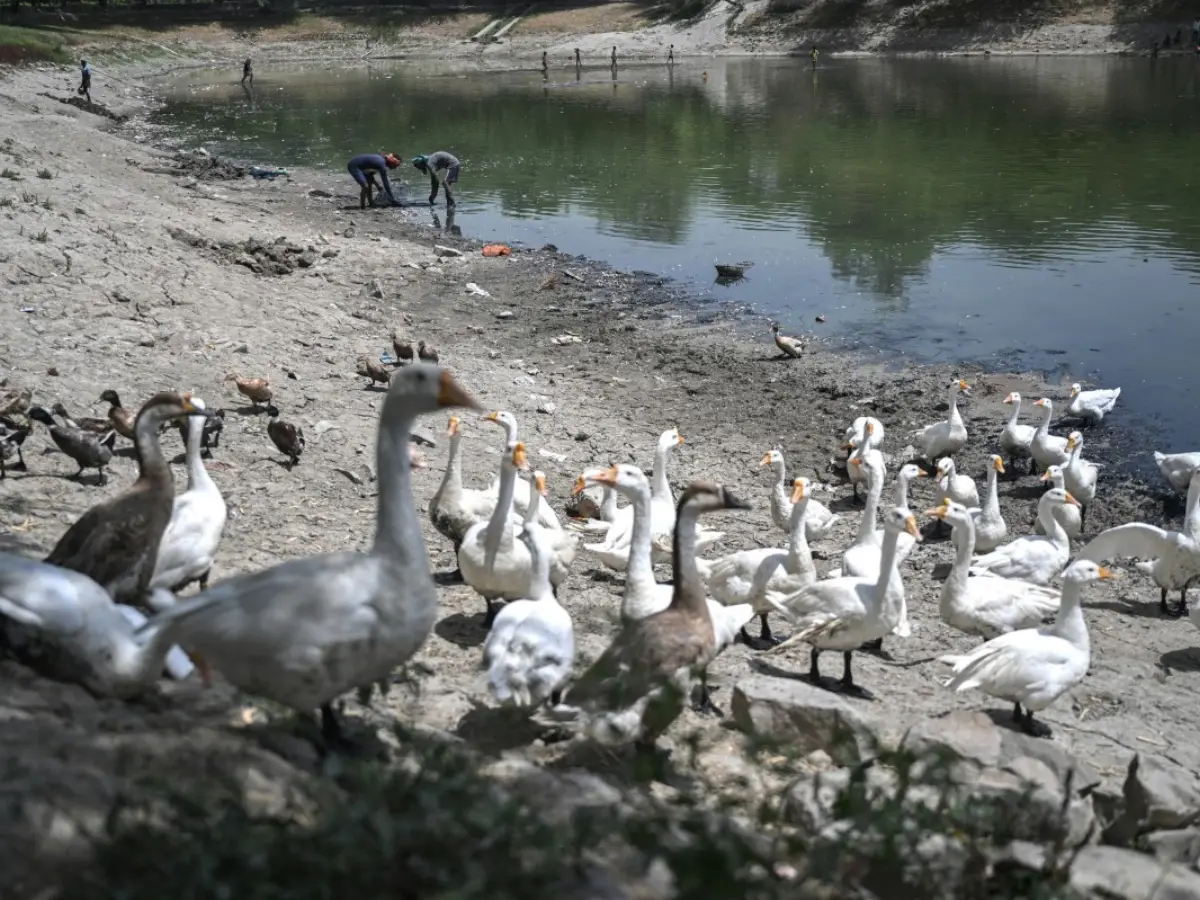
Europe’s heatwave could lead to major economic consequences, researchers have found. However, India is already suffering from it as temperatures have been soaring and the monsoon has remained stalled for nearly two weeks. According to a study by Climate Analytics, average household incomes drop by almost 3 per cent across Europe due to heat-and-drought events. For India, where a massive informal workforce exists, and sectors like agriculture heavily rely on the climate, the effects will be amplified manifold.
Much research shows that rising temperatures directly impact the pockets of the common man. A World Bank working paper analysed subnational data and found that even a rise of 1 degree Celsius can cause a significant rise in local poverty and inequality indices.
According to a study by Emerging Investigators, there is a significant negative relationship between heat waves and household income. The researchers found that the strongest negative correlation existed between heat waves and agricultural income, meaning that the agricultural sector was severely impacted by heat waves.
“A severe heatwave is not merely a climatic event; it is an economic shock that lowers productivity, damages crops, increases expenditure on food, electricity and healthcare, and steadily erodes the financial resilience of Indian households,” Prof. (Dr.) Sanjay Kumar, Vice Chancellor, Rayat Bahra University, said.
For nearly 90 per cent of India's workforce in the informal sector, such as construction workers, street vendors, and agricultural labourers, heat stress will lead them to miss work, meaning a complete loss of daily wages.
Trending Stories
&imwidth=180&imheight=135&format=webp&quality=medium)
Other Mommy leads North American box Office as Verity, Resident Evil round out top four
&im=FitAndFill=(700,400)&imwidth=180&imheight=135&format=webp&quality=medium)
Navratri 2026: 9 days, 9 forms of Goddess Durga and 9 colours- Check the complete list
&imwidth=180&imheight=135&format=webp&quality=medium)
Anti-SIR protest in Mumbai: Protestors wear black masks & ribbons in Mumbai
&imwidth=180&imheight=135&format=webp&quality=medium)
BCCI rejects venue shift reports, India vs Sri Lanka 1st ODI to remain in Delhi
&imwidth=180&imheight=135&format=webp&quality=medium)
Diljit Dosanjh’s Delhi concert gets a new date: When and where to catch the singer
&im=FitAndFill=(700,400)&imwidth=180&imheight=135&format=webp&quality=medium)
Is sending robots to Mars easier than sending humans?
&imwidth=180&imheight=135&format=webp&quality=medium)
A watchdog rated 'ChatGPT for Teens' an unacceptable risk and says keep under-18s off it
&imwidth=180&imheight=135&format=webp&quality=medium)
1,500 drones illuminate Mumbai sky as Cordelia Cruises unveils second ship, Cordelia Sky
&imwidth=180&imheight=135&format=webp&quality=medium)
'Just coincidence': Police mistakes protester as AISA chief Neha Bora, arrests her from site
&imwidth=180&imheight=135&format=webp&quality=medium)
Anthropic's AI invented a murder witness and sent the fake tip to Philadelphia police
&imwidth=180&imheight=135&format=webp&quality=medium)
Congress demands action against chief election commissioner
&imwidth=180&imheight=135&format=webp&quality=medium)
CJI Surya Kant declines INDIA bloc leaders’ request for meeting ahead of march to SC, asks them to file petition
&imwidth=180&imheight=135&format=webp&quality=medium)
Saif Ali Khan is finally on Instagram! Here's what he shared in his first post
&imwidth=180&imheight=135&format=webp&quality=medium)
'Turn approver, resign, we'll forgive you': Rahul Gandhi claims receiving messages from CEC Gyanesh Kumar
&imwidth=180&imheight=135&format=webp&quality=medium)
One Indian killed in Riyadh airport attack; 11 others injured : MEA
&imwidth=180&imheight=135&format=webp&quality=medium)
Top AI models flunked a test of inventing new AI research, so much for self-improving AI
&imwidth=180&imheight=135&format=webp&quality=medium)
Wasim Jaffer blames Ajit Agarkar-led selection panel for Virat Kohli’s Test retirement
&imwidth=180&imheight=135&format=webp&quality=medium)
'Ouch!!! That must hurt': Kangana Ranaut hails Kamal Haasan's sharp reply to Elon Musk over Starlink row
&imwidth=180&imheight=135&format=webp&quality=medium)
Sidhu Moose Wala’s younger brother wins hearts by recreating late singer’s signature move at Toronto Hologram Show
&imwidth=180&imheight=135&format=webp&quality=medium)
UK school ditches technology, shifts from screen to pen and paper for learning
&imwidth=180&imheight=135&format=webp&quality=medium)
Telangana ATM heist: Thieves in nighties arrive in ambulance, break into SBI ATM in Kamareddy - VIDEO
&imwidth=180&imheight=135&format=webp&quality=medium)
Houthis claim Riyadh airport attacks, Aramco strikes; issue fresh warning to airlines, travellers and workers
&imwidth=180&imheight=135&format=webp&quality=medium)
Portugal Federation confirms Cristiano Ronaldo’s return to national team despite suspension
&imwidth=180&imheight=135&format=webp&quality=medium)
Delhi protests: 'Court should not be dragged into political activity', says CJI Surya Kant
&im=FitAndFill=(700,400)&imwidth=180&imheight=135&format=webp&quality=medium)
New OTT releases this week (October 12-18, 2026): Sacrifice, Koffee with Karan S9, Roadies Rebirth- 6 titles coming on Netflix, JioHotstar and more
&imwidth=180&imheight=135&format=webp&quality=medium)
Microsoft's Nadella says treat every AI model as already hacked, and build an 'emergency brake'
&imwidth=180&imheight=135&format=webp&quality=medium)
Delhi protest: CJI Surya Kant declines to meet India Bloc leaders
&imwidth=180&imheight=135&format=webp&quality=medium)
Telangana man allegedly recruited into Russian military dies near Ukraine border
&imwidth=180&imheight=135&format=webp&quality=medium)
China imposes first-ever sanctions on ministers from Taiwan allies: What this means
&imwidth=180&imheight=135&format=webp&quality=medium)
McSweeney reveals how studying Virat Kohli’s YouTube clips helped Australia A conquer India
&imwidth=180&imheight=135&format=webp&quality=medium)
Maharashtra appoints FDA commissioner Tukaram Mundhe as secretary of committee for MPSC overhaul amid stir
&imwidth=180&imheight=135&format=webp&quality=medium)
Iran: US accepted some conditions, Clarity needed on others
&imwidth=180&imheight=135&format=webp&quality=medium)
Nana Patekar's cause of death confirmed; here's what his postmortem report says
&imwidth=180&imheight=135&format=webp&quality=medium)
iPhone Duo price index: Tracking Apple’s latest pricing trends
&imwidth=180&imheight=135&format=webp&quality=medium)
'Say no to Muse': Meta has no control over its own moderation AI while it forces a security nightmare on everyone
Agricultural impact
The agricultural shock would be massive as extreme temperatures damage crop yields. Researchers from Cambridge estimate that record heatwaves put over 90 per cent of India's population at risk of losing income, going hungry, or facing severe health risks. With Super El Niño already having taken hold ot he the globe, droughts are expected. The monsoon in India was already delayed. The combined toll of heatwaves and droughts on agriculture could be immense.
Food costs
Food inflation is another fallout of extreme heat. As crops are damaged, the supply is heavily impacted. The rising prices will directly impact low-income families who spend the majority of their income on food. A 6–15 per cent spike in grain and vegetable prices directly threatens basic nutrition.
GDP fall
India’s GDP is in direct line of attack of climate change. It is projected to see a 2.8 decline by 2050, which could severely depress the living standards of nearly half the country's population. States like Chhattisgarh, Madhya Pradesh, Rajasthan, Uttar Pradesh, and Maharashtra are at a higher risk of witnessing this fall.
Electricity and water crisis
Increasing heat leads to a rise in demand for electricity, putting pressure on the grids. In this scenario, electric companies purchase expensive emergency fuel while passing on those costs to consumers in the form of surcharges. Heatwaves cause groundwater to deplete, forcing people to buy water from private tankers, putting additional pressure on their pockets.
Health costs
Extreme temperatures lead to heat stress, heatstroke, and a surge in vector-borne diseases. Families end up spending money on medical treatments, as public health facilities are strained. So while families from the informal sector are earning less during rising heat, they are forced to spend more on health and other utilities, dealing them a double blow.

