‘Robots will do the job’: NASA's next alien-hunting telescope won't need astronauts for repairs

&imwidth=600&imheight=450&format=webp&quality=medium "‘Robots will do the job’: NASA's next alien-hunting telescope won't need astronauts for repairs")
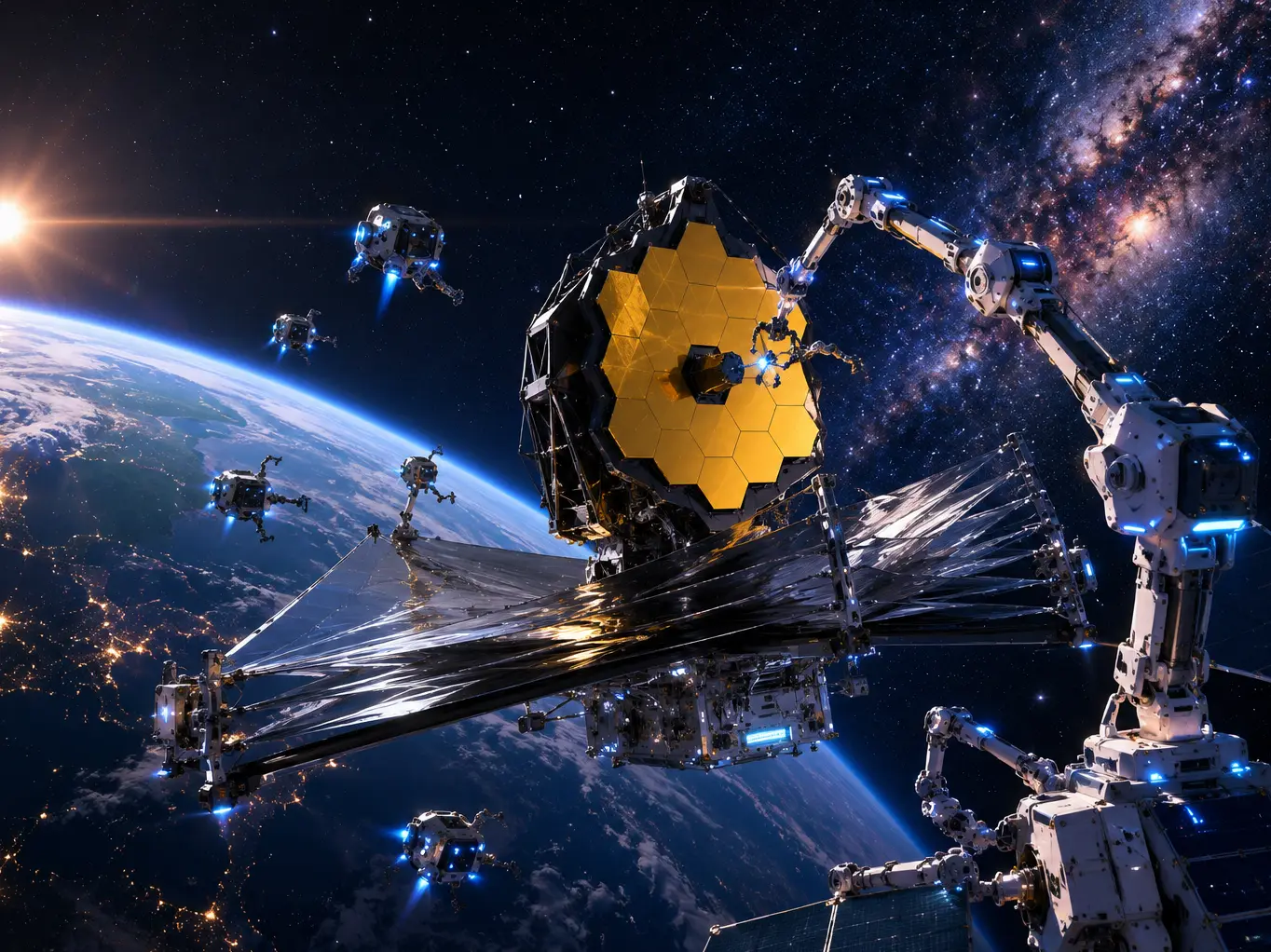
How robots could keep NASA's next alien-hunting telescope running for years Photograph: (AI)
NASA's proposed Habitable Worlds Observatory will be designed for robotic repairs instead of astronaut servicing. The telescope aims to search for Earth-like planets while allowing robots to refuel, repair and upgrade it, potentially extending its mission for decades.
NASA's next flagship space telescope could change not only how scientists search for life beyond Earth, but also how spacecraft are maintained in orbit.
The agency's proposed Habitable Worlds Observatory (HWO) is being designed so that robots not astronauts can repair, upgrade and refuel it throughout its lifetime. If successful, it would become the first major NASA observatory built from the beginning with robotic servicing in mind. The approach could extend the telescope's working life, reduce mission costs and allow new instruments to be added years after launch.
Why is NASA choosing robots?
Unlike the Hubble Space Telescope, which astronauts visited five times using the Space Shuttle, NASA no longer has a vehicle capable of carrying astronauts to every future space observatory. The Habitable Worlds Observatory is expected to operate near the Sun-Earth L2 Lagrange Point, about 1.5 million kilometres from Earth. That location is ideal for observing distant planets but is far beyond the reach of today's routine human space missions.
Instead of relying on astronauts, NASA wants specialised robotic spacecraft to dock with the telescope, replace faulty components, refuel it and even install upgraded scientific instruments.
A telescope built to search for another Earth
Trending Stories
&im=FitAndFill=(700,400)&imwidth=280&imheight=210&format=webp&quality=medium)
&imwidth=280&imheight=210&format=webp&quality=medium)
&imwidth=280&imheight=210&format=webp&quality=medium)
&imwidth=280&imheight=210&format=webp&quality=medium)
&imwidth=280&imheight=210&format=webp&quality=medium)
&imwidth=280&imheight=210&format=webp&quality=medium)
&imwidth=280&imheight=210&format=webp&quality=medium)
&imwidth=280&imheight=210&format=webp&quality=medium)
&imwidth=280&imheight=210&format=webp&quality=medium)
&imwidth=280&imheight=210&format=webp&quality=medium)
&imwidth=280&imheight=210&format=webp&quality=medium)
&imwidth=280&imheight=210&format=webp&quality=medium)
&imwidth=280&imheight=210&format=webp&quality=medium)
&imwidth=280&imheight=210&format=webp&quality=medium)
&imwidth=280&imheight=210&format=webp&quality=medium)
&imwidth=280&imheight=210&format=webp&quality=medium)
&imwidth=280&imheight=210&format=webp&quality=medium)
&imwidth=280&imheight=210&format=webp&quality=medium)
&im=FitAndFill=(700,400)&imwidth=280&imheight=210&format=webp&quality=medium)
&imwidth=280&imheight=210&format=webp&quality=medium)
&imwidth=280&imheight=210&format=webp&quality=medium)
&imwidth=280&imheight=210&format=webp&quality=medium)
&imwidth=280&imheight=210&format=webp&quality=medium)
&imwidth=280&imheight=210&format=webp&quality=medium)
&imwidth=280&imheight=210&format=webp&quality=medium)
&imwidth=280&imheight=210&format=webp&quality=medium)
&im=FitAndFill=(700,400)&imwidth=280&imheight=210&format=webp&quality=medium)
&imwidth=280&imheight=210&format=webp&quality=medium)
&imwidth=280&imheight=210&format=webp&quality=medium)
&imwidth=280&imheight=210&format=webp&quality=medium)
&imwidth=280&imheight=210&format=webp&quality=medium)
The Habitable Worlds Observatory is expected to become NASA's most ambitious planet-hunting mission since the James Webb Space Telescope. Its main goal is to directly observe Earth-like exoplanets orbiting nearby stars and analyse their atmospheres for gases such as oxygen, methane and water vapour—possible signs that a planet could support life. The observatory will also study galaxies, black holes, stars and the evolution of the universe, making it a general-purpose space telescope alongside its search for potentially habitable worlds.
Why robotic servicing could change future missions
Designing spacecraft for robotic maintenance represents a major shift in space engineering. Instead of treating telescopes as single-use missions, future observatories could be upgraded much like satellites or even computers. New cameras, spectrometers and other scientific instruments could be installed years after launch, allowing missions to stay scientifically relevant for much longer. NASA has already demonstrated some robotic servicing technologies through missions such as OSAM-1 and continues to work with industry on autonomous space robotics. If the Habitable Worlds Observatory follows its planned roadmap, it could become the first observatory designed to evolve throughout its lifetime keeping humanity's search for alien worlds active for decades without needing astronauts to make the journey.
