‘Nvidia’s next AI push’: 5 biggest announcements from CEO Jensen Huang’s GTC Taipei 2026 keynote

&imwidth=600&imheight=450&format=webp&quality=medium "‘Nvidia’s next AI push’: 5 biggest announcements from CEO Jensen Huang’s GTC Taipei 2026 keynote")
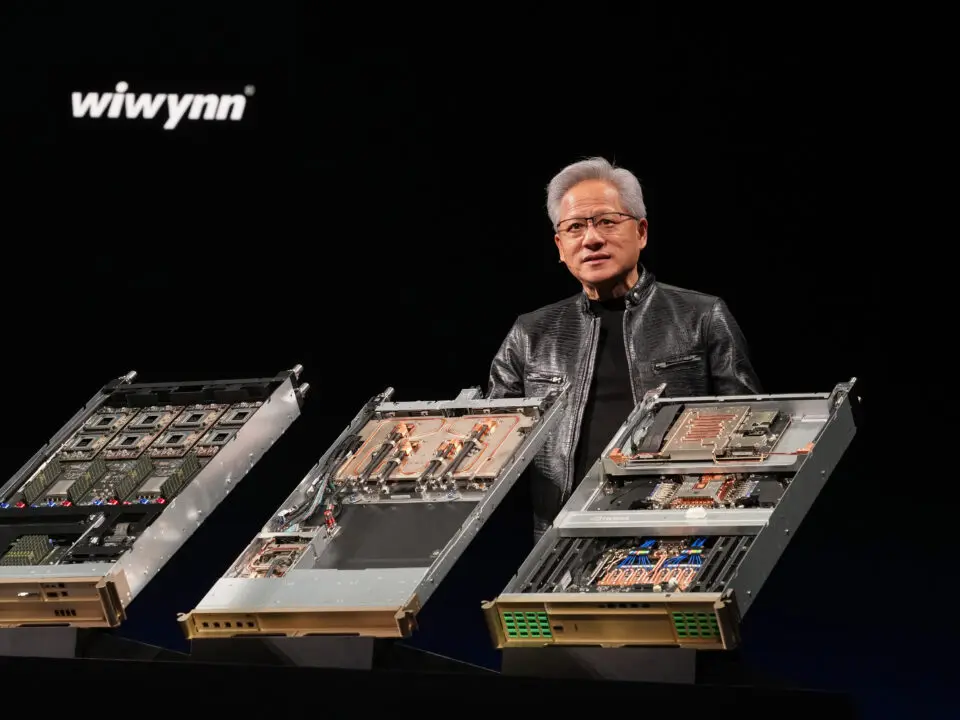
Nvidia, Microsoft and AI chips: Key takeaways from Jensen Huang's keynote Photograph: (Nvidia)
Nvidia CEO and founder Jensen Huang used his keynote address at GTC Taipei 2026 to outline the company's vision for the next phase of artificial intelligence.
Nvidia CEO and founder Jensen Huang used his keynote address at GTC Taipei 2026 to outline the company's vision for the next phase of artificial intelligence.
The presentation focused on AI infrastructure, new computing architectures, agentic AI systems and Nvidia's growing partnerships with major technology companies. Huang argued that artificial intelligence is moving beyond chatbots and simple assistants towards systems capable of reasoning, planning and carrying out complex tasks.
Here are the five biggest announcements and takeaways from Nvidia's latest AI event.
Nvidia and Microsoft deepen AI partnership
One of the most significant announcements from the event was Nvidia's expanded partnership with Microsoft. According to Huang, the two companies are working together on a new generation of AI-powered personal computers. These systems will reportedly use Nvidia's RTX Spark superchip and run a version of Windows designed to support agentic AI experiences. The move highlights Microsoft's growing focus on AI-native computing and Nvidia's ambition to bring advanced AI capabilities directly to personal computers. Industry analysts believe partnerships like this could intensify competition across the PC market, where companies are increasingly racing to integrate AI capabilities into future devices.
Agentic AI takes centre stage
Trending Stories
&imwidth=280&imheight=210&format=webp&quality=medium)
&imwidth=280&imheight=210&format=webp&quality=medium)
&imwidth=280&imheight=210&format=webp&quality=medium)
&imwidth=280&imheight=210&format=webp&quality=medium)
&imwidth=280&imheight=210&format=webp&quality=medium)
&imwidth=280&imheight=210&format=webp&quality=medium)
&imwidth=280&imheight=210&format=webp&quality=medium)
&imwidth=280&imheight=210&format=webp&quality=medium)
&imwidth=280&imheight=210&format=webp&quality=medium)
&imwidth=280&imheight=210&format=webp&quality=medium)
&imwidth=280&imheight=210&format=webp&quality=medium)
&imwidth=280&imheight=210&format=webp&quality=medium)
&imwidth=280&imheight=210&format=webp&quality=medium)
&imwidth=280&imheight=210&format=webp&quality=medium)
&imwidth=280&imheight=210&format=webp&quality=medium)
&im=FitAndFill=(700,400)&imwidth=280&imheight=210&format=webp&quality=medium)
&imwidth=280&imheight=210&format=webp&quality=medium)
&imwidth=280&imheight=210&format=webp&quality=medium)
&imwidth=280&imheight=210&format=webp&quality=medium)
&im=FitAndFill=(700,400)&imwidth=280&imheight=210&format=webp&quality=medium)
&imwidth=280&imheight=210&format=webp&quality=medium)
&imwidth=280&imheight=210&format=webp&quality=medium)
&imwidth=280&imheight=210&format=webp&quality=medium)
&imwidth=280&imheight=210&format=webp&quality=medium)
&imwidth=280&imheight=210&format=webp&quality=medium)
&imwidth=280&imheight=210&format=webp&quality=medium)
&imwidth=280&imheight=210&format=webp&quality=medium)
&imwidth=280&imheight=210&format=webp&quality=medium)
&imwidth=280&imheight=210&format=webp&quality=medium)
&imwidth=280&imheight=210&format=webp&quality=medium)
&imwidth=280&imheight=210&format=webp&quality=medium)
&imwidth=280&imheight=210&format=webp&quality=medium)
&imwidth=280&imheight=210&format=webp&quality=medium)
&imwidth=280&imheight=210&format=webp&quality=medium)
A major theme throughout Huang's presentation was agentic AI. Unlike traditional AI assistants that mainly respond to prompts, agentic AI systems are designed to complete multi-step tasks, make decisions and work more independently. Huang said the industry is now entering a phase where AI can reason through complex problems and assist users in more meaningful ways. According to Nvidia, many of the products announced during the keynote are built around these capabilities. Technology companies across the industry are increasingly investing in agentic AI, with many experts viewing it as the next major stage of artificial intelligence development.
Nvidia says AI is becoming a business tool
Huang also focused on the economic impact of artificial intelligence. He argued that AI is no longer simply an experimental technology and is increasingly becoming a practical tool that companies can use to improve productivity and generate returns on investment. Businesses across sectors are adopting AI for software development, customer service, research, automation and operational planning. Nvidia believes the growing use of AI agents could further increase these gains over the coming years. The comments reflect a broader shift in the AI industry, where attention is moving from experimentation towards measurable business outcomes.
Introducing Vera, Nvidia's new CPU architecture
Another major announcement was Vera, Nvidia's latest CPU architecture. According to the company, Vera has been designed specifically for AI workloads rather than traditional consumer computing tasks. The architecture is powered by Nvidia's custom Olympus CPU core and features 88 cores along with high-bandwidth memory capabilities. Nvidia says these systems are intended to support AI-driven computing environments where intelligent agents handle many of the tasks that would traditionally require human interaction. The announcement demonstrates how semiconductor companies are increasingly designing specialised hardware tailored specifically for artificial intelligence applications.
Vera Rubin becomes Nvidia's next AI platform
Huang also highlighted Vera Rubin, Nvidia's next-generation AI infrastructure platform. The system is expected to succeed the company's Blackwell architecture and is designed to support large-scale AI workloads used by enterprises, cloud providers and AI research organisations. Vera Rubin is built for the growing demand for AI training, inference and agentic computing systems. The company expects the platform to power future data centres and AI infrastructure projects around the world.
Reports suggest that major AI companies, including Anthropic, OpenAI and SpaceXAI, are among the organisations exploring next-generation Nvidia infrastructure solutions.
What do these announcements mean for the AI industry?
The keynote highlighted a broader trend shaping the technology sector. The conversation is increasingly moving beyond individual AI models and towards the infrastructure needed to support them. Companies are now investing heavily in specialised chips, AI data centres, agentic systems and next-generation computing platforms.
Nvidia remains at the centre of that transformation. The company's processors power many of the world's leading AI systems, and its technology continues to play a critical role in the expansion of artificial intelligence. For investors, businesses and developers, Huang's message was clear: the next phase of AI will depend not only on smarter models but also on the computing infrastructure capable of supporting them at scale.
