&imwidth=800&imheight=600&format=webp&quality=medium "India's AI moment: Hype, investment & reality")
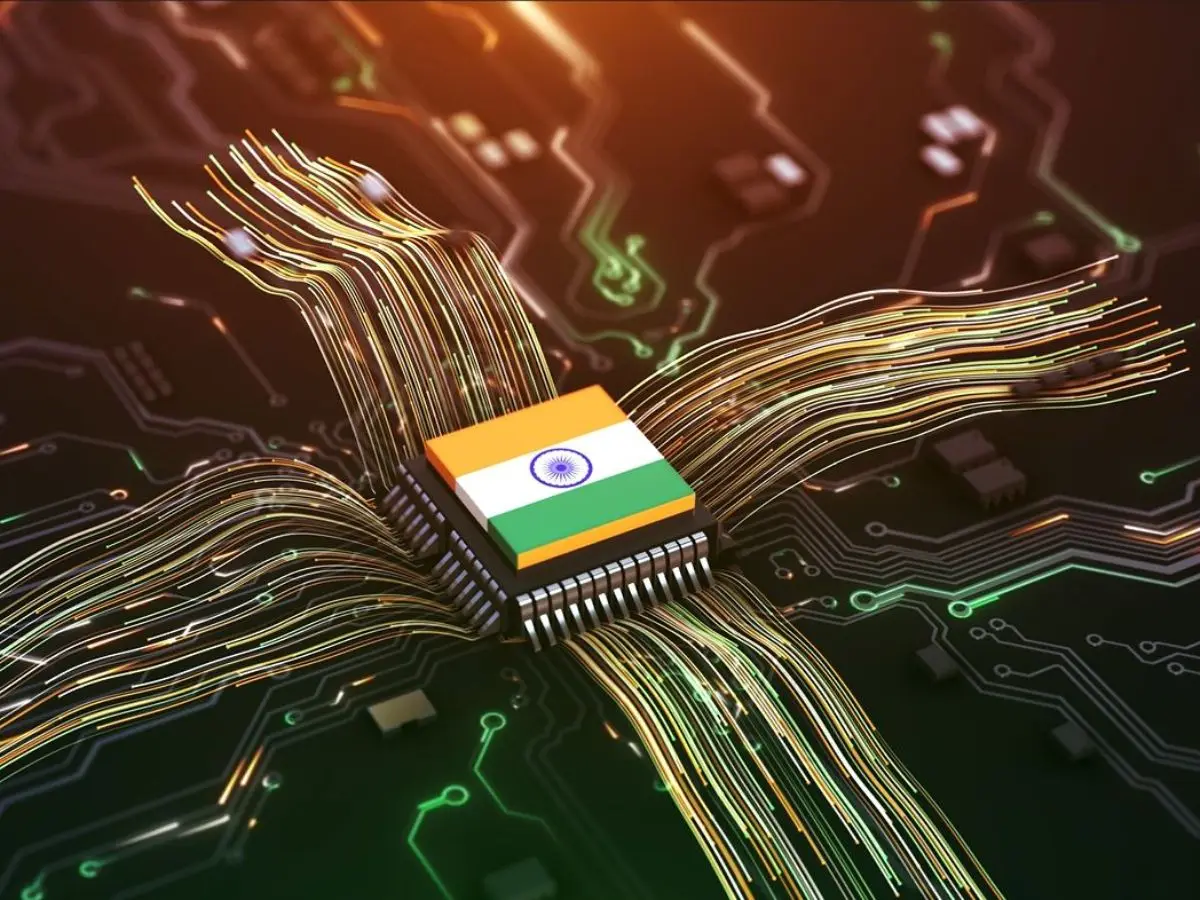
In February this year, India hosted the AI Impact Summit, the first of its kind, signalling a clear intent to lead the AI narrative rather than simply be part of the conversation. Now, a new report by an AI-native VC, SenseAI, reinforces that momentum. It says global AI investment reached $800 billion in 2025, with venture capital funding nearly doubling to $226 billion. India, meanwhile, is increasingly being seen as a hub for AI applications, a place where technology is being adopted at scale, adapted to local use cases, and used to build a new generation of companies.
The report challenges the conventional view of India as a follower in the global AI race. Instead, it highlights how India is emerging as a key driver of the AI application layer, the point where commercial value is ultimately captured. The report states that 75% of Indian AI startups are building at the application layer and nearly 80% of funding is flowing into applications. Meanwhile, a majority of startups are reaching revenue stages early.
"That amount of money is the largest we've seen flow into any industry when it's born. AI is not one thing; it's not just ChatGPT. For example, if you think of electricity, a lot of plants generate that electricity but in this context, application is that electrical appliance like a toaster you use at home. That is where AI becomes useful to you and me," said Rahul Agarwalla, Managing Partner, SenseAI Ventures, during a panel discussion at WION on India's AI Moment.

Speaking about the broader implications, Juhi Bhatnagar, a key advisor to the Indian AI Research Organisation and Founder, Forj, said, "Nations are not very different from businesses. For instance, in the last decade, China won on manufacturing, Singapore won on speed of decision-making, India won on services and the U.S. won on innovation. But this AI boom has told us, if you're not innovative, you can't have a competitive edge as a country. Thus, you have to invest more in R&D, and from going from papers to patents and from patents to products; that's the journey as a country that we have to traverse."
Indian AI Research Organisation works on advancing sovereign AI capabilities, policy research and ecosystem development in India.
Trending Stories
)
AI kill switch explained: Why shutting down a dangerous AI may not be as simple as pressing a button
)
Putin's United Russia party wins 355 seats in Duma election; 4 other parties cross threshold to enter parliament
)
US ships in Indian Ocean ‘will be attacked’ if war resumes, warns Iran
)
Delhi Air pollution: Strict crackdown on waste burning
)
SNL UK takes aim at Ed Sheeran with AI Princess Diana sketch
)
‘0% chance’: Nvidia CEO Jensen Huang dismisses AI extinction fears by 2030
)
Samay Raina-Mukesh Chhabra controversy explained: What happened over girlfriend joke on India's Got Latent?
&im=FitAndFill=(700,400))
What TSMC's 2nm technology means for Apple
)
Trump says he'll build an 'AI Force' and appoint a czar, for 'high IQ' people only
)
'Were you here to sell chickpeas?': Wasim Akram criticises Babar Azam's captaincy
)
Apple reportedly building AI server with M8 Ultra chips, may use Nvidia technology
)
TIFF 2026: Theja Rio’s Angh wins Platform Prize, puts Nagaland story on global stage
)
Glitch in the matrix caught on camera: Woman vanishes after talking to reporter
)
Samsung raises Galaxy S26 prices by Rs 20,000: Here’s what each model now costs
)
Fleming's aspirations as England Test coach include WTC, top ranking and Ashes
)
J&K Assembly Session begins amid chaos: BJP, ruling alliance clash as statehood demand dominates
)
Trump-Xi summit: US Treasury Secretary holds meeting with Chinese Vice Premier
)
Bessent meets China’s He Lifeng to prepare for Trump-Xi summit
)
S Jaishankar, former Army chief among high-profile names issued Delhi SIR notices
)
CDU suffers historic defeat in eastern Germany as AfD surges, Merz vows to stay on
)
Iran sets 7 conditions to end war with US: What are Tehran’s demands?
)
Arvind Kejriwal, family members, Delhi CM Rekha Gupta get SIR notices
)
AI actress Tilly Norwood glitches mid-interview, switches from English to Chinese | Watch
)
Saudi vs Houthis: Houthis claim missiles & drones used in attack on key Saudi sites
)
Punjab man consumes poison outside DC office; Congress, BJP target AAP government
)
Saudi Arabia exits China-led mBridge digital currency platform amid Saudi-Houthi conflict
)
'Lot of things to learn from experienced players': Jayasuriya backs Rohit, Virat for 2027 ODI World Cup
)
Chancellor Friedrich Merz vows to stay on as exit polls signal major poll setback
)
Taylor Swift has a 'proud wife' moment as Travis Kelce scores first touchdown of season: 'That’s my husband!'
)
Several petrol pumps, other businesses to refuse UPI payments above Rs 2,000 from Oct 16: Is it legal?
)
Mahabharat actor Saurav Gurjar arrested in Hyderabad, sent to 14-day judicial custody in sexual exploitation case
&im=FitAndFill=(700,400))
New OTT releases this week (September 21-27, 2026): Shaque: Trust No One, Hunkkaar, Don’t Be Shy- 5 new titles coming to Netflix, Prime Video and more
)
Noel Tata challenges Chandrasekaran’s reappointment as Tata Sons chairman. What happened at the board meeting
&im=FitAndFill=(700,400))
Kareena Kapoor birthday special: Inside her net worth, best movies, luxurious lifestyle and love story with Saif Ali Khan
)
Pilot recreates Mona Lisa in sky over Oklahoma and Arkansas in four-hour flight: VIDEO
)
Delhi: Flagged voters remain on the draft roll but face hearings
)
China now makes advanced memory chips without the machines it was banned from buying
)
Jailer 2: Vidya Balan joins Rajinikanth's upcoming film as Kantha | Watch
)
Microsoft executive called AI training the ‘largest theft of labour in human history’
)
40-foot waves crash into cruise ship in dangerous stretch near Antarctica. Watch
)
Italy moves to ban face veils in schools as Meloni pushes new integration measures
AI applications now account for approximately 75% of the ecosystem, with Enterprise SaaS emerging as the largest category. The segment grew from 14.1% in 2024 to 25.5% in 2025, reflecting rapid adoption within enterprise workflows. Additionally, 60% of startups are already post-revenue at early stages, driven by faster adoption and monetisation cycles of AI-native applications.
But how is this shift playing out in reality? What is working and what isn't?
"AI is here to stay. And in the last few years, it has moved from experimentation to execution in most industries. I think we need to look at it from different dimensions. There is traditional AI, which was largely confined to certain enterprises. And then what we are looking at and experiencing right now is agentic AI, the transformation where autonomous decision-making comes into the picture. But from an end-user and enterprise perspective, is it really solving the problem? Definitely, it is solving the problem in pieces and there are tools available which can solve your business problems. But when you look at it holistically, that's where the end-to-end, the workflow and the larger picture comes into play," said Achin Sharma, Head of Technology and Cybersecurity at MOVIN India, during the panel discussion.
The SenseAI report also states that Enterprise AI contract sizes have grown sharply, from $39,000 to $530,000 in just two years, signalling growing enterprise confidence in AI deployments.
As investment accelerates and deployment expands, another critical question is beginning to take centre stage - regulation. With AI systems increasingly influencing businesses, economies and everyday decision-making, the conversation is no longer just about innovation, but also about accountability.
During the panel discussion, the issue of governance & digital sovereignty also came up, particularly around who should regulate AI and how. "The realization that has come is that if our people use the data, if a billion plus Indians are using AI products, all that data is today leaving the country if they're using foreign products. So, should that data stay here? Should our companies, our government get the benefit of that data, learn from that data? Of course, yes. So, that is one clear place where you require regulation," Agarwalla explained.
Achin added, "We have to see how things will evolve once the Digital Personal Data Protection Act gets fully enforced, which is the Indian data law. Because all this data is being, in a way, exported to other countries and somewhere I have read a long time back that if the service is free, you are the product."
India is one of the largest user bases for AI globally, particularly when it comes to tools like GPT. With millions of users interacting with AI systems daily, this also means vast amounts of data are being generated and processed. Panelists noted that as AI adoption grows, questions around how this data is collected, stored and used become increasingly important.
Juhi noted that while India is one of the largest AI user bases, generating data and even building applications locally, much of the revenue and tax benefits are captured overseas, particularly in the United States, meaning India contributes the data and insights while value is created elsewhere.
As India's AI ecosystem continues to expand, the focus is now shifting from adoption to ownership of data, innovation and economic value. How India navigates this next phase could reinforce its position as a global AI leader, particularly for emerging economies and the Global South.