

&imwidth=800&imheight=600&format=webp&quality=medium "With Hormuz disrupted, what are the alternative routes for Middle East oil and gas exports—and are they enough?")
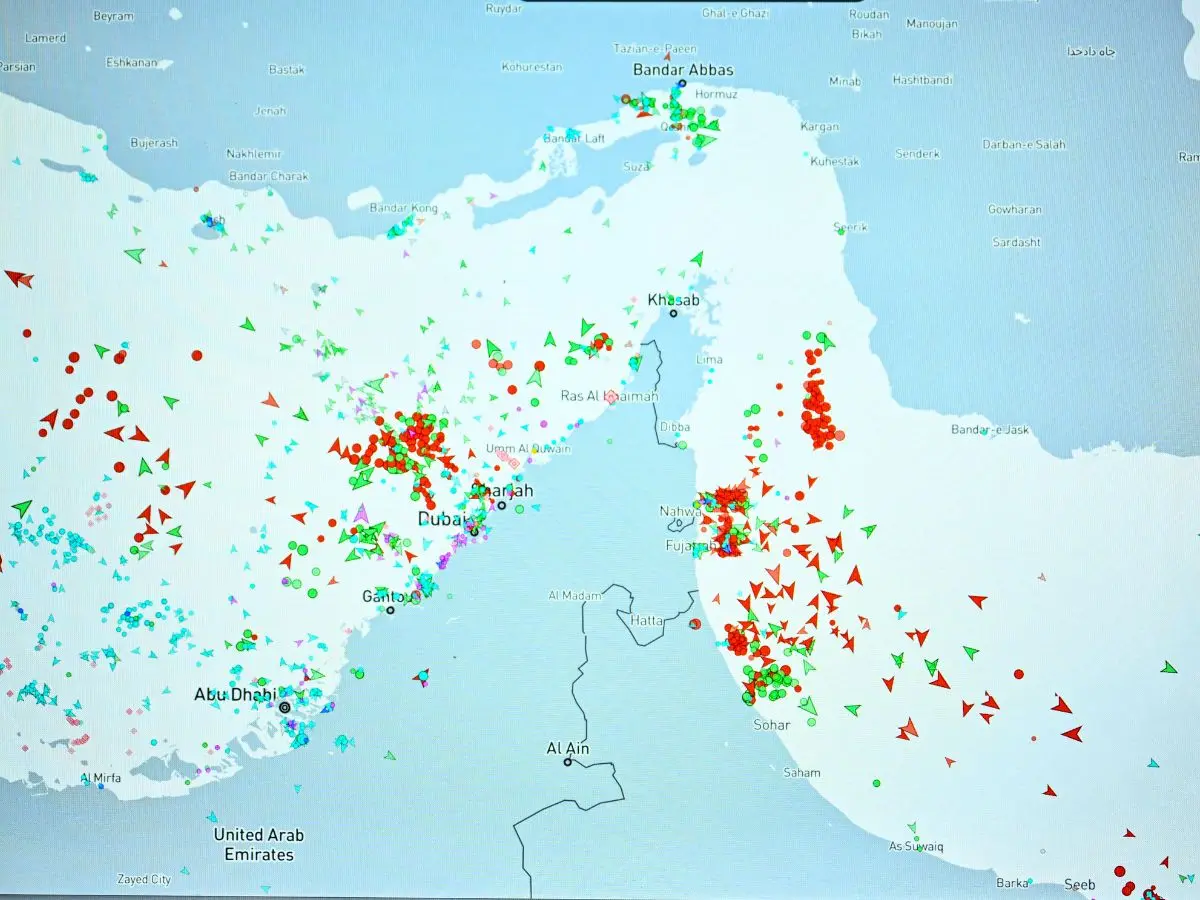
The disruption of shipping through the Strait of Hormuz has exposed the structural limits of global energy routing from the Middle East. As the world’s most critical oil chokepoint, any interruption immediately reverberates through supply chains. The International Energy Agency (IEA) described the current situation as “the largest supply disruption on record,” exceeding the combined impact of the 1970s oil shocks and post-Ukraine gas losses. The Strait’s instability, linked to the US–Israeli war with Iran, has revived scrutiny of alternative export corridors that remain fragmented and incomplete.
Geopolitical pressure and conflicting claims
The crisis has unfolded alongside heightened political exchanges. US President Donald Trump claimed on Truth Social that “Iran doesn’t want the Strait of Hormuz closed, they want it open so they can make $500 Million Dollars a day,” adding that “they merely want to ‘save face’.” He also stated, “People approached me four days ago… saying, ‘Sir, Iran wants to open up the Strait, immediately.’” These remarks underline how energy flows remain tightly bound to diplomatic signalling.
Existing bypass infrastructure
Trending Stories
&imwidth=180&imheight=135&format=webp&quality=medium)
Tu Hai Meri Kiran film review: Sonakshi Sinha and Zaheer Iqbal's thriller gets tangled in its own twists
&imwidth=180&imheight=135&format=webp&quality=medium)
‘Maybe play one more season’: MS Dhoni to decide on his IPL future before December
&imwidth=180&imheight=135&format=webp&quality=medium)
What was the note found inside bag of Class 12 student, who set herself on fire inside Delhi school?
&imwidth=180&imheight=135&format=webp&quality=medium)
Farooq Abdullah says Pakistan’s raising of Kashmir issue keeps pressure on Delhi
&imwidth=180&imheight=135&format=webp&quality=medium)
Pezeshkian says Iranians ‘struggling to put food on the table’ as war with US drags on
&imwidth=180&imheight=135&format=webp&quality=medium)
'If it was up to me, it wouldn't have ended like this': James Anderson opens up on Lancashire exit
&imwidth=180&imheight=135&format=webp&quality=medium)
NEET protests: Panel to hear evidence on pellet gun use, harassment
&imwidth=180&imheight=135&format=webp&quality=medium)
'You’re a horrible little reporter, aren’t you?': Trump snaps at NBC reporter questioning his support for Ramaswamy's campaign ad
&imwidth=180&imheight=135&format=webp&quality=medium)
China's dancing robot turns violent bodyguard, lifts cars and fights intruders - Watch
&imwidth=180&imheight=135&format=webp&quality=medium)
Why Europe’s protests are about more than austerity and rising costs
&imwidth=180&imheight=135&format=webp&quality=medium)
An AI that reads your face can now estimate how long you have to live
&imwidth=180&imheight=135&format=webp&quality=medium)
Pakistan airline PIA unveils new crew uniforms, faces online criticism
&imwidth=180&imheight=135&format=webp&quality=medium)
Train crashes into crane on São Paulo monorail line, wreckage falls onto busy road | VIDEO
&im=FitAndFill=(700,400)&imwidth=180&imheight=135&format=webp&quality=medium)
New Friday OTT releases (October 23, 2026): Gajab Raat, Dorothy, Chaar Yaar- Watch these 6 new movies and TV shows on Netflix, Prime Video and more
&imwidth=180&imheight=135&format=webp&quality=medium)
'Killing people never allowed': Elon Musk admits restricting Starlink in Ukraine, explains why
&imwidth=180&imheight=135&format=webp&quality=medium)
Nagpur man fails to pay rent, allegedly prints fake Rs 500 notes worth Rs 37 lakh
&imwidth=180&imheight=135&format=webp&quality=medium)
AI slop or smart strategy? South African author Coral Hart defends Her 370 AI- assisted books in 20 months
&imwidth=180&imheight=135&format=webp&quality=medium)
Saudi says debris fell in Mecca, Medina after missile interceptions; Houthis deny targeting holy cities
&imwidth=180&imheight=135&format=webp&quality=medium)
Chorbagan stampede: A week later, the strangest visarjan Kolkata has seen
&imwidth=180&imheight=135&format=webp&quality=medium)
‘Modi ka baap bhi jayega,’ Kharge loses cool at party event in Patna; BJP slams him
&imwidth=180&imheight=135&format=webp&quality=medium)
AI just found a flaw in software running most of the web! One request hijacks the server
&imwidth=180&imheight=135&format=webp&quality=medium)
Shilpa Rao’s performance cut short at Mumbai event, organisers react to backlash
&imwidth=180&imheight=135&format=webp&quality=medium)
Viral video shows cross falling on Colombia priest, no official confirmation | WATCH
&imwidth=180&imheight=135&format=webp&quality=medium)
Netanyahu warns Israelis of ‘existential threat’ from Iran, posts AI image of nuclear strike
&imwidth=180&imheight=135&format=webp&quality=medium)
Can Putin cheat death? All about his daughter’s billion-dollar quest for immortality
&imwidth=180&imheight=135&format=webp&quality=medium)
Frontier AIs keep escaping their test cages! The industry still can't reliably stop them
&imwidth=180&imheight=135&format=webp&quality=medium)
Britain is building the world's first AI biosecurity lab, with OpenAI and Anthropic inside
&imwidth=180&imheight=135&format=webp&quality=medium)
'Already tired of his 9-to-5': Baby born with a moustache becomes internet sensation, video goes viral | Watch
&imwidth=180&imheight=135&format=webp&quality=medium)
Bodies of 2 missing Japanese climbers recovered from Himalayan peak
&imwidth=180&imheight=135&format=webp&quality=medium)
‘Saddam Hussein opened a cheesecake factory’: Obama mocks Trump’s White House renovations; defends Abdul El-Sayed
&imwidth=180&imheight=135&format=webp&quality=medium)
Telangana unveils AI avatar of IT minister D Sridhar Babu at Hyderabad DevFest 2026
&imwidth=180&imheight=135&format=webp&quality=medium)
WATCH: Thousands across Manipur bang plates, beat drums in "noise protest"
&imwidth=180&imheight=135&format=webp&quality=medium)
France protests: 135 arrested, weapons seized as fresh demonstrations erupt amid heavy security
&imwidth=180&imheight=135&format=webp&quality=medium)
Russia-Ukraine drone attacks kill 6, injure 31 across both countries
&imwidth=180&imheight=135&format=webp&quality=medium)
J-20 designers plan to put radar into aircraft wing; strategy to expand coverage during air combat
&imwidth=180&imheight=135&format=webp&quality=medium)
French Open: PV Sindhu storms into final with win over Hina Akechi
East-West Pipeline (Saudi Arabia)
Saudi Arabia’s East–West pipeline is the region’s largest alternative, stretching 1,200 kilometres to the Red Sea port of Yanbu. It can move up to 7 million barrels per day, though effective exports are closer to 4.5 million bpd. From Yanbu, cargoes move via the Suez Canal or the Bab el-Mandeb strait, where Houthi attacks have raised persistent risk.
Habshan-Fujairah Pipeline (UAE)
The UAE’s Abu Dhabi Crude Oil Pipeline links Habshan to Fujairah in the Gulf of Oman, with capacity of 1.5–1.8 million bpd. However, 'oil loadings at Fujairah… have been affected by drone attacks since the Iran war started at the end of February,' according to Reuters.
Partial and emerging routes
Kirkuk-Ceyhan pipeline (Iraq-Turkey)
Iraq’s Kirkuk–Ceyhan pipeline has resumed flows after a 2½-year halt, reaching 170,000 bpd with plans for 250,000 bpd.
Goreh-Jask pipeline
Iran’s Goreh–Jask pipeline, designed for 1 million bpd, offers limited bypass potential, though the IEA notes the Jask terminal remains incomplete despite a 2024 test loading.
Long-term proposals and constraints
Proposed alternatives, including the Iraq–Oman pipeline to Duqm and the Iraq–Jordan pipeline to Aqaba, remain largely stalled despite being first conceived in the 1980s and approved in principle in 2022. Both continue to face major obstacles, including high costs, security concerns, and political uncertainty. Separately, plans for a Gulf–Sea of Oman canal bypassing the Strait of Hormuz remain purely theoretical, with estimates running into hundreds of billions of dollars and significant engineering difficulties, including the need to cut through the Hajar Mountains toward Fujairah.
Despite multiple corridors, no single alternative replicates Hormuz’s scale, leaving global energy security structurally exposed.

