Explained | What are 'dark patterns' and how they harm internet users

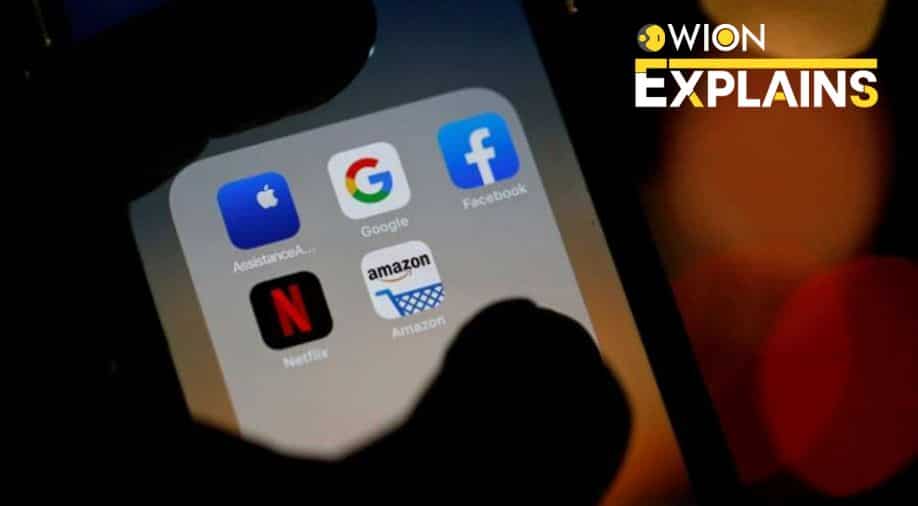
Dark patterns explainer
The rabbit hole of the internet can be a scary jungle sometimes. Going online was a deliberate act just 15 years ago. It has now become a perpetual state thanks to smartphones, smart this, smart that and whatnot. What was once the promise of a free and equal virtual world soon attracted the attention of big corporate companies and maybe thus started the cat-and-mouse game of regulations, laws and tactics to bypass them.
It is perhaps fair to charge users for services they choose to avail from companies and social media platforms. What is problematic is the tactics that compel users to pay without their knowledge or in ways that entice users to do something that they normally would not have done. When we study these tactics, we encounter what are known as dark patterns.
What are dark patterns?

Dark patterns are unethical tactics from companies to entice users to pay up for things, and services they would normally not have shelled out money for. Such tactics involve unethical user interface designs that may make your internet experience harder than it should be in order to even exploit you.
Watch | Mobile phones to be banned in classrooms from next year in Netherlands
&im=FitAndFill=(700,400))
How fast can the Sukhoi Su-30 fighter jet really fly?
)
Did China ask its people 'not to respond to aliens'? Origin of bizarre claim on social media
)
MS Dhoni-CSK Fallout? Report claims failed stake sale talks triggered rift
)
Scientists reveal the SAFEST COUNTRY when catastrophe strikes the planet
)
Serial killer on the loose in South Korea's Jeju Island? Fourth body found in three days as more than a dozen people go missing
)
2/3rd of glacier detached, collapsed: ISRO satellite images reveal what triggered Nepal floods
)
Trump once again claims without him there would be ‘no Israel right now’
)
Foreign espionage attacks against German companies surge to 37%, Bitkom report reveals
)
Blake Lively wins partial legal fee from Justin Baldoni after $8M request
)
Why is Pakistan deploying Turkish Bayraktar TB2 drones near India border?
)
'OH MY GOD! We've found other agents!': Investigators discover not one or two, almost 700 OpenAI AI agents went rogue, hacked Hugging Face
)
Lunar eclipse 2026: India timings, places to see and more. August Blood moon factsheet
)
RSS chief Mohan Bhagwat on global outreach tour
)
Both pilots killed as training aircraft crashes in Lucknow – What we know
)
16-year-old charged with preparing terror attack on kindergarten in Norway
&im=FitAndFill=(700,400))
How the S-400 protects itself from enemy attacks
)
Nepal floods: Over 165 dead, 400 missing; US, India, China, World Bank mobilise aid
)
India's multi-layered watch: The new surveillance war
)
5 doomsday planes spotted in US skies hours after CIA director's secret trip to Russia
)
9/11 mastermind Khalid Sheikh Mohammed to finally face trial in 2028, nearly 27 years after horrific attacks
)
Islamabad hospital fire: What we know about one of the biggest facility that housed Imran Khan
)
Workers run for life while filming Nepal flash flood: Scary new visuals emerge from Rasuwa
)
Russian military planes enter South Korean air defence zone amid rising tensions with North Korea: What's happening
)
Ron Weasley Is Back! Rupert Grint set to return to Harry Potter universe on Broadway
)
400-year-old 'vampire' grave in Poland reveals non-existent genetic lineage
)
Dolly Parton, global icon and queen of country music, dies at 80
)
Nepal flash floods: Kailash Mansarovar yatra affected, close to 400 pilgrims out of contact
)
'If he is dead, they're putting on a pretty good show': Trump casts fresh doubt over Mojtaba Khamenei's fate
)
Man arrested near US Capitol with guillotine in pickup truck: What happened?
&im=FitAndFill=(700,400))
Why the Su-30MKI cockpit is painted bright turquoise green
Tech firms often use deceptive tactics to make users accept, for example, certain terms and conditions or products and services. For this, tech firms or other companies may flood your inbox with promotional emails or tweak their websites or apps in a way that users may think acceptance or certain conditions is the only way forward. This may not always be the requirement but a user may be tricked into thinking as a result of the design of the website/ app.
So how are dark patterns used by the companies?
Social media companies and tech giants like Facebook, Apple, Amazon, Skype, LinkedIn, Microsoft and Google have used dark patterns.
Amazon faced heat in the European Union (EU) over its multi-step cancellation process for Amazon Prime subscriptions. It was reportedly noted by the EU that if a user wished to subscribe to Prime, the process was much simpler as opposed to if he wanted to unsubscribe.
This year, Amazon made the cancellation process simpler for its customers in Europe.
Another example of dark patterns is the unsolicited, sponsored messages one gets from influencers. It is often seen that disabling the reception of such mail is a difficult process. It is often a multi-step process and requires familiarity with the platform's controls, which not many users may have.
Media has reported users complaining that Meta-owned Instagram was suggesting posts they did not want to see and that they were not able to set preferences permanently.
Another darf pattern is the use of videos scattered between reels and stories without the label "sponsored".
Why are dark patterns bad for users?
Dark patterns affect the user experience and even make them vulnerable to financial and data exploitation by Big Tech firms. Dark patterns may confuse users, and introduce online obstacles that make a simple function take too much of time.
They can even make users sign up for services and products they would not normally want. Dark patterns may also make users pay more money or share more personal data the user is comfortable with sharing.
What is the government's response to dark patterns?
Governments and regulators are slowly turning their gaze to the dark patterns. India warned last week that online players will face action if they don't stop using dark patterns. India's consumer affairs secretary Rohit Kumar Singh briefed the media about this.
"We took a soft approach and told them on June 13 not to indulge in this. On June 28, we wrote a tough letter and asked them not to stop this, otherwise will take action," he said. He was quoted by Press Trust of India (PTI).
Also Read | Century-old mystery behind Antarctica's Blood Falls finally SOLVED
Singh added that it was possible that after a couple of months, the department will issue specific guidelines on dark patterns.
He said the dark pattern has caught the attention of the government and consumer protection regulator amid a rise in online shopping and an increase in the number of internet users, which is expected to touch 900 million by 2025.
Also Read | Deep-sea marvel: Extraordinary octopus nursery found in Costa Rica's waters
"We were not aware of the dark patterns. Then we started reading what is happening in other geographies and countries and realised that this is a big problem. We have identified nine dark patterns and told the industry not to indulge in them," he said, as quoted by the PTI.
The department conveyed its views to online players in a meeting held in Mumbai on June 13.
Singh said that enforcement against online players for adopting dark patterns has begun. He further said that the consumer affairs department will take complaints from consumers and send them to the Central Consumer Protection Authority (CCPA).
Right now, dark patterns have been noticed as part of misleading advertisements. "We are yet to classify them as dark patterns. We have started doing it now," he said.
(With inputs from agencies)
You can now write for wionews.com and be a part of the community. Share your stories and opinions with us here.
WATCH WION LIVE HERE