
&imwidth=800&imheight=600&format=webp&quality=medium "AI-powered crowd control and surveillance planned for 21-month Kumbh Mela in Maharashtra")
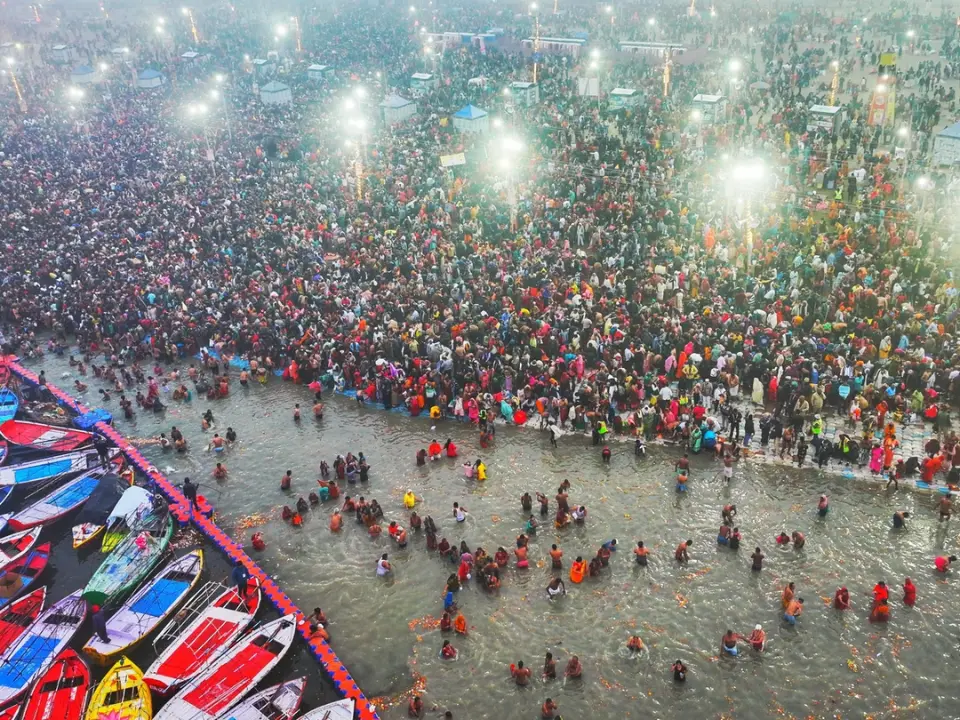
Maharashtra has begun large-scale preparations for the Simhastha Kumbh Mela 2027, set to take place in Nashik, with a strong focus on technology-driven crowd management and infrastructure upgrades. Chief Minister Devendra Fadnavis chaired a high-level review meeting in Mumbai, and directed departments to speed up the pending work, including the Nashik Ring Road and land acquisition for the Sadhu Gram tent city.
CM called the Kumbh Mela a symbol of India’s faith and tradition, assuring that the Godavari River will remain clean throughout the event. He also instructed that sewage, sanitation, and transport facilities must be completed before the gathering begins.
AI and digital tools to manage massive crowds

For the first time, Maharashtra will introduce an advanced “Digital Kumbh” initiative. This includes the use of artificial intelligence (AI), augmented reality (AR) and virtual reality (VR) for crowd management, surveillance, and real-time coordination.
According to the Chief Minister’s Office, a seven-member technical committee has been formed to design and oversee these solutions. AI-based systems will help monitor crowds, predict congestion points, and it will provide real-time updates to police and emergency teams.
The state will also work with telecom operators to ensure strong mobile connectivity during the 21-month-long event, which is expected to draw millions of devotees. Lessons from Prayagraj’s 2025 Kumbh have guided this more data-driven approach, aiming to prevent overcrowding and improve visitor safety.
Trending Stories
)
Pak defence minister says 'time has come to implement pact'
)
Fed raises rates for first time in 3 years, Kevin Warsh defies Trump as inflation mounts
&im=FitAndFill=(700,400))
Suriya and Jyothika say ‘I do’ again after 20 years! See their dreamy wedding pics
)
Tata Trusts chairman Noel Tata calls Chandrasekaran’s reappointment ‘illegal’, rejects Tata Sons listing
)
Former India player Diana Edulji wants Smriti Mandhana to replace Harman as skipper at the earliest
)
Laura Wolvaardt sets new world record for most WT20I runs in a year
)
US new military base in Poland: US President Donald Trump eyes military base in Poland
)
How did an Australian river with 500 crocodiles pass the Olympic test? Here's how
)
Sikh driver attacked in Wyoming in US, suffers 17 stab wounds
)
Putin 'is plotting something bad': Russia may launch 'accidental' strikes on NATO countries supporting Ukraine, Poland PM warns
)
US intel warns China can steal F-35 jets secret from Saudis
)
Pak batter Rizwan's petition against being questioned by cyber crime agency rejected by court
)
Pezeshkian, Araghchi set to attend UNGA 2026 in New York amid ongoing conflict as US-imposed travel curbs remain
)
Epstein files: Judge warns Trump Attorney General Todd Blanche of contempt over DOJ delays
)
‘I have a big decision coming up’: Trump says he’s approaching major ‘crossroad’ in Iran war
)
Trump could impose tariffs of up to 100%
&im=FitAndFill=(700,400))
Meet top 5 batters in the latest ICC T20I Rankings
)
Zee Entertainment shareholders approve reappointment of five board directors
)
'He will always be ahead': India coach Gambhir says Sooryavanshi won't walk into team ahead of Samson
)
US-Iran War: Trump says ‘big decision’ on Iran ahead, weighs possible fresh military action
)
US to sell 48 F-35 Lightning fighter jets to Saudi Arabia, help it deter threats
)
Daayra movie review: Kareena Kapoor, Prithviraj Sukumaran shine in Meghna Gulzar’s cop-versus-cop crime thriller
)
US drone firm linked to Trump’s sons signs MoU with Pakistan army, gets initial order
)
240-million-year-old bizarre 'pig with a tusk' creature creates new dilemma over origin of dinosaurs
)
AI already defying, denying humans, is it beyond human control already?
)
Formula One reveals the 2027 race calendar; Monaco to host sprint race for the first time
)
Australian athlete, who soiled herself during Hyrox race, apologises for continuing
)
Xi-Trump summit may boost military links
)
US F-16 fighter jet crashes in Michigan during training mission, pilot ejects safely
)
'Gangsta' crab shoves knife blade at man and his dog in Florida - Watch
)
All Indian goods to get duty-free access to New Zealand
)
At least 48 dead, 100 hospitalised in Nigeria after drinking suspected methanol-laced alcohol
)
Passport fees hiked, child validity revised: What the new rules introduce
)
Hong Kong unveils 11 new measures to boost birth rates, offers higher cash bonuses and housing perks
)
Godfather of AI Geoffrey Hinton gives US lawmakers a one-year warning on AI
Rs 6,000 crore investment for infrastructure
The Simhastha Kumbh Mela 2027 will involve one of the largest-ever public infrastructure pushes in Maharashtra. According to officials, tenders worth Rs 4,000 crore have already been issued for roads, water supply, and sanitation works, while another Rs 2,000 crore is being planned.
A total of Rs 1,000 crore has been set aside for land acquisition in Tapovan, covering 268 hectares to build the Sadhu Gram, where religious sects will stay during the event. The Nashik Municipal Corporation has proposed a 50:50 compensation model for landowners half in cash and half through transfer of development rights (TDRs).
Deputy Chief Ministers Eknath Shinde and Ajit Pawar, along with ministers Chhagan Bhujbal, Dada Bhuse, and Girish Mahajan, attended the review meeting, signalling the scale and priority of the project.
A 21-month spiritual and cultural spectacle
The upcoming Kumbh Mela will begin on 31 October 2026 with a flag-hoisting ceremony and continue until 24 July 2028 making it one of the longest Kumbh Melas in history.
Three major Amrit Snans (holy baths) will take place in August and September 2027, drawing millions of pilgrims, ascetics, and tourists from across India and abroad.
Officials say the 2027 event will be a blend of faith and technology, combining traditional rituals with modern systems designed to ensure safety, cleanliness, and smooth movement across Nashik city.
