‘Anthropic’s Mythos AI bug detection’: What it means for the future of software security

&imwidth=600&imheight=450&format=webp&quality=medium "‘Anthropic’s Mythos AI bug detection’: What it means for the future of software security")
‘Anthropic’s Mythos AI bug detection’: What it means for the future of software security
Anthropic’s new Mythos model is changing how companies approach cybersecurity, with early results showing a sharp improvement in detecting software vulnerabilities.
Anthropic’s new Mythos model is changing how companies approach cybersecurity, with early results showing a sharp improvement in detecting software vulnerabilities. When the model was introduced in April 2026, it reportedly identified thousands of high-severity bugs, many of which needed to be fixed before the system could be made widely available. Now, researchers working on Mozilla Firefox have shared how this technology is already being used in practice.
AI finds long-hidden bugs in Firefox
According to Mozilla’s security team, Mythos has uncovered several serious vulnerabilities, including issues that had remained undetected for more than a decade. This marks a significant shift compared to earlier AI tools, which often produced large numbers of low-quality alerts and false positives.
Researchers say that recent improvements in AI systems, especially those that can review and refine their own outputs, have made these tools more reliable. As a result, security teams are now able to focus on meaningful findings instead of filtering out incorrect reports.
Bug fixes rise sharply with AI support
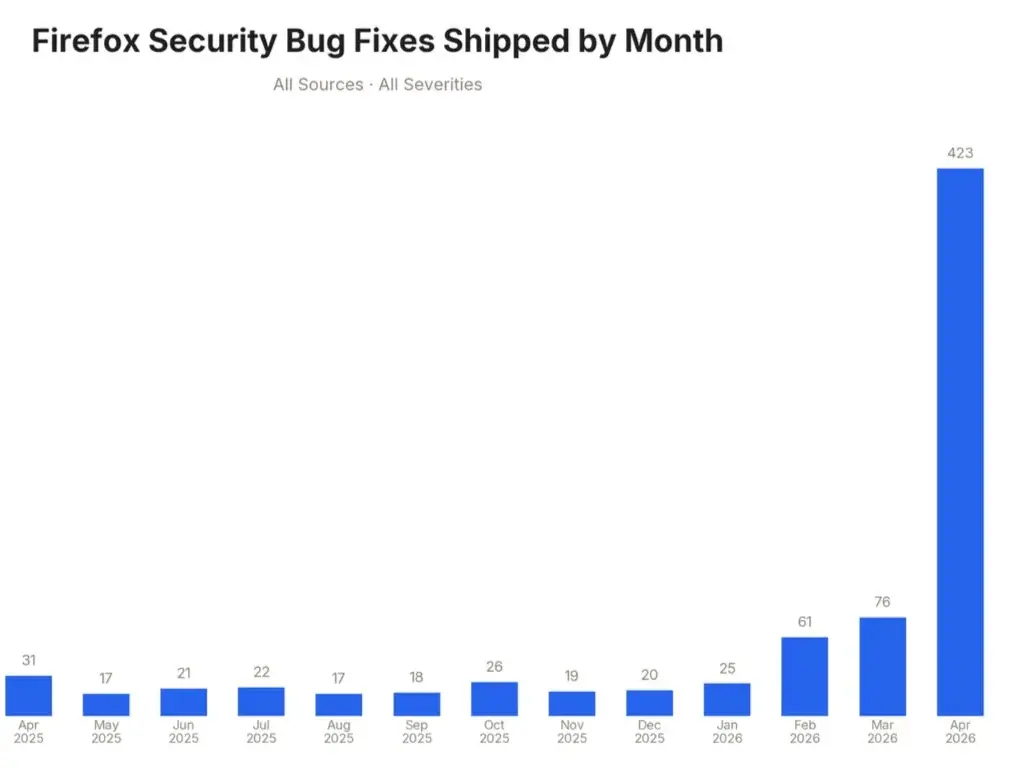
The impact of AI tools is clearly visible in Firefox’s recent updates. In April 2026, the browser released 423 bug fixes, compared to just 31 fixes in the same month last year. This increase shows how AI is helping teams identify more issues in less time. Some of these bugs were highly complex, including vulnerabilities in Firefox’s sandbox system. These types of issues are difficult to detect because they require multiple steps, including creating test code and simulating attacks on secure parts of the browser.
Trending Stories
&imwidth=280&imheight=210&format=webp&quality=medium)
&imwidth=280&imheight=210&format=webp&quality=medium)
&imwidth=280&imheight=210&format=webp&quality=medium)
&im=FitAndFill=(700,400)&imwidth=280&imheight=210&format=webp&quality=medium)
&imwidth=280&imheight=210&format=webp&quality=medium)
&imwidth=280&imheight=210&format=webp&quality=medium)
&imwidth=280&imheight=210&format=webp&quality=medium)
&imwidth=280&imheight=210&format=webp&quality=medium)
&imwidth=280&imheight=210&format=webp&quality=medium)
&imwidth=280&imheight=210&format=webp&quality=medium)
&imwidth=280&imheight=210&format=webp&quality=medium)
&imwidth=280&imheight=210&format=webp&quality=medium)
&im=FitAndFill=(700,400)&imwidth=280&imheight=210&format=webp&quality=medium)
&imwidth=280&imheight=210&format=webp&quality=medium)
&imwidth=280&imheight=210&format=webp&quality=medium)
&imwidth=280&imheight=210&format=webp&quality=medium)
&imwidth=280&imheight=210&format=webp&quality=medium)
&imwidth=280&imheight=210&format=webp&quality=medium)
&imwidth=280&imheight=210&format=webp&quality=medium)
&imwidth=280&imheight=210&format=webp&quality=medium)
&imwidth=280&imheight=210&format=webp&quality=medium)
&imwidth=280&imheight=210&format=webp&quality=medium)
&imwidth=280&imheight=210&format=webp&quality=medium)
&imwidth=280&imheight=210&format=webp&quality=medium)
&imwidth=280&imheight=210&format=webp&quality=medium)
&imwidth=280&imheight=210&format=webp&quality=medium)
&imwidth=280&imheight=210&format=webp&quality=medium)
&imwidth=280&imheight=210&format=webp&quality=medium)
&imwidth=280&imheight=210&format=webp&quality=medium)
&imwidth=280&imheight=210&format=webp&quality=medium)
&im=FitAndFill=(700,400)&imwidth=280&imheight=210&format=webp&quality=medium)
&imwidth=280&imheight=210&format=webp&quality=medium)
&imwidth=280&imheight=210&format=webp&quality=medium)
&imwidth=280&imheight=210&format=webp&quality=medium)
&imwidth=280&imheight=210&format=webp&quality=medium)
)
AI helps find bugs, but humans still fix them
Despite these advances, human engineers remain central to the process. While AI can suggest possible fixes, the final code is still written and reviewed by developers.
Mozilla’s team has said that AI-generated patches often need refinement and cannot be directly applied. For now, the role of AI is mainly to assist in discovery rather than fully automate the repair process.
A shift in cybersecurity approach
The use of tools like Mythos reflects a broader change in cybersecurity. Instead of relying only on manual testing or traditional scanning tools, companies are now using AI to analyse code more deeply and identify hidden risks.
However, experts also note that these tools could be used by both defenders and attackers. While AI can help fix vulnerabilities faster, it may also enable malicious actors to discover weaknesses more quickly. Dario Amodei has suggested that, if managed properly, these tools could improve overall security by helping organisations fix vulnerabilities before they are exploited.
At the same time, Mozilla engineers have taken a cautious view, noting that the long-term impact is still unclear. They believe that while AI gives an advantage to defenders, the balance between attackers and defenders may continue to evolve.
What this means going forward
The use of AI in cybersecurity is growing rapidly, and tools like Mythos show how quickly capabilities are improving. The ability to detect complex and long-standing bugs could help make software more secure.
At the same time, the technology raises new questions about how security risks will be managed in the future. As AI tools become more widely available, companies will need to adapt their strategies to keep systems safe while making the most of these new capabilities
