104 matches, 16 cities, 3 countries: The massive broadcast operation behind FIFA World Cup 2026

&imwidth=600&imheight=450&format=webp&quality=medium "104 matches, 16 cities, 3 countries: The massive broadcast operation behind FIFA World Cup 2026")
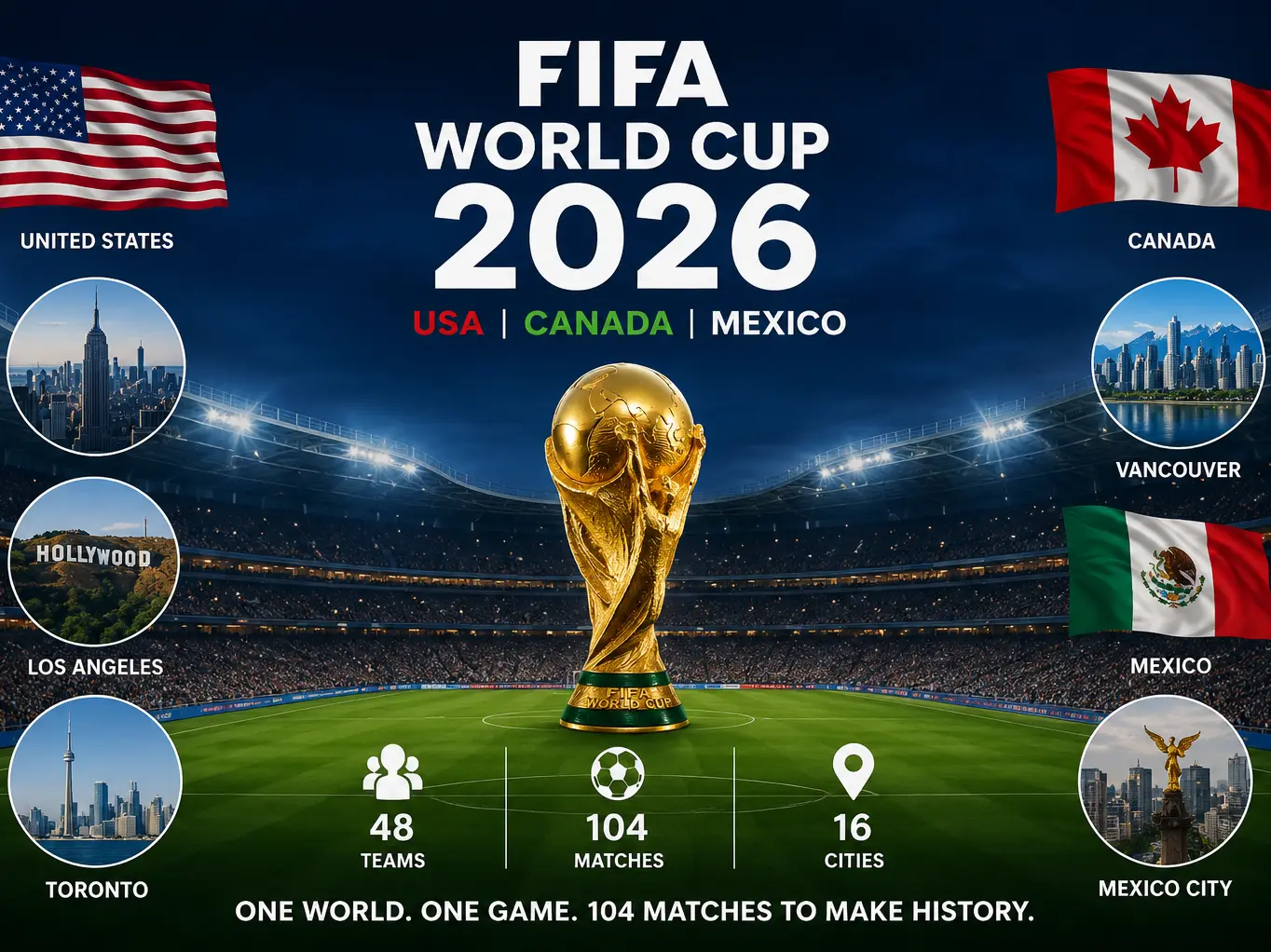
For representative purpose only Photograph: (AI-generated image)
With 104 matches across the USA, Canada and Mexico, FIFA World Cup 2026 is the most complex sports broadcast ever. Here's how thousands of professionals will bring the tournament to billions
When football fans tune in to watch the FIFA World Cup 2026, they will see goals, celebrations, controversies and unforgettable moments unfold on their screens. What they won't see is the massive army of producers, engineers, camera operators, commentators and technicians working behind the scenes to bring every second of the tournament to life. The FIFA World Cup 2026 is set to become the biggest sporting event ever staged. With 48 teams, 104 matches, three host nations and 16 cities spread across North America, the tournament is not only rewriting football history, it is redefining sports broadcasting itself.
For the global media industry, World Cup 2026 represents the most ambitious live-production challenge ever attempted.
A tournament on an unprecedented scale
Previous FIFA World Cups were large. The 2026 edition is something entirely different. For the first time, 48 nations will compete in football's biggest competition. The tournament will feature 104 matches, nearly double the number played in some earlier editions. Games will be staged across the United States, Canada and Mexico, stretching from Vancouver in the west to New York in the east. For broadcasters, that means coordinating production teams across thousands of kilometres, multiple time zones and dozens of venues, all while maintaining seamless coverage for billions of viewers worldwide. The logistical challenge has been compared to producing more than a hundred major championship broadcasts in little over a month.
The nerve centre behind the World Cup
At the heart of the operation sits FIFA's International Broadcast Centre (IBC) in Dallas. The facility will act as the central hub for the tournament's global television production. Every match feed, replay package, graphics operation, archive clip and broadcast signal will pass through the centre before reaching audiences around the world. Think of it as mission control for football's biggest show. Thousands of media professionals from broadcasters across the globe will rely on the facility to coordinate coverage, create content and distribute programming during the tournament.
Trending Stories
)
)
)
)
)
)
)
)
)
)
)
)
)
)
)
)
)
)
)
)
)
)
)
)
)
)
)
)
The invisible giant making it all possible
While viewers are familiar with broadcasters such as FOX Sports, BBC, ITV and beIN Sports, much of the actual production work begins with Host Broadcast Services (HBS). HBS is responsible for producing the official World Cup feed that is distributed to rights-holding broadcasters worldwide. Every camera angle, replay sequence, crowd shot and tactical view originates from this central production system before being customized by broadcasters for their own audiences. The challenge for 2026 is greater than ever. More matches mean more production crews, more cameras, more data and more technical infrastructure than any previous FIFA World Cup.
More cameras than ever before
Modern sports audiences demand far more than a traditional television broadcast. Fans expect ultra-slow-motion replays, tactical analysis, player-tracking graphics, aerial stadium shots and instant social-media clips. To meet those expectations, every World Cup venue will be equipped with extensive camera networks capable of capturing every detail of the action. Broadcasters will have access to multiple dedicated feeds, including tactical angles, isolated player cameras and enhanced replay systems. The result is a viewing experience designed not just for television but for smartphones, tablets, streaming platforms and social media audiences.
Technology powering a global audience
Behind every goal lies an enormous technological ecosystem. Artificial intelligence, cloud-based production systems and real-time data networks are expected to play a larger role than ever before at FIFA World Cup 2026. These technologies help broadcasters process vast amounts of footage, create highlights within seconds and distribute content to audiences across the globe almost instantly. A dramatic moment in Los Angeles can be clipped, edited and shared with fans in Asia, Europe and Africa within moments. The speed and scale of modern sports broadcasting would have been unimaginable even a decade ago.
Beyond television
The World Cup is no longer just a television event. Broadcasters today must serve audiences across multiple platforms, from traditional television channels to streaming services, social media networks and digital content hubs. Millions of younger fans consume football through short-form videos, behind-the-scenes clips and creator-driven content rather than full-match broadcasts. As a result, media organizations are producing thousands of hours of additional programming beyond the matches themselves, including training-ground reports, fan features, analysis shows and documentary content.
A glimpse into the future
The FIFA World Cup 2026 is more than a football tournament. It is a glimpse into the future of sports media. The lessons learned from broadcasting 104 matches across three countries will influence how future Olympics, World Cups and global sporting events are produced. Cloud production, AI-assisted workflows, remote operations and centralized broadcast hubs are no longer experimental technologies—they are becoming the new standard.
For six weeks, viewers around the world will witness football history. Behind the scenes, however, another extraordinary achievement will be taking place: the successful delivery of the largest live sports production ever attempted. And if everything goes according to plan, most fans will never even notice the complexity behind it.

