US redeploy troops in Afghanistan: Zero-sum game

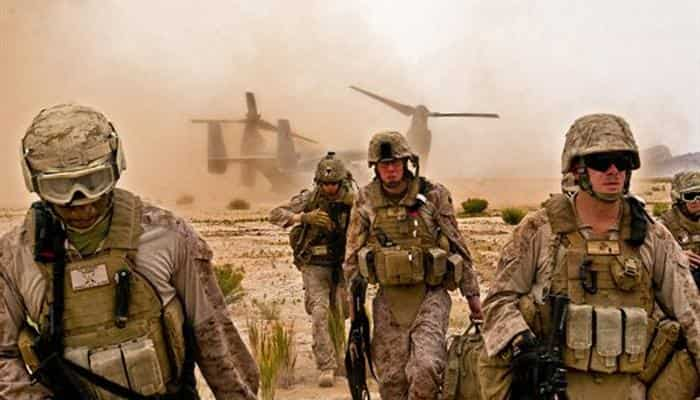
Afghanistan
Afghanistan...what a tangle of thorns
By: Agni Chatterrji
The US administration's decision to open the possibility of redeploying thousands of soldiers in Afghanistan is a welcome one, but its success hinges on several factors.
US President Donald Trump Tuesday decided to empower the Pentagon to decide on thetroop levels in Afghanistan, in his bid to "win" the stalematein the war-torn country.

Not very long back -- even till 2015 --the US was talking about an exit strategy from Afghanistan. They were looking to withdraw their troops by 2017. But a rash of events turned that plan on its head.
[How many troops were there at the time they wanted to leave? Make this number clear, and the year, and describe the situation...it needs to be rock solid that the troop withdrawal is the sole/main cause of the inability to defeat what was a shrinkinginsurgency...]
The pivot is primarily down to Washington's scrambled policy in the region that is bedevilled by a resurgent Taliban, a dormant Al Qaedaand a growing Islamic State.

India moves to buy 10,000 more AI chips for a national compute pool open to startups

Netanyahu rival Benny Gantz quits Israel election race, vows to push for unity government

Ghaziabad is world's fastest-growing city; Surat, Patna, Rajkot also feature on list

Baby orangutan rescued in India returns to Indonesia

Feds obtain DNA evidence that could prove Ilhan Omar married her brother: Report

Kim Jong Un death rumours: State media shares photos to prove dictator is alive amid reports of brain haemorrhage

Trump calls on New Mexico to become 'New America', claims 'home values and incomes would rise'

Priest dies after crucifix falls on his head during livestreamed Mass in Ecuador | VIDEO

Brendan Taylor overtakes Andy Flower to become Zimbabwe’s leading ODI run-scorer

Prince Harry, Meghan Markle never accepted Queen Elizabeth’s terms for royal exit: Report

New OTT releases this week (October 19-25, 2026): Gajab Raat to Chaar Yaar-8 titles to watch during Dussehra week on Netflix, Prime Video and more

Two Indians among 28 arrested in California over alleged voter registration fraud, DOJ says

AUS vs SA: Boland grabs opportunity with both ends to help Australia dominate

WATCH | Albania protesters set Supreme Court on fire as anti-Rama riots escalate

Ramayana advance booking: Ranbir Kapoor, Yash's film cross $500K ahead of Diwali release

PCB omits Atherton, Hussain from tri-series commentary panel over Imran Khan interview row

Pujara says 'Samson and Vaibhav cannot be in Playing XI' for India on NZ tour

Flying car race: Alef Aeronautics welcomes Tesla Roadster '11 years' later, but are the two models the same?

US Congressman Raja Krishnamoorthi describes foiled temple attack as ‘divine intervention’, criticises Vance and MAGA rhetoric

'We feel like Mr India': Gujarat’s undercover SHE team guard garba nights at Navratri

'Paris is going to be a Muslim city very soon': Trump blames immigration for France unrest, urges Macron to tighten border policies

‘Spare India from anarchy’: Over 400 Indian-origin academics from MIT, Oxford condemn anti-CEC protests

What is the real meaning behind Pete Hegseth's tattoos?

'Not going to let it happen here': From Kansas, Trump ramps up US midterm campaign, points to ‘what’s happening in France’

Girl 'dead' for 8 hours wakes up at her own funeral, dad insists she wasn't breathing

US Midterm 2026: What do opinion polls and prediction markets say less than two weeks before voting

'Whatever I can do to end this war': Trump floats China Summit with Putin and Xi, questions Zelensky's role in peace talks

US midterms 2026: From Pooja Sethi to Vivek Ramaswamy, here are Indian-origin candidates to watch out for

Pete Hegseth meets Benjamin Netanyahu during unannounced visit to Israel ahead of election

Trump Commerce Secretary Howard Lutnick’s family fortune more than doubles to $7.3 billion, outpacing his boss

Shastri backs Shami comeback; lauds Bhuvi and warns Bumrah on format workload ahead of World Cup

‘Nuclear-use decision should be taken by humans’: India flags AI risks at UN

'It's a joy to see the makers bring it on such a grand scale': SS Rajamouli on Ramayana

WATCH | Japan launches historic mission to collect samples from Mars' moon Phobos

Cattle-feed bran in biscuits, detergent in milk: FSSAI acts against 3 companies
There has been an increasing concern in the Pentagon about the Afghan security forces' inability to withstand the annual Spring Offensive launched by the Taliban.
The fact that the US administration has spent close to $71billion on training the Afghan National Security Forces (ANSF), coupled with an annual $23 billion expenditure on reconstruction of the ravaged country, stakes in the Afghanistan war remainambitiously high.
[this isn't annually, right? Why does the amount of fundin bear on the stakes? Isn't that ranking American dollars as more important than Afghan security? Why are the Afghans so unable to protect themselves if this much money has been spent on training them? That's a genuine question....I wonder where this money went....]
Tellingly, the Afghan government controls roughly 52 per cent of districts in 2017, down from 72 per cent in November 2015. This is down to a resilient Taliban chipping away at the fraying stalemate in the country.
The recent attack on American soldiers has also pressured the US government to get their act together in the country. Five soldiers have been killed since April to underscore the turmoil swirling in the tough terrains of the South Asian nation.
When Senator John McCain questioned the government's will to act on the Afghanistan conundrum,US Defense Secretary Jim Mattis admitted that they were still "not winning" the longest war in Afghanistan.
"We are not winning in Afghanistan right now," Mattis said during Tuesday's congressional hearing, adding: "And we will correct this as soon as possible."
Light-footprint approach
The US army haslong wanted reinforcement of troops to combat the stasis that has gripped the ANSF too. About 35 per cent of the force does not re-enlist every year, according to the report submitted by theSpecial Inspector General for Afghanistan Reconstruction(SIGAR) report.
[Which force, the ANSF, right? Grammer is a liiiiiittle unclear, here]
According to Mattis, the Pentagon defines"winning" in Afghanistan as a situation where the Afghan government, with international help, drives the insurgencydown to a level that local security forces can handle it.
[Hasn't the pentagon described their goal in explicit terms? Why use Mattis' definition of the Pentagon's, not the Pentagon's?]
Although additional troops on the ground might lessenviolence and the Taliban juggernaut in the short- to medium-term, duration of their stay would be imperative for any positive outcome.
The Americans can't just expect to arrest the level of violence and make a hasty retreat by leaving behind a few soldiers in non-combative role. That is because it is unreasonable to train the local security agencies in three, four years and then leave them to fight the extremists. The local forces would need air and logistical support for them to thwart future battles.
[How can you describe the longest war in Afghanistan as "hasty"? Why, if they've spent all those billions, aren't they able to?]
An untimely "right-sizing" of US troops would thereby diminish or negate important capabilities in countering terrorist threats, financing andoverseeing contracts.
US' presence in Korea is a point in case where decades of military deployment has yielded a semblance of stability in the region.
As mentioned before, 35 per cent of personnel don't re-enlist, meaning that full recruitment to cover the gap would ultimately result in dilution of quality. Also, there have been several concerns about the ability of middle- to senior-level Afghan commanders' ability to lead troops in combat.
So the decision to introduce more US military presence would be good news in the region, but the burgeoning fiscal costs of the war is fraught with peril.
[It sounds like it will fall to shit unless the Americans are permanently there, by your logic....is this not unsustainable? How much time and moneu should the US invest? Fuck, why are they even there in the first place??? When is enough enough?]
Negotiations remain a pipe dream
In 2011, the US had all the cards in their negotiation with the Taliban.The US had about 100,000 soldiers in Afghanistan and the Taliban were in the doldrums. But even then, the two parties failed to forge a peace plan.
[Did the US try to make peace with the Taliban? Did they fail to forge a peace plan, or did they fail to make the Taliban surrender?]
So if the current administration hopes to push the years-long war into a negotiated settlement by reining in the Taliban, theirplan is more likely to fall of the cliff.
Today's Taliban is a different beast. The group has splintered in the aftermath of their leader Akhtar Mohammad Mansour's death in 2016. Negotiating with a multi-headed group will be a nightmare for the White House.
The political infighting in the country is another factor that has precipitated Taliban's gains. Uncertainty in the powers of corridor in Kabul and local governments have handed the Taliban a fertile ground to re-ignite their support among the masses.
The SIGAR 2017 report says: "The National Unity Government grappled with political challenges ranging from defiance from Vice President Abdul Rashid Dostum, a former warlord whose bodyguards are charged with sodomizing a political opponent, to resolving conflicts with the parliament over a path to promised parliamentary elections and Afghanistan’s 2019 presidential contest."
If the US has to be successful in bringing the Taliban to the negotiation table, they have to upgrade the quality of polity in the country.
The US has to rectify its operational problems too, which has largely been marred by corruption.
Several security forces leaders have been prosecuted on corruption charges. There have also been widespread misuse of the funds sent by the US.
[Ahhh! Misuse of funds, classic...this make increasing deployment there seem like a worse not better idea, to me]
The US willhave to crack down on financial irregularities as well to sustain their project in the long run.
'McMaster's War'
The Trump administration's renewed policy in Afghanistan has been largely forged by national security advisorLtGenHRMcMaster. So much so thatcertain sections of the White House have dubbed the fresh Afghan blueprint as "McMaster's War".
The shift in decision-making from the White House to the Pentagon has been credited to McMaster.
He has been an endorser ofSun Tzu's "The Art of War" tennet which advocates winning the hearts and minds of the populace to help defeat the insurgency.
[No Sun Tzu reference is necessary here...]
But the task of micro-managing the local population remains an uphill task as the Afghans would be wary, and weary, of yet another bout of foreign presence in their country.
US troops have been viewed by the locals with deep hostility due to the bloody quagmire they have endured for 16 years. [Hasn't the US presence ever been welcome? If the US is unwelcome by the citizens and the Taliban, who are they there for? Why increase presence?]
As Abraham Lincoln said in his 1858 “A House Divided” speech, “If we could first know where we are, and whither we are tending, we could then better judge what to do, and how to do it".
Therefore, it remains vital for the US administration to adopt a multi-pronged strategy -- not just miltarily -- to consolidate any gains they make in the country.