Bhutan reopens for tourists after Covid-19, welcomes them with honey, turmeric & SIM cards

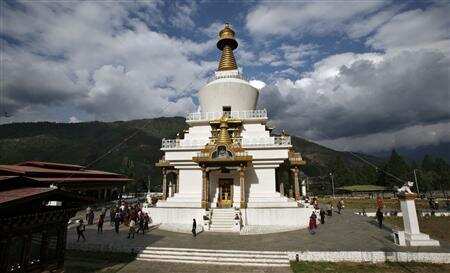
"Gongzok Choten" stupa that was built in memory of the third king Jigme Dorji Wangchuck
The first 23foreigners to enter Bhutan since the Himalayan nation reopened its borders following the Covid-19 pandemic more than two years ago arrived on Friday. Officials hope that tourism would help the region's economy recover.
The nation, which is wedged between China and India and is renowned for its natural beauty and historic Buddhist culture, first welcomed affluent tourists in 1974. After discovering its first incidence of Covid-19 in March 2020, it closed its borders to travellers, a significant source of income.
With fewer than 800,000 residents, the constitutional monarchy has reported little over 61,000 infections and 21 fatalities, but the $3 billion economy shrank over the last two fiscal years, forcing more people into poverty.

After welcoming the first travellers to the nation's sole international airport in Paro, close to the capital city of Thimphu, Dorji Dhradhul, Director General of the Tourism Council of Bhutan (TCB), declared that tourism for his organisation meant more than just financial gain.
He claimed that the small nation was eager to "very much be a part of the whole world."
He said, speaking from Bhutan to Reuters, "We feel through tourism we can do that... take advantage of their support and goodwill."
The officials reported that each guest who arrived on the inaugural aircraft from Kathmandu in neighbouring Nepal was given tiny packages of organic honey, tea, Bhutanese turmeric, and a local SIM card as a present.
Also Read:More Russians emigrating to Kazakhstan amid conscription drive
Bhutan increased its Sustainable Development Fee in July from the $65 it had been charging for three decades to $200 per visitor per night in order to attract more wealthy visitors. In order to balance the carbon footprints of visitors, officials claimed the fees will be used for initiatives including tree planting, training for tourism employees, maintaining hiking routes, lowering dependency on fossil fuels, and electrifying transportation vehicles.
According to TCB data, there were 315,600 visitors in 2019, an increase of 15.1 per centfrom the previous year. During the three years before to the pandemic, travellers helped the economy by spending an average of $84 million annually.
(with inputs from agencies)