Cleft palate, fused toes: Fentanyl likely causing certain birth defects in newborns


Fentanyl
Doctors believe that a group of 10 to 12 babies in the United States born with multiple congenital malformations could be suffering from a new syndrome related to exposure to fentanyl in the womb.
Healthcare professionals from across the country, in a recent report, found the group of babies whose mothers had used fentanyl while pregnant were born with an abnormally small head, short body, and physical birth defects like a cleft palate or fused toes.


The doctors could not find any common genetic cause for the babies’ condition. However, their mothers admitted that they used street drugs, particularly fentanyl, while they were pregnant, leading the researchers to believe that exposure to the synthetic opioid was the root cause of these abnormalities.
What did the study find?
The study was published by a group of healthcare professionals in Genetics in Medicine Open. “In light of the ongoing fentanyl use epidemic, public health impact of the novel syndrome associated with prenatal fentanyl exposure is likely to be significant,” the authors wrote in the report.
)
Did India risk its US trade deal despite softer stance at BRICS?
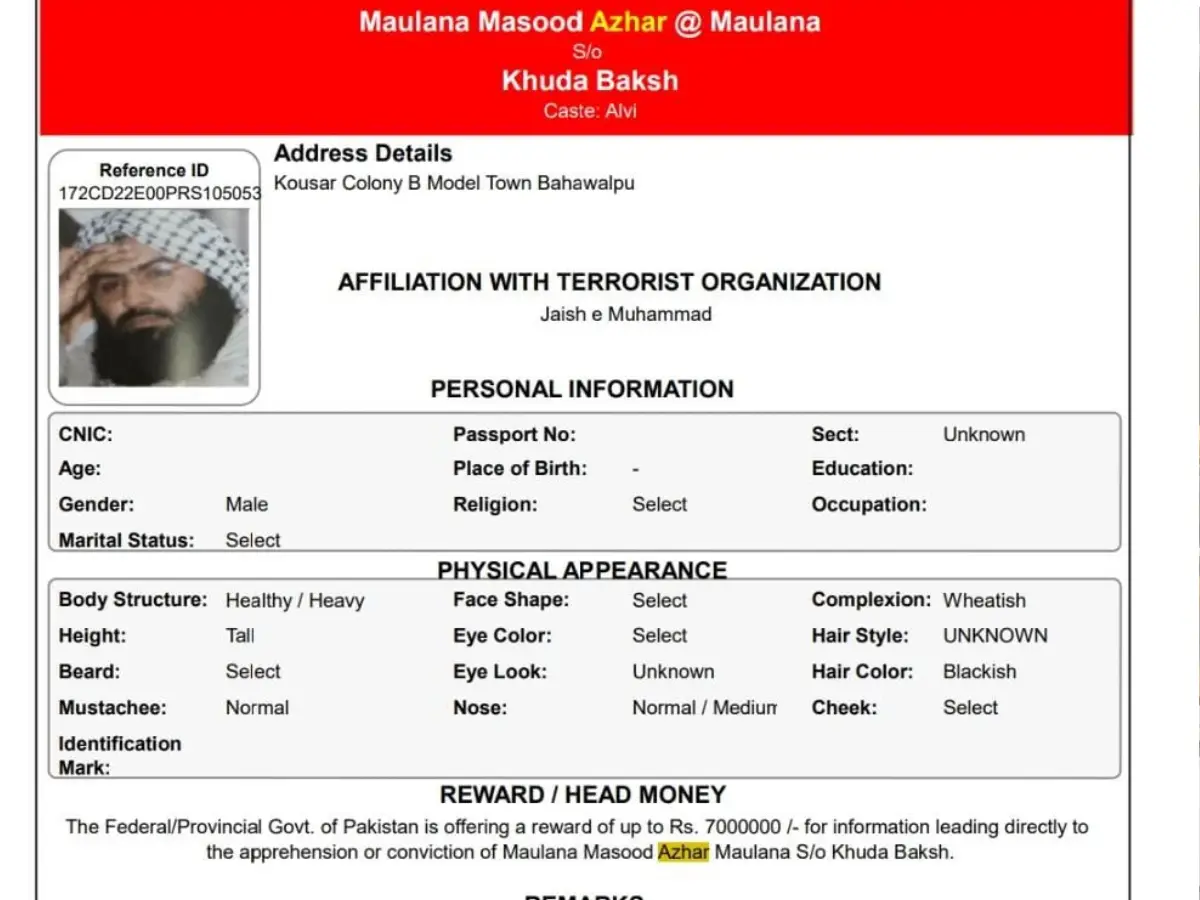)
Pakistan puts Pak Rs 70 lakh bounty on UN terrorist Masood Azhar; move draws skepticism in Delhi
)
First naval drone battle? Ukraine says Sargan 3000 sank Russian unmanned boat
)
Practical Magic 2 breaks Spidey spell over North American box office
)
'Huge destructive power': North Korea calls its latest missile launches 'live-fire drill' even as US dismisses 'immediate threat'
&im=FitAndFill=(700,400))
Meet top 5 batters fastest to 3000 runs in T20Is
)
‘Let’s go’: Newly declassified videos show dramatic rescue of US Air Force officers downed in Iran
)
Delhi’s balancing act: BRICS serves as a stage for West Asia diplomacy
&im=FitAndFill=(700,400))
Why European Meteor missiles use ramjet engines compared to standard US solid rockets
)
Iran, India agree to deepen humanitarian and political ties, President Pezeshkian says
)
‘Want to reset ties with India, have engagement based on mutual interests,’ says Bangladesh minister
)
Trump says Canada eager to reach a deal, it could come ‘fairly soon’ if Ottawa treats US farmers better
)
Turkish Airlines plane flies through a storm three times, triggering severe turbulence
&im=FitAndFill=(700,400))
Why Chinese PL-15 air-to-air missiles use dual-pulse motors compared to European interceptors
)
China thinned Himalayan troop presence in 2025, India defence report says; terms border situation 'stable'
)
800 million years old - Scientists discover 'fingerprints' of supercontinent Gondwana in ancient rocks
)
Russia proposes to build 360 kmph Ivolga FG trains in India: What happened on sidelines of BRICS
)
Israeli minister calls to strip Gaza film directors of citizenship
)
China discovers vast gold and silver 'mine' in the Pacific with unheard-of deposits
)
Russian drone hits Warsaw-bound train near Polish border, Zelensky accuses Moscow of ‘deliberate’ targeting
)
War is making Russia stronger? How Ukraine is shaping Moscow’s next generation of weapons
)
Plane carrying prominent figure crashes at Libya’s Misrata airport: Report
)
NEET-UG to move to computer-based test soon, NTA DG says ‘CBT is the future’
)
Woman removes all her clothes on American Airlines flight, performs 'indecent acts'; arrested
)
Liam Neeson sparks romance rumours after holding hands with Stella Stocker at TIFF 2026
&im=FitAndFill=(700,400))
New OTT releases this week (September 14-20, 2026): Lust Stories 3, Waiting Hai, Irumudi- 5 new titles coming on Netflix, Prime Video and more
)
Indian importers urge Bangladesh to lift export ban on 'Hilsa' fish ahead of Durga Puja
)
Did China give Iran intel before US base strike that killed 3 troops? Trump says, 'You’re right...'
)
Meghan Markle shares first glimpse of family life with Prince Harry and children in UK
)
Crude oil prices jump more than $107 per barrel following Houthi attacks on Saudi
&im=FitAndFill=(700,400))
From Rinku Singh to Mayank Yadav, 5 players dropped from India’s squad for Afghanistan T20Is
)
PM Modi and China's Xi offered to help resolve Russia-Ukraine war: Kremlin
)
Women's Asia Cup 2026: India denied trophy once again despite winning the title
)
Humans may lose control of AI: Anthropic CEO calls for slowdown, Altman, Musk back him
ALSO READ |Top US Senator Chuck Schumer accuses Chinese firms of ‘fuelling’ fentanyl crisis
The research began with the identification and enrollment of six babies who were identified with the potential syndrome at Nemours Children’s Health in Delaware. Additionally, four babies with similar features were found in the US states of California, Massachusetts and Rhode Island, but they were not enrolled.
All the babies were initially believed to have Smith-Lemli-Opitz Syndrome which is a genetic developmental disorder that affects many parts of the body and is caused by a cholesterol metabolism issue which is necessary for normal cell function and brain development.
However, researchers found that the 10 children did not exhibit any features of SLOS or any other syndrome.
Erin Wadman, a genetic counsellor at Nemours, in an interview with NBC News said that the cases were linked in 2022 when she was asked to consult in the case of a baby who had been born with birth defects.
It was during the appointment that she was able to link all the aspects, including the features of the child and the story of her past patients. “I was sitting there in the appointment, and I was just like this face looks so familiar. This story sounds so familiar. And I was just thinking about how this patient reminded me so much of a patient I'd seen earlier in the year,” Wadmen said, as quoted by NBC News.
She added, “That’s when we were like we think we might have stumbled on something really big here.”
'Critical importance'
Eventually, Wadman and her colleague at Nemours, Dr Karen Gripp, a geneticist and paediatrician suspected that fentanyl may be causing similar disruptions to cholesterol metabolism during pregnancy.
“Although fentanyl’s effect on cholesterol metabolism has not been directly tested, based on indirect evidence it is biologically plausible that it affects cholesterol metabolism in the developing fetus,” the authors wrote.
ALSO READ |Explained: Fentanyl seized in 2022 enough to kill every American, says US federal drug agency
The researchers also acknowledged the gaps in their report including “lack of quantifiable prenatal drug exposure and lack of laboratory evidence directly showing fentanyl’s effect on cholesterol metabolism and embryological development”.
However, they said that the recognition of the novel syndrome linked with prenatal fentanyl exposure is of “critical importance”.
Fentanyl is a synthetic opioid that is up to 50 times stronger than heroin and 100 times stronger than morphine. In 2022, US officials seized enough fentanyl to kill every American as the country continues to struggle with an epidemic of drug overdose deaths.
(With inputs from agencies)