&imwidth=800&imheight=600&format=webp&quality=medium "Scientists trained mosquitoes to love repellent, but don't throw away your bug spray yet")
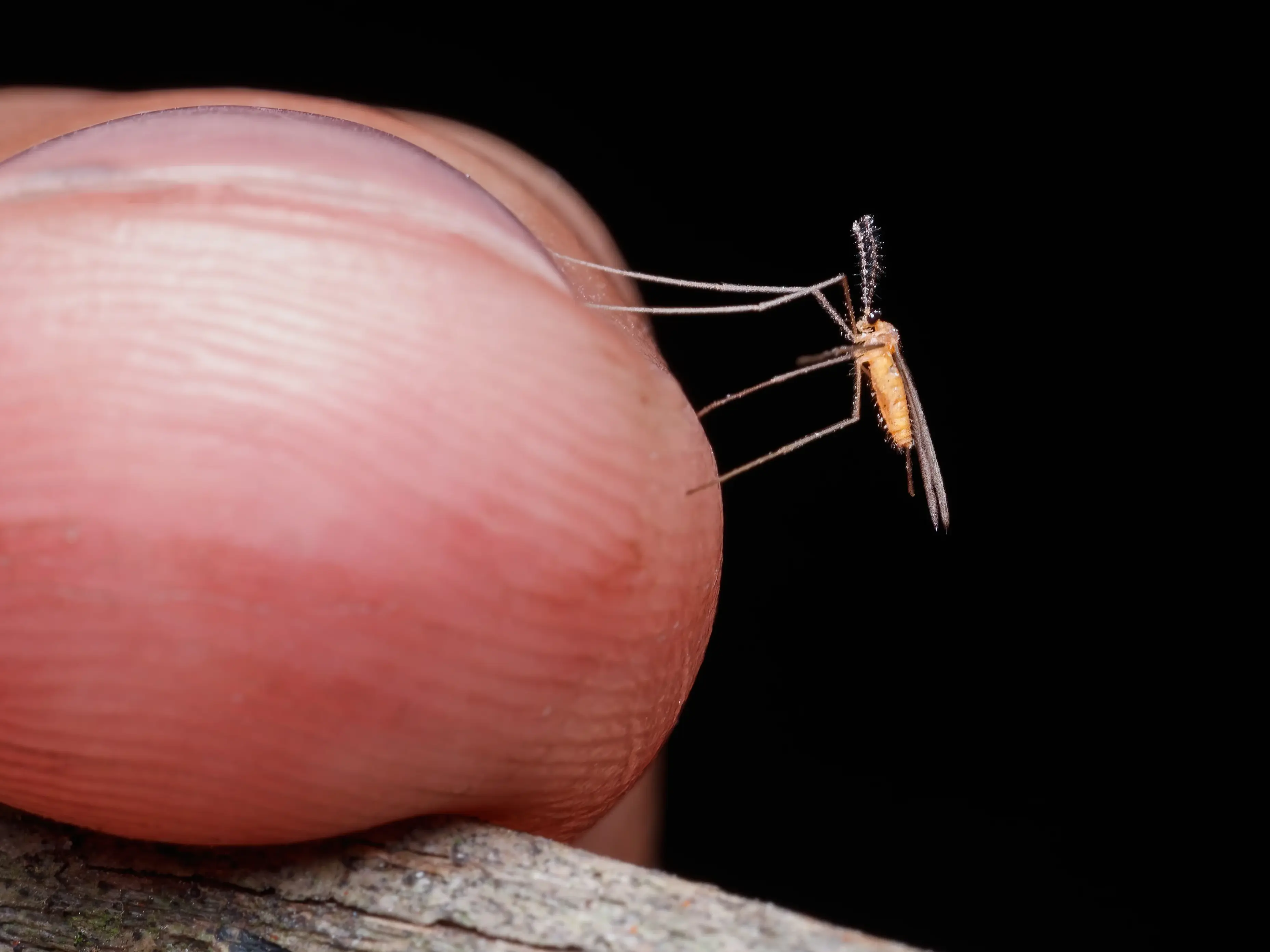
Scientists have discovered that mosquitoes can be trained to associate the smell of the world's most widely used insect repellent with a rewarding meal and can even develop a preference for biting people who have applied it. Despite the striking findings, lead study author Claudio Lazzari was quick to reassure the public that the results, obtained under highly controlled laboratory conditions, do not undermine the effectiveness of DEET (N,N-diethyl-m-toluamide). The chemical compound has been in use since the 1940s and is considered the gold standard in repellents, recommended by the World Health Organisation in the fight against mosquito-borne illnesses.
However, Lazzari, a professor emeritus at the University of Tours in France, noted that the world still needs newer, more environmentally friendly alternatives that cause fewer allergic reactions — and that requires a deeper understanding of why existing repellents work at all.
Also read: Ice shelf the size of Indian capital city Delhi will detach from 'Doomsday Glacier' in 2026

To investigate, an international research team applied a conditioning method similar to the one made famous by Pavlov's dog, the subject of classical conditioning. Aedes aegypti mosquitoes carriers of dengue fever, Zika, yellow fever, and chikungunya were placed in a mesh enclosure and exposed to warm blood alongside the scent of DEET in repeated sessions. Initially, the insects retreated from the repellent as expected. But after just a few rounds of conditioning, more than 60 percent attempted to bite a DEET-scented surface even when no blood was present. When given a choice between a clean hand and one coated in DEET, the trained mosquitoes consistently preferred the treated one. Similar results were observed using sugar instead of blood.
The researchers concluded that DEET's repellent effect is not purely chemical but depends on how mosquitoes interpret and remember the scent. Co-author Clement Vinauger of Virginia Tech described this as a paradigm shift in understanding repellent behavior. The findings were published in the Journal of Experimental Biology.
Trending Stories
&im=FitAndFill=(700,400))
How fast can the Sukhoi Su-30 fighter jet really fly?
)
Did China ask its people 'not to respond to aliens'? Origin of bizarre claim on social media
)
MS Dhoni-CSK Fallout? Report claims failed stake sale talks triggered rift
)
Scientists reveal the SAFEST COUNTRY when catastrophe strikes the planet
)
Serial killer on the loose in South Korea's Jeju Island? Fourth body found in three days as more than a dozen people go missing
)
2/3rd of glacier detached, collapsed: ISRO satellite images reveal what triggered Nepal floods
)
Trump once again claims without him there would be ‘no Israel right now’
)
Foreign espionage attacks against German companies surge to 37%, Bitkom report reveals
)
Blake Lively wins partial legal fee from Justin Baldoni after $8M request
)
Why is Pakistan deploying Turkish Bayraktar TB2 drones near India border?
)
'OH MY GOD! We've found other agents!': Investigators discover not one or two, almost 700 OpenAI AI agents went rogue, hacked Hugging Face
)
Lunar eclipse 2026: India timings, places to see and more. August Blood moon factsheet
)
RSS chief Mohan Bhagwat on global outreach tour
)
Both pilots killed as training aircraft crashes in Lucknow – What we know
)
16-year-old charged with preparing terror attack on kindergarten in Norway
&im=FitAndFill=(700,400))
How the S-400 protects itself from enemy attacks
)
Nepal floods: Over 165 dead, 400 missing; US, India, China, World Bank mobilise aid
)
India's multi-layered watch: The new surveillance war
)
5 doomsday planes spotted in US skies hours after CIA director's secret trip to Russia
)
9/11 mastermind Khalid Sheikh Mohammed to finally face trial in 2028, nearly 27 years after horrific attacks
)
Islamabad hospital fire: What we know about one of the biggest facility that housed Imran Khan
)
Workers run for life while filming Nepal flash flood: Scary new visuals emerge from Rasuwa
)
Russian military planes enter South Korean air defence zone amid rising tensions with North Korea: What's happening
)
Ron Weasley Is Back! Rupert Grint set to return to Harry Potter universe on Broadway
)
400-year-old 'vampire' grave in Poland reveals non-existent genetic lineage
)
Dolly Parton, global icon and queen of country music, dies at 80
)
Nepal flash floods: Kailash Mansarovar yatra affected, close to 400 pilgrims out of contact
)
'If he is dead, they're putting on a pretty good show': Trump casts fresh doubt over Mojtaba Khamenei's fate
)
Man arrested near US Capitol with guillotine in pickup truck: What happened?
&im=FitAndFill=(700,400))
Why the Su-30MKI cockpit is painted bright turquoise green