Scientists find some 'gigantic' viruses in soil samples

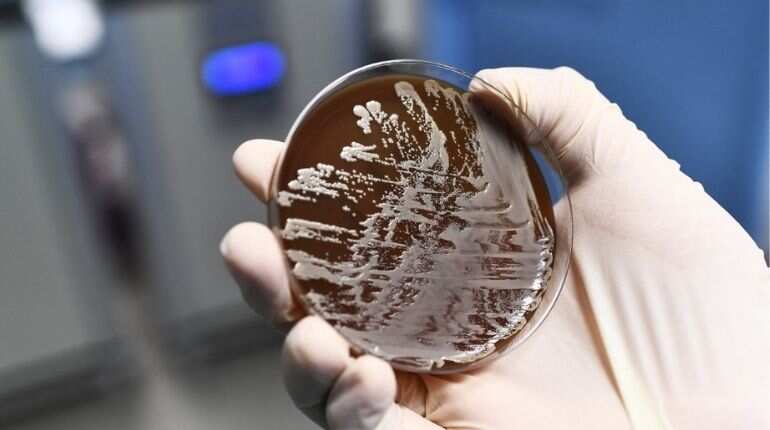
A scientist
Viruses were always a thing of fascination. The normally 'dead' microbes appear instantly to be 'living' when they find a host cell to attack. Even a casual reader of the news knows a bit about viruses.
This was some years ago.
Now, thanks to the coronavirus pandemic, the entire world knows what havoc can these microbes cause.

While hoping that the world doesn't see another pandemic, it sounds like a good idea to keep an eye on viruses. A research paper is making news because it says that researchers have found some 'gigantic' viruses in just a few hundred-gram of soil.
This research paper is available on pre-print server bioArxiv.
Sciencealert reported that the researchers have found viruses measuring 635 nanometres. For comparison, viruses that usually create problems for humans are usually 50-140 nm wide.
)
Why asking questions could be more important than memorising answers
)
BRICS Summit 2026: Iran's Pezeshkian praises PM Modi at BRICS
)
Osama Bin Laden ‘planned’ to target India, CIA reveals dozens of declassified documents
)
'Iran won't surrender': Pezeshkian sends blunt message to US while attending BRICS Summit in India
)
BRICS Summit 2026: Global leaders of BRICS nations attend main open session
)
PM Modi and China's Xi offered to help resolve Russia-Ukraine war: Kremlin
)
Why dehydration is the hidden cause of travel fatigue on long flights
&im=FitAndFill=(700,400))
Meet top 5 batters fastest to 3000 runs in T20Is
)
Top 5 places to visit in Goa beyond its famous beaches
)
'He is popular...': Malaysian PM Anwar Ibrahim's praise for PM Modi during bilateral meeting | WATCH
)
BRICS Summit 2026: PM Modi, Xi reach key consensus on ties, China to assume BRICS chairmanship in 2027
)
BRICS Summit 2026: Consensus on joint declaration, diplomatic win for India
)
Trump says Canada eager to reach a deal, it could come ‘fairly soon’ if Ottawa treats US farmers better
)
‘Partners, not rivals’: Xi outlines four point plan for stronger India-China ties
&im=FitAndFill=(700,400))
Why Chinese PL-15 air-to-air missiles use dual-pulse motors compared to European interceptors
)
Could staying indoors all day affect your health?
)
BRICS Summit 2026: PM Modi addresses Day 2 of 18th BRICS summit
)
Who is the smiling man beside Modi, Putin and Xi at BRICS Summit 2026?
)
800 million years old - Scientists discover 'fingerprints' of supercontinent Gondwana in ancient rocks
)
Why going digital does not always mean becoming more efficient
&im=FitAndFill=(700,400))
Why do air defence missiles explode near their target instead of hitting it?
)
War is making Russia stronger? How Ukraine is shaping Moscow’s next generation of weapons
)
From severe mobility problems to recovery: Madhuri the elephant’s journey of wildlife care
)
BRICS Summit day 1: New Delhi declaration adopted with full consensus, big diplomatic win for India
)
Did Iran President Pezeshkian touch feet of Hindu spiritual leader at Delhi event as shown in viral video?
)
9-year-old Chennai prodigy clears Cambridge IGCSE grade 10 exams
)
Why does your body need time to adjust after a long journey?
)
BRICS Summit 2026: PM Modi to hold bilateral with leaders of seven countries
)
Ramanathaswamy temple takes centre stage as PM Modi welcomes world leaders at BRICS
)
Houthis launch cross-border strike on Saudi Arabia as Yemen war escalates
)
BRICS Summit 2026: Chinese president Xi Jinping departs from New Delhi after attending BRICS summit
)
Why does your skin need protection from UV rays?
)
How does the loss of forests affect the way wildlife lives and moves?
)
IND vs AFG, 1st T20I: When and where to watch live streaming in India?
)
Why do wild animals need quiet places to survive?
)
Bigg Boss 20: Qazi Touqeer gets a special ‘rockstar’ moment from Salman Khan
)
Humans may lose control of AI: Anthropic CEO calls for slowdown, Altman, Musk back him
In their research paper, the scientists have said that they were 'quite confident' that what they found were viruses and not material discarded from their cells by microbes. This is because, the shell, or Capsids as they are called, have distinctive shapes.
The soil sample was collected in Harvard Forest near Boston. The sample was then analysed at the famous Max Planck Institute in Germany.
"Transmission electron microscopy … revealed an astounding diversity of virus-like particles," write the researchers, as quoted by Scienealert.
"Amazingly, we found that a few hundred grams of forest soil contained a greater diversity… than… all hitherto isolated giant viruses combined."
"This fascinating window into the complex world of soil viruses leaves little doubt that the high genetic diversity of giant viruses is matched by diverse and previously unimaginable particle structures, whose origins and functions remain to be studied," writes microbiologist Matthias Fischer, electron microscopist Ulrike Mersdorf, and biologist Jeffrey Blanchard.
So does this mean we are moving towards another pandemic? Well, we should thank the scientific community for being watchful on that count.
You can now write for wionews.com and be a part of the community. Share your stories and opinions with us here.
WATCH WION LIVE HERE