Moon is safe - JWST pulls off near-impossible feat, locates asteroid that had gone into hiding

&imwidth=600&imheight=450&format=webp&quality=medium "Moon is safe - JWST pulls off near-impossible feat, locates asteroid that had gone into hiding")
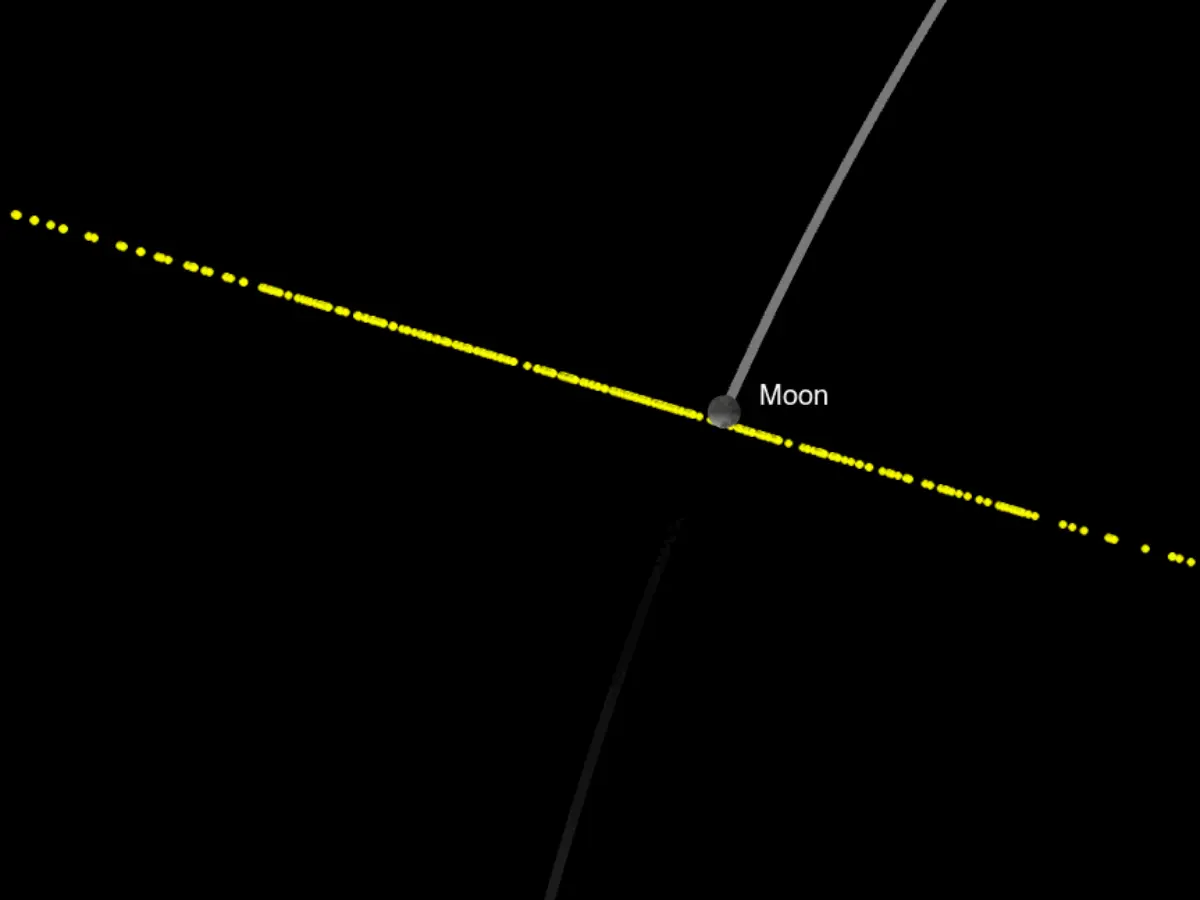
Asteroid 2024 YR4 will not collide with the moon, NASA has confirmed. Photograph: (NASA / JPL Center for Near-Earth Object Studies)
Asteroid 2024 YR4 will miss the moon in 2032. Scientists have calculated that not only will it miss Earth, but it will also not collide with the moon anymore, an event that had a high chance of happening until recently. James Webb Space Telescope takes the honours.
Asteroid 2024 YR4 will not hit the moon in 2032, NASA has confirmed. The space rock made a lot of noise after being discovered over a year ago. First, it triggered panic when scientists calculated its trajectory and found that it could collide with Earth. Later, more observations cancelled this threat, but pointed out that there is a high chance of it smashing into the moon. The probability of this happening kept increasing, and until January this year, it had a four per cent chance of hitting the Moon on December 22, 2032. But now NASA and ESA have confirmed that this is not happening. New observations made by the Near-Infrared Camera (NIRCam) on the James Webb Space Telescope show that it will pass the moon at a safe distance of more than 20 000 km. JWST pulled off an amazing feat when it observed the asteroid through narrow windows on February 18 and 26.
The asteroid is around 200 feet in diameter, around the size of a 15-story building. It had gone out of sight in the spring of 2025, leaving astronomers in a lull and without options to trace it until at least 2028. It was believed to have hidden from view for three years. But ESA’s Near-Earth Object Coordination Centre, NASA’s Center for Near-Earth Object Studies and the Webb mission huddled together to come up with a solution.
How James Webb helped calculate path of asteroid
They knew JWST could locate it, but they were also aware that it would be tough. An international team of astronomers found that they had two chances to still catch the asteroid that was not bigger than a tiny speck of dust in the vast universe at this time. Their calculations showed that the asteroid could be detected against a sparse backdrop of stars, whose position was known because of ESA’s Gaia mission.
Also Read: Asteroid to hit Earth in 2032? Scientists warn of space rock that can cause ‘severe damage’
Trending Stories
&imwidth=280&imheight=210&format=webp&quality=medium)
&im=FitAndFill=(700,400)&imwidth=280&imheight=210&format=webp&quality=medium)
&imwidth=280&imheight=210&format=webp&quality=medium)
&imwidth=280&imheight=210&format=webp&quality=medium)
&imwidth=280&imheight=210&format=webp&quality=medium)
&imwidth=280&imheight=210&format=webp&quality=medium)
&imwidth=280&imheight=210&format=webp&quality=medium)
&imwidth=280&imheight=210&format=webp&quality=medium)
&imwidth=280&imheight=210&format=webp&quality=medium)
&imwidth=280&imheight=210&format=webp&quality=medium)
&imwidth=280&imheight=210&format=webp&quality=medium)
&imwidth=280&imheight=210&format=webp&quality=medium)
&imwidth=280&imheight=210&format=webp&quality=medium)
&imwidth=280&imheight=210&format=webp&quality=medium)
&imwidth=280&imheight=210&format=webp&quality=medium)
&imwidth=280&imheight=210&format=webp&quality=medium)
&imwidth=280&imheight=210&format=webp&quality=medium)
&imwidth=280&imheight=210&format=webp&quality=medium)
&imwidth=280&imheight=210&format=webp&quality=medium)
&imwidth=280&imheight=210&format=webp&quality=medium)
&imwidth=280&imheight=210&format=webp&quality=medium)
&imwidth=280&imheight=210&format=webp&quality=medium)
&im=FitAndFill=(700,400)&imwidth=280&imheight=210&format=webp&quality=medium)
&imwidth=280&imheight=210&format=webp&quality=medium)
&im=FitAndFill=(700,400)&imwidth=280&imheight=210&format=webp&quality=medium)
&imwidth=280&imheight=210&format=webp&quality=medium)
&imwidth=280&imheight=210&format=webp&quality=medium)
&imwidth=280&imheight=210&format=webp&quality=medium)
&imwidth=280&imheight=210&format=webp&quality=medium)
&imwidth=280&imheight=210&format=webp&quality=medium)
&imwidth=280&imheight=210&format=webp&quality=medium)
&imwidth=280&imheight=210&format=webp&quality=medium)
&imwidth=280&imheight=210&format=webp&quality=medium)
&imwidth=280&imheight=210&format=webp&quality=medium)
&imwidth=280&imheight=210&format=webp&quality=medium)
They now had to track an almost invisible object millions of kilometres away, and precisely predict where it would be after seven years. JWST has a very small field of view as it is meant to scan cosmic objects billions of light-years away. The team was successfully able to achieve the exact precision needed to find and observe asteroid 2024 YR4. They were able to measure its orbit accurately and have ruled out a collision in 2032.
Asteroid 2024 YR4 impact on moon
Previously, scientists had warned that if the asteroid collides with the moon, it could carve a two-kilometre-wide crater and release tonnes of micrometeoroids that could threaten satellites and astronauts at the International Space Station. They even stated that this event could create the moon's very own meteor shower.