Rock, gas, gas, rock? Star system with 'strange disorder' baffles scientists

&imwidth=600&imheight=450&format=webp&quality=medium "Rock, gas, gas, rock? Star system with 'strange disorder' baffles scientists")
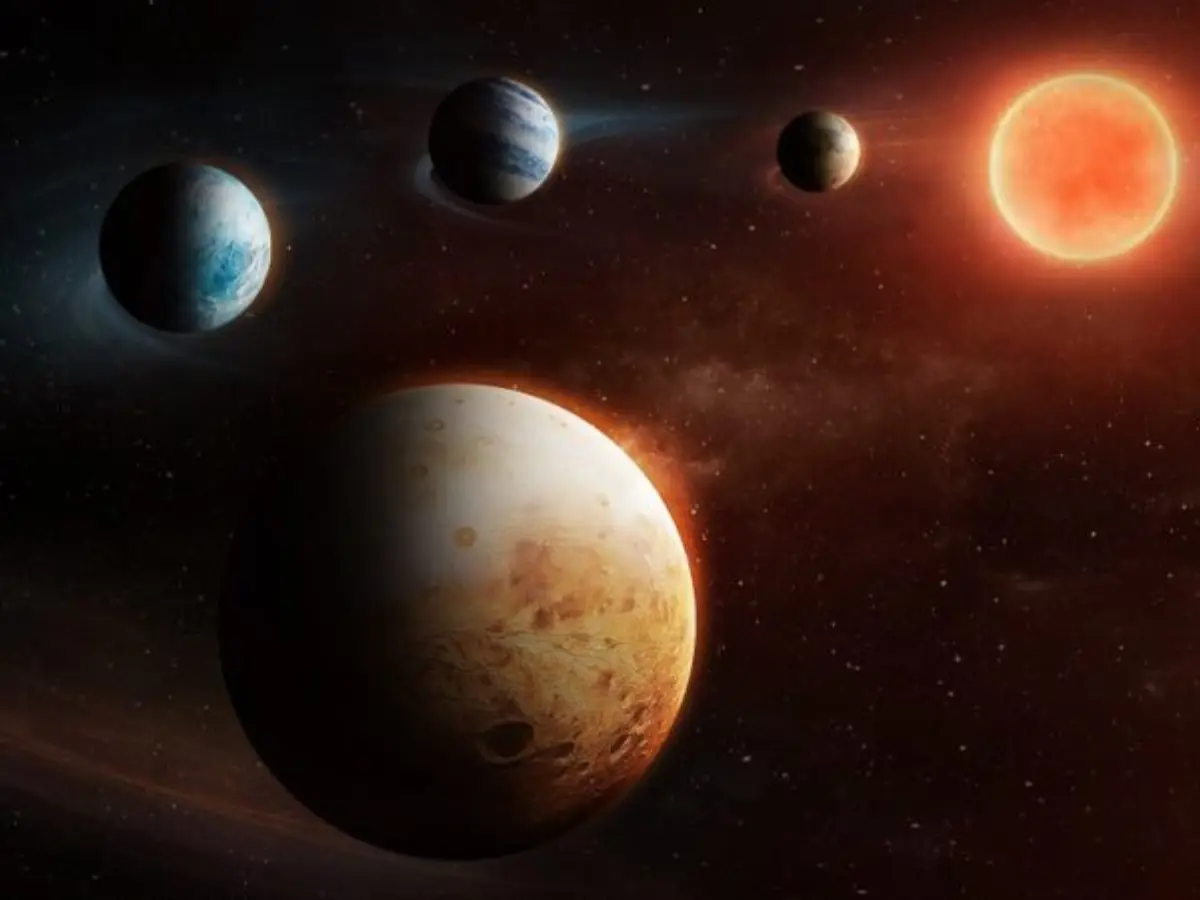
LHS 1903 is an inside-out star system. Photograph: (ESA/ University of Birmingham)
LHS 1903 is located 116 light-years away and has four planets, which are placed incorrectly. The placement of the planets goes against standard knowledge and has never been seen before. Scientists are calling it an inside-out star system.
A planetary system located at the farthest edges of the Milky Way has a planetary line-up that goes against basic scientific logic. A star called LHS 1903, located 116 light-years away from Earth, has four planets. Interestingly, the planet closest to it is rocky, followed by two gaseous planets and then...surprise...another rocky planet. Typically, rocky planets are closest to their star, while the gaseous ones follow them, and that's about it. This pattern of rocky to gaseous is the norm in every planetary system seen in the Milky Way. So why does the LHS 1903 system have a rocky planet at the end? The discovery was made by an international research team that observed the system using the European Space Agency's CHaracterising ExOPlanet Satellite (CHEOPS) telescope. The research was published on February 12, 2026, in the peer-reviewed journal Science.
How are planets formed?
LHS 1903 is a cool, faint red dwarf star with four planets around it, but they defy the basic playbook of planetary formation and placement. In any system, the rocky planets form nearer to the star since the radiation blows away all the gas. The rocky material left behind coalesces to form these planets, such as Mercury, Venus, Earth and Mars, in our solar system. The gas swept outwards and collects in the far reaches to form gas planets. This is where it ends. But the latest observation shows that for some reason, the LHS 1903 system has a rocky planet at the end. Scientists say either it lost its gas in the later stages of its life, or it never had any. Lead author, Thomas Wilson from the University of Warwick said, "This strange disorder makes it a unique inside-out system. Rocky planets don’t usually form far away from their home star, on the outside of the gaseous worlds."
Also Read: Not water or location, but the 'chemical Goldilocks zone' is the secret reason Earth exists
Each planet was born at a different time
Trending Stories
&imwidth=280&imheight=210&format=webp&quality=medium)
&im=FitAndFill=(700,400)&imwidth=280&imheight=210&format=webp&quality=medium)
&imwidth=280&imheight=210&format=webp&quality=medium)
&imwidth=280&imheight=210&format=webp&quality=medium)
&imwidth=280&imheight=210&format=webp&quality=medium)
&imwidth=280&imheight=210&format=webp&quality=medium)
&imwidth=280&imheight=210&format=webp&quality=medium)
&imwidth=280&imheight=210&format=webp&quality=medium)
&im=FitAndFill=(700,400)&imwidth=280&imheight=210&format=webp&quality=medium)
&imwidth=280&imheight=210&format=webp&quality=medium)
&imwidth=280&imheight=210&format=webp&quality=medium)
&imwidth=280&imheight=210&format=webp&quality=medium)
&imwidth=280&imheight=210&format=webp&quality=medium)
&imwidth=280&imheight=210&format=webp&quality=medium)
&imwidth=280&imheight=210&format=webp&quality=medium)
&imwidth=280&imheight=210&format=webp&quality=medium)
&imwidth=280&imheight=210&format=webp&quality=medium)
&imwidth=280&imheight=210&format=webp&quality=medium)
&im=FitAndFill=(700,400)&imwidth=280&imheight=210&format=webp&quality=medium)
&imwidth=280&imheight=210&format=webp&quality=medium)
&imwidth=280&imheight=210&format=webp&quality=medium)
&imwidth=280&imheight=210&format=webp&quality=medium)
&imwidth=280&imheight=210&format=webp&quality=medium)
&imwidth=280&imheight=210&format=webp&quality=medium)
&imwidth=280&imheight=210&format=webp&quality=medium)
&imwidth=280&imheight=210&format=webp&quality=medium)
&im=FitAndFill=(700,400)&imwidth=280&imheight=210&format=webp&quality=medium)
&imwidth=280&imheight=210&format=webp&quality=medium)
&imwidth=280&imheight=210&format=webp&quality=medium)
&imwidth=280&imheight=210&format=webp&quality=medium)
&imwidth=280&imheight=210&format=webp&quality=medium)
&imwidth=280&imheight=210&format=webp&quality=medium)
&imwidth=280&imheight=210&format=webp&quality=medium)
The researchers examined the theory that the planets may have switched places at some point in time, or the last one lost its gases. None of these options was feasible, and they came up with a more plausible explanation. According to the study, instead of forming all at once, each planet in the system was born one by one. Co-author Annelies Mortier, from the University of Birmingham, said, "The most compelling theory to explain the rocky planet says that LHS 1903 gave birth to its four planets one after another from the inner to outermost planet, instead of bearing quadruplets at once. This means that each planet evolved separately, sweeping up nearby dust and gas, with further out worlds waiting their turn for the next planet to form."
So by the time it was the fourth planet's turn, the environment was very different, and all the gases likely ran out, leaving it to become a rocky world. Scientists say it changes their understanding of how planets form, and has left them wondering whether it is an exception, or the first look at a new way planets form.