&imwidth=800&imheight=600&format=webp&quality=medium "Is this another Earth? Astronomers find Earth-like exoplanet 146 light-years away")
Astronomers have identified a candidate exoplanet almost 146 light-years from Earth that has a striking resemblance to Earth. The planet has almost the same orbital path as our Earth and has a star which is astonishingly similar to our Sun. Among the 6000 or more exoplanets known to earth this has the most potential.
How was the planet discovered?
The planet was discovered by amateur researchers in the citizen science project "Planet Hunters." It went through archive data from the Kepler space telescope of the K2 mission, which monitored the brightness of more than 5000 stars between 2009 and 2018. They observed only a single transit in 2017: the star dimmed slightly for about 10 hours. Normally, several such transit is required. But the researchers are confident about the size and orbital period from the duration and depth of this single signal.

Could this be another Earth?
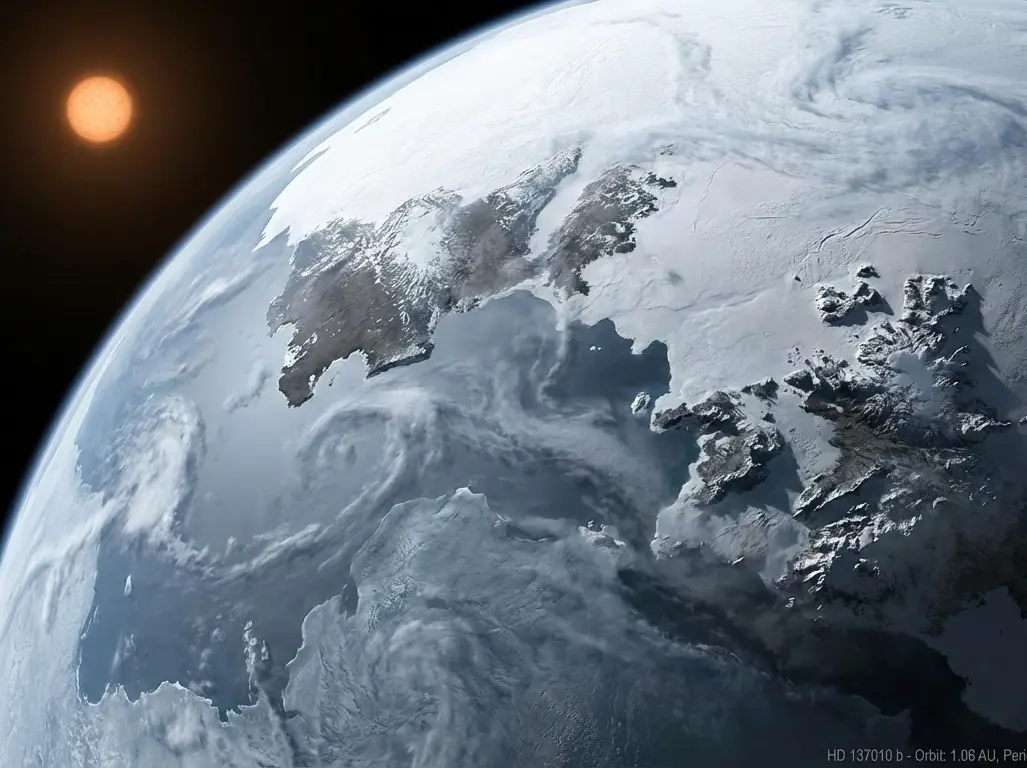
The planet identified as HD 137010 b has an orbit only six per cent larger than the Earth's and takes 355 days for one complete rotation. Its central star is also similar to our sun, only 1,000 degrees cooler and significantly less luminous. The planet receives less than a third of the energy that we receive from the sun. Its surface temperature is minus 68 to minus 70 degrees Celsius, which is more similar to Mars than a habitable Earth.
Is it habitable?
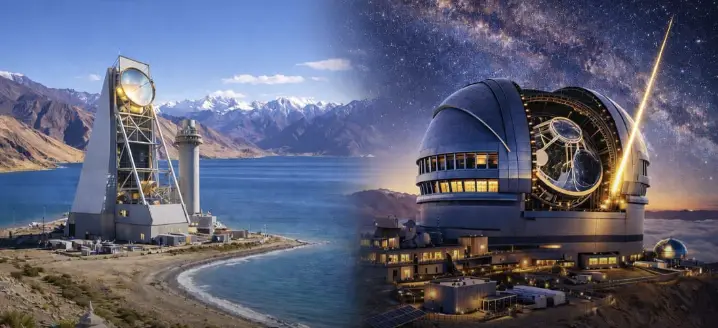
The exoplanet is placed at the outer edge of the habitable zone. In principle, liquid water could be possible at the orbit of the Earth. There is little information about the atmosphere of the new Earth; however, climate model shows that if the planet has a dense atmosphere with high carbon dioxide levels, a greenhouse effect could warm the surface and liquid water could be induced. Due to its short distance from its star, the planet would be an ideal candidate for future atmospheric analysis. This could focus on gases like oxygen or methane, which are considered possible indicators of life. But given its massive distance from our earth, it will take hundreds of thousands of years to reach the planet with the available technology.