Pet owners beware! Allowing your dog to lick your face can be unhealthy and even fatal

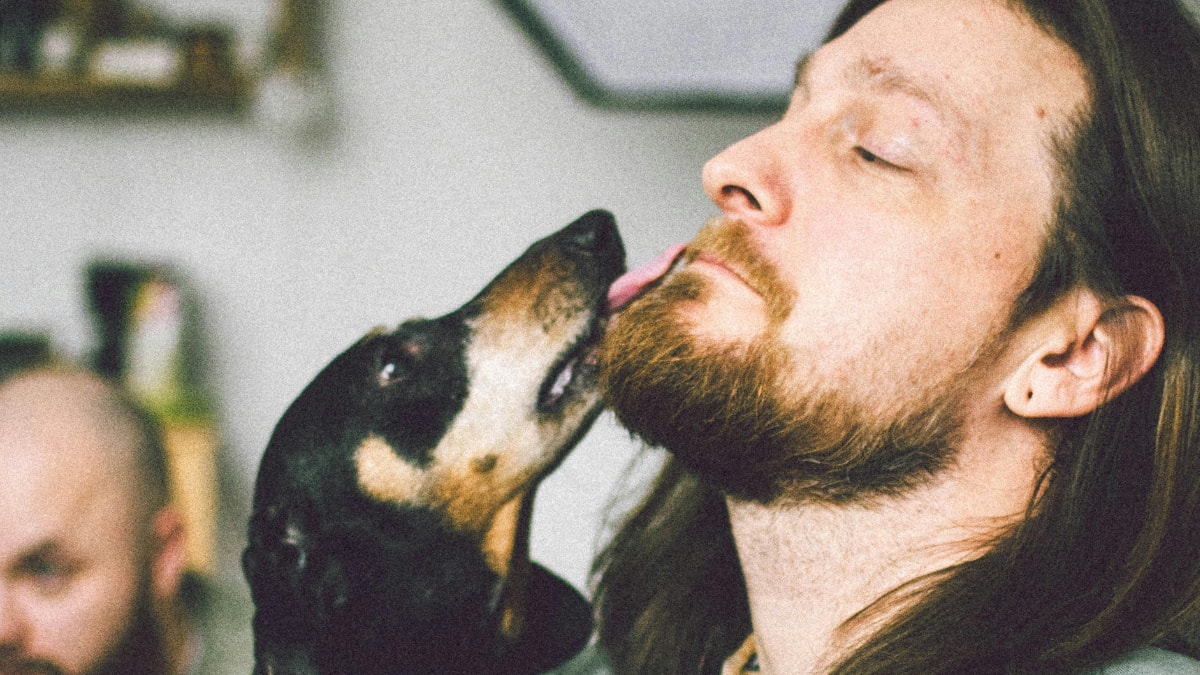
Dog Licking Owner's Face
Face-drenching licks by dogs feel delightful to dog owners. While some push their pooches away, others positively indulge in their pet's affection.
It's a heartwarming scene but not the healthiest thing for the dog owner. In an article published inThe Conversation, Jacqueline Boyd, a senior lecturer in Animal Science at Nottingham Trent University, describes how a dog's way of showing affection by licking can do more harm than good.

Licking is a crucial action for dogs. When a dog licks its mouth repeatedly, it could be a slight sign of stress or fear. They also use lip-licking as a behavioural response to their owner's emotional state. They lick their lips more frequently when they see angry faces.
Almost all canine owners report being licked on their face by their dog. However, for people who are immunocompromised, have open wounds, or have a dog that has a track record of eating faeces, it's best to avoid face licks.
According to Boyd, a dog's mouth has several microorganisms that are low risk for humans. However, there are rare cases when certain infections can pass from dogs to humans by bites, licks or scratches. For instance, Capnocytophaga canimorsus, a bacteria found in the mouths of up to 75 per cent of otherwise healthy dogs and cats, can cause life-threatening sepsis. Other microbes like Pasteurella multocida can also spread by contact with dog saliva, resulting in meningitis.
&imwidth=180&imheight=135&format=webp&quality=medium)
Viral video shows cross falling on Colombia priest, no official confirmation | WATCH
&imwidth=180&imheight=135&format=webp&quality=medium)
Rafale Marine fighter begins flight trials in Goa ahead of Indian Navy induction
&imwidth=180&imheight=135&format=webp&quality=medium)
Ranbir Kapoor apologises for Dussehra speech slip, clarifies remark at Ramayana event
&imwidth=180&imheight=135&format=webp&quality=medium)
Meta slapped with $25 billion fine in New Mexico over Facebook data practices, company plans appeal
&imwidth=180&imheight=135&format=webp&quality=medium)
WATCH: Woman IPS officer fires several rounds of AK-47, ignites debate online
&imwidth=180&imheight=135&format=webp&quality=medium)
EU probes Booking.com under Digital Services Act
&imwidth=180&imheight=135&format=webp&quality=medium)
Pakistan signs another defence pact even as Makkah Alliance shows no teeth. This time, it's with Qatar, Indonesia, Turkey
&imwidth=180&imheight=135&format=webp&quality=medium)
Ilhan Omar breaks silence over alleged marriage to her brother; Trump thinks it's 'really good answer'
&imwidth=180&imheight=135&format=webp&quality=medium)
US-Iran war: Bibi, Trump gamble on new Iran war to save themselves in polls
&imwidth=180&imheight=135&format=webp&quality=medium)
From Agni-V to Project Kusha: How are India’s indigenous missile systems and defence shield reshaping modern warfare
&imwidth=180&imheight=135&format=webp&quality=medium)
'It's a crime not to see this scene': Tehran puts Trump 'behind bars'
&imwidth=180&imheight=135&format=webp&quality=medium)
Will Rohit and Kohli play ODI World Cup 2027? BCCI president Manhas says board 'not in a position to comment'
&imwidth=180&imheight=135&format=webp&quality=medium)
Why websites around the world are suddenly going offline? What you need to know about PHP
&imwidth=180&imheight=135&format=webp&quality=medium)
US midterms 2026: What polls and prediction markets indicate about Congress
&imwidth=180&imheight=135&format=webp&quality=medium)
'You are a dummy, you are a stupid person': Trump loses temper with CNN, ABC reporters after questions about Russia sanctions
&imwidth=180&imheight=135&format=webp&quality=medium)
China's dancing robot turns violent bodyguard, lifts cars and fights intruders - Watch
&imwidth=180&imheight=135&format=webp&quality=medium)
16-foot doomsday fish in Chile triggers fears that the next earthquake is coming
&imwidth=180&imheight=135&format=webp&quality=medium)
US to get 850 F-35 stealth fighter jets under 10-year Pentagon-Lockheed deal
&imwidth=180&imheight=135&format=webp&quality=medium)
Are the US and Israel preparing for another major attack on Iran? Here's what report claims
&imwidth=180&imheight=135&format=webp&quality=medium)
Priyanka Chopra celebrates Dussehra 2026 with Nick Jonas and daughter Malti Marie | See pics
&im=FitAndFill=(700,400)&imwidth=180&imheight=135&format=webp&quality=medium)
New OTT releases this week (October 19-25, 2026): Gajab Raat to Chaar Yaar-8 titles to watch during Dussehra week on Netflix, Prime Video and more
&imwidth=180&imheight=135&format=webp&quality=medium)
‘I caution the president...’: Trump’s ex-press secretary warns after Zacharia’s exit
&imwidth=180&imheight=135&format=webp&quality=medium)
'Father of all bombs' vs 'mother of all bombs': Iran threatens US with new weapon as Trump hints at MOAB strike
&imwidth=180&imheight=135&format=webp&quality=medium)
Diljit Dosanjh's Oct 30 Delhi show hits roadblock, Delhi Police denies permission
&imwidth=180&imheight=135&format=webp&quality=medium)
Australia police arrest former national 100m champ Jake Doran for alleged child abuse
&imwidth=180&imheight=135&format=webp&quality=medium)
'Gyanu must go': CJP's Saurav Das, Ashutosh Ranka after release, despite Jantar Mantar protest undertaking
&imwidth=180&imheight=135&format=webp&quality=medium)
Kolkata airport: CISF detects ₹1.13 crore in US dollars hidden in bags of 2 Bangkok-bound passengers
&imwidth=180&imheight=135&format=webp&quality=medium)
Feds obtain DNA evidence that could prove Ilhan Omar married her brother: Report
&imwidth=180&imheight=135&format=webp&quality=medium)
US midterms 2026: Trump's approval rating hits record low as Democrats gain ground
Antibiotic resistance has become a concerning global health challenge. Canine saliva can also be a potential source of bacteria carrying antibiotic-resistant genes.
ALSO READ |Scientists develop recyclable ‘water batteries’ that never explode
A German study of 2,800 hospital patients and their companion animals in 2023 proved "that the sharing of multidrug-resistant organisms between companion animals and their owners is possible." However, the study identified only a handful of cases.
Thus, the researchers concluded that "cat or dog ownership isn't a significant risk factor for multidrug-resistant organism colonisation in hospital patients."
In the past, animal saliva has been used for wound healing, with some dogs specially trained to lick open wounds. However, there's no strong evidence which shows that allowing animals, especially dogs, to lick wounds will help them heal.
Having a dog can have healing effects on your mental health. However, allowing animals to lick open wounds can put the owner at an increased risk of infection.
(With inputs from agencies)