&imwidth=800&imheight=600&format=webp&quality=medium "133 light-years away, astronomers may have spotted a ‘monster’ exomoon for the first time")
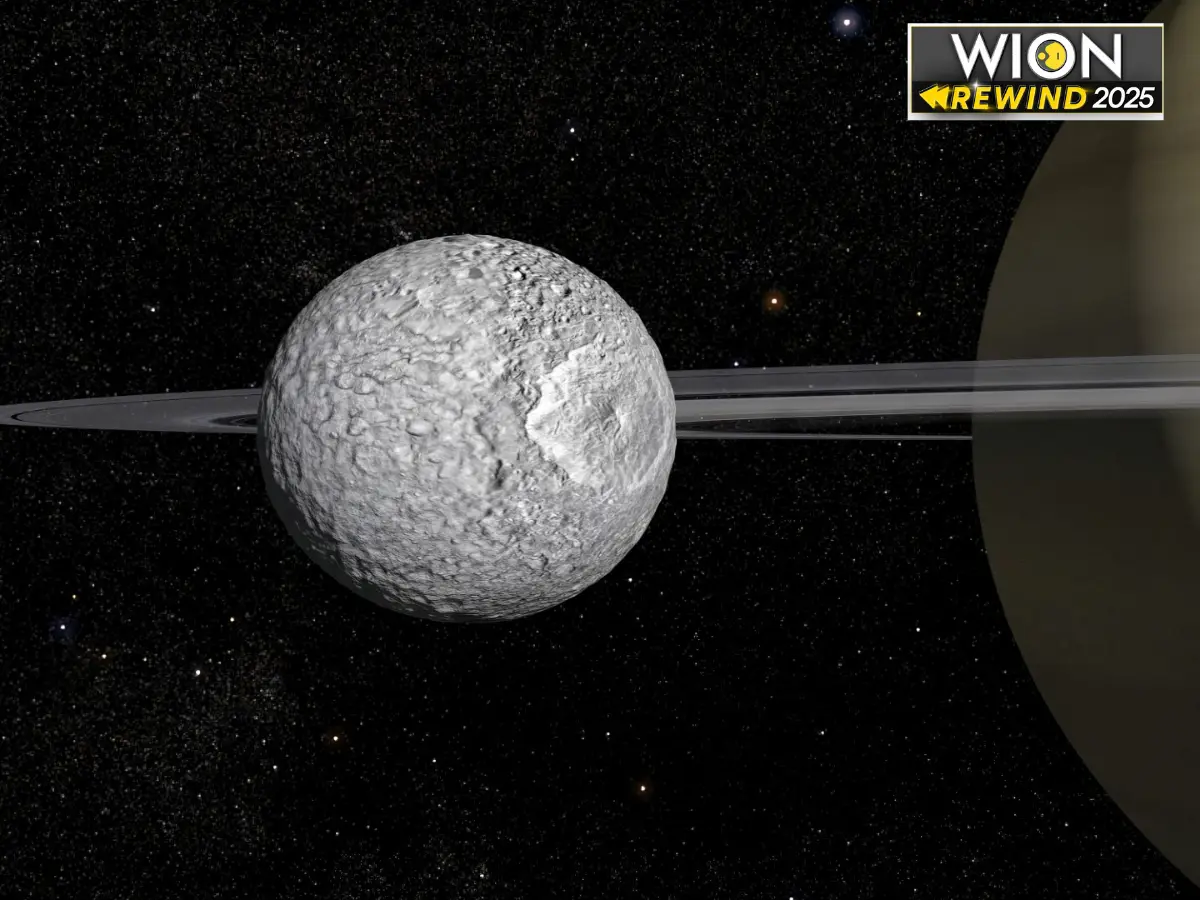
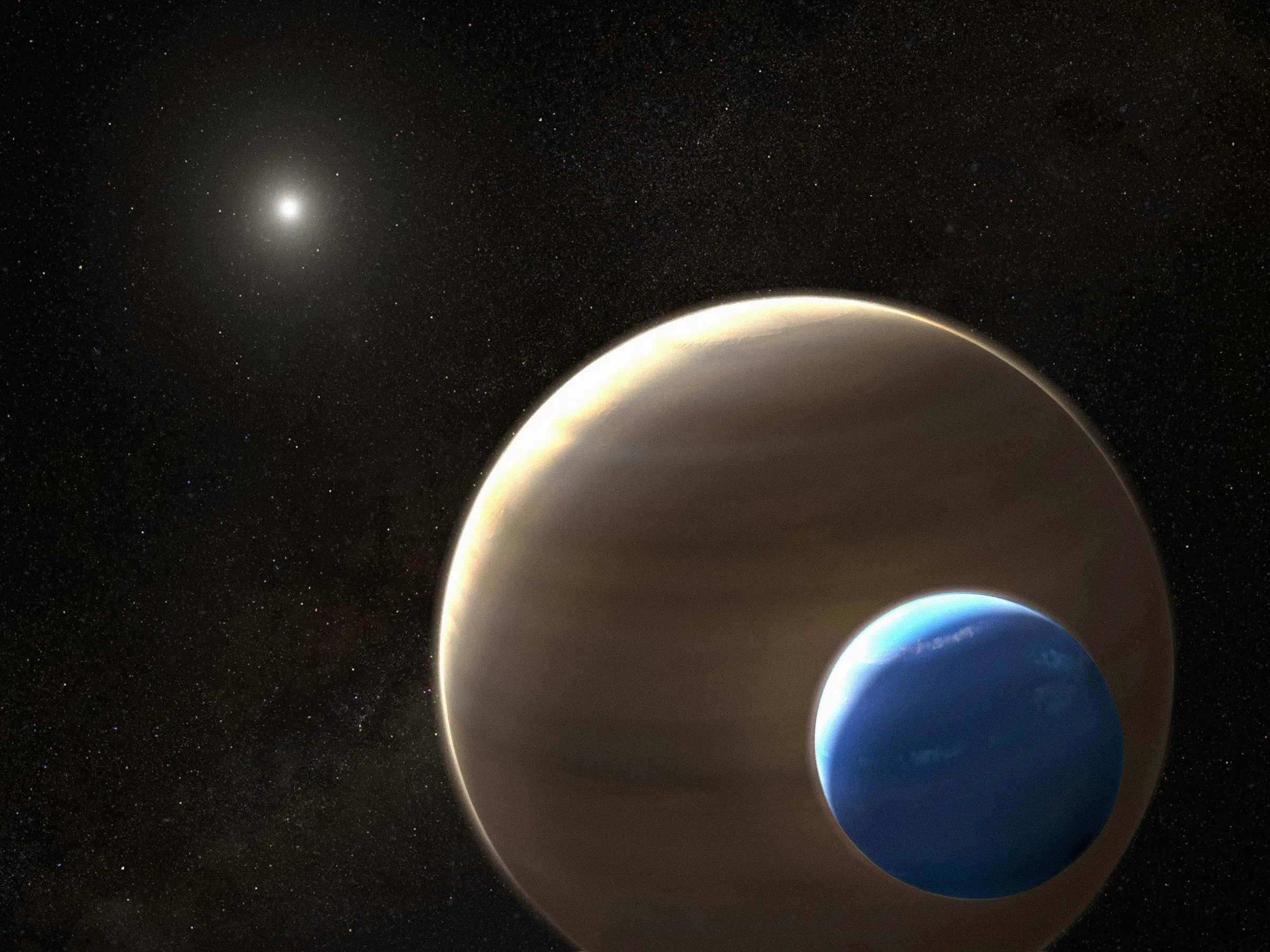
Scientists might have, for the first time, discovered an exomoon, a body similar to our Moon, but way beyond our solar system. NASA officially confirmed in September this year that it had, to date, found a whopping 6,000 exoplanets. But exomoons only existed in theory, and none had ever been found. However, some astronomers now claim that they might have stumbled across the first exomoon. The candidate in contention to be officially declared the first exomoon resides 133 light-years from Earth and orbits HD 206893 B, a Jupiter-like exoplanet. The researchers used a new approach to identify any exomoons near this planet. They repurposed high-precision astrometry, a mathematical approach to mapping out stellar distance, to check for moons. And they seem to have tasted success.
While the planet is equal to the mass of 28 Jupiters, its exomoon is around 0.4 Jupiter masses. This is around the size of seven Neptunes put together, the scientists said. This makes it an exomoon of monstrous proportions. The paper submitted by a group of astronomers led by Quentin Kral of the Paris Observatory in France is currently available as a preprint. It still needs to be checked and verified by other astronomers. Even though their finding still needs to be confirmed by the wider community, they believe that astrometry will emerge as a promising method to detect exomoons.

Also Read: 3I/ATLAS spewed pristine material as ice volcanoes erupted near the Sun, Spanish scientists find
Why are exomoons hard to find?
Scientists have often come across bodies that they thought were exomoons, only to be disappointed. Exomoons are much smaller than their planets, based on how things work in our solar system. Discovering verified exoplanets itself is a task, since confirmation is based on rigorous and multiple checks. According to NASA, there are nearly 8,000 exoplanets waiting for official status. On the cosmological scale, exoplanets are already considered extremely small. Since exomoons are even smaller, detecting them has been nearly impossible. The study adds that "there is no definition of what an exomoon is, and some ambiguity remains as to whether it may include, for instance, binary planets."
Trending Stories
)
Did India risk its US trade deal despite softer stance at BRICS?
)
Pakistan puts Pak Rs 70 lakh bounty on UN terrorist Masood Azhar; move draws skepticism in Delhi
)
First naval drone battle? Ukraine says Sargan 3000 sank Russian unmanned boat
)
Practical Magic 2 breaks Spidey spell over North American box office
)
'Huge destructive power': North Korea calls its latest missile launches 'live-fire drill' even as US dismisses 'immediate threat'
&im=FitAndFill=(700,400))
Meet top 5 batters fastest to 3000 runs in T20Is
)
‘Let’s go’: Newly declassified videos show dramatic rescue of US Air Force officers downed in Iran
)
Delhi’s balancing act: BRICS serves as a stage for West Asia diplomacy
&im=FitAndFill=(700,400))
Why European Meteor missiles use ramjet engines compared to standard US solid rockets
)
Iran, India agree to deepen humanitarian and political ties, President Pezeshkian says
)
‘Want to reset ties with India, have engagement based on mutual interests,’ says Bangladesh minister
)
Trump says Canada eager to reach a deal, it could come ‘fairly soon’ if Ottawa treats US farmers better
)
Turkish Airlines plane flies through a storm three times, triggering severe turbulence
&im=FitAndFill=(700,400))
Why Chinese PL-15 air-to-air missiles use dual-pulse motors compared to European interceptors
)
China thinned Himalayan troop presence in 2025, India defence report says; terms border situation 'stable'
)
800 million years old - Scientists discover 'fingerprints' of supercontinent Gondwana in ancient rocks
)
Russia proposes to build 360 kmph Ivolga FG trains in India: What happened on sidelines of BRICS
)
Israeli minister calls to strip Gaza film directors of citizenship
)
China discovers vast gold and silver 'mine' in the Pacific with unheard-of deposits
)
Russian drone hits Warsaw-bound train near Polish border, Zelensky accuses Moscow of ‘deliberate’ targeting
)
War is making Russia stronger? How Ukraine is shaping Moscow’s next generation of weapons
)
Plane carrying prominent figure crashes at Libya’s Misrata airport: Report
)
NEET-UG to move to computer-based test soon, NTA DG says ‘CBT is the future’
)
Woman removes all her clothes on American Airlines flight, performs 'indecent acts'; arrested
)
Liam Neeson sparks romance rumours after holding hands with Stella Stocker at TIFF 2026
&im=FitAndFill=(700,400))
New OTT releases this week (September 14-20, 2026): Lust Stories 3, Waiting Hai, Irumudi- 5 new titles coming on Netflix, Prime Video and more
)
Indian importers urge Bangladesh to lift export ban on 'Hilsa' fish ahead of Durga Puja
)
Did China give Iran intel before US base strike that killed 3 troops? Trump says, 'You’re right...'
)
Meghan Markle shares first glimpse of family life with Prince Harry and children in UK
)
Crude oil prices jump more than $107 per barrel following Houthi attacks on Saudi
&im=FitAndFill=(700,400))
From Rinku Singh to Mayank Yadav, 5 players dropped from India’s squad for Afghanistan T20Is
)
PM Modi and China's Xi offered to help resolve Russia-Ukraine war: Kremlin
)
Women's Asia Cup 2026: India denied trophy once again despite winning the title
)
Humans may lose control of AI: Anthropic CEO calls for slowdown, Altman, Musk back him
The researchers added that this exomoon candidate has "a tentative nature" and needs further confirmation using GRAVITY data. If all goes well and the measurements stick, we might soon have out very first exomoon.