World Sparrow Day: Where have the birds gone?

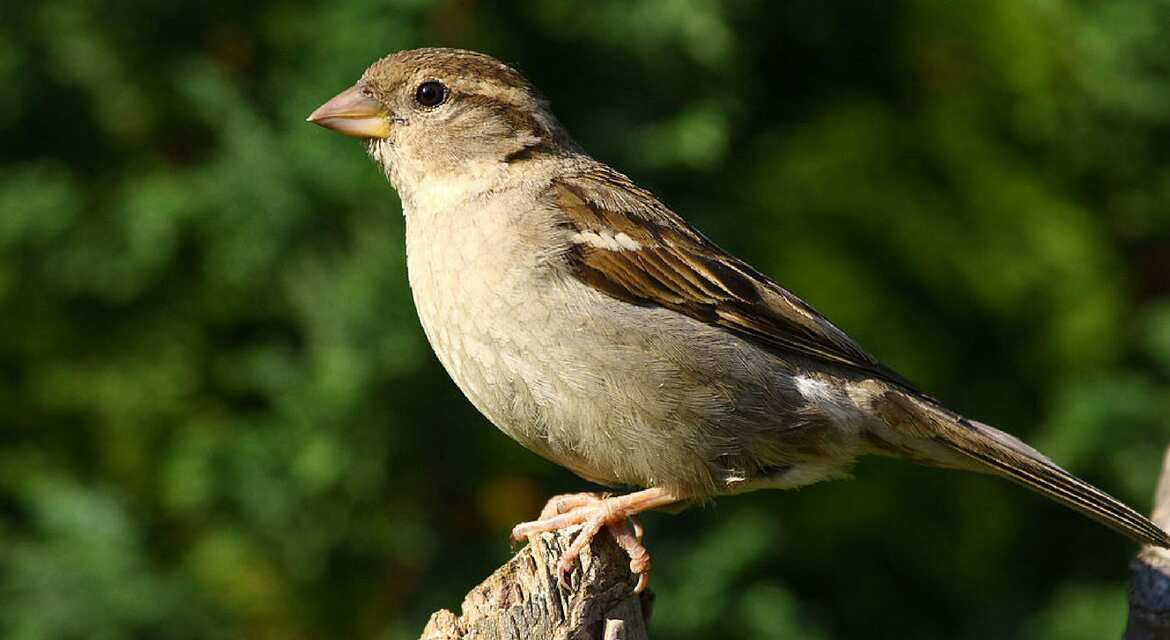
World Sparrow Day
Abrupt disappearance of sparrows must be seen as an ecological indication to humans about forthcoming environmental menace
Photo Attribution
Where have the sparrows gone?
When was the last time you saw a sparrow chirping near your window?
The house sparrow has been one of the oldest companions of humans. Poets of all languages have praised of their trust and love for each other. Sparrows have been associated by the ancient Greeks with Aphrodite- the goddess of love, due to their perceived lustfulness. The association was inscribed by writers such as Shakespeare and Chaucer.

The familiar bird prefers to live around agricultural areas, and for several, human settlements are a primary habitat. House sparrows for a long period of time have been known to reside around buildings.
However, over the last 5 decades, sparrows have deserted human company in urban areas, preferring the countryside to make short visits to close by human habitats.
World Sparrow Day
The sudden and puzzling alienation led to the species being included in the IUCN Red List of Threatened Species in UK.
World Sparrow Day is observed on March 20 across the world as an international initiative taken in 2010 by Nature Forever Society of India in collaboration with Eco-Sys Action Foundation (France) and numerous other national and international organisations across the world. It aims to provide a platform for advocacy and spreading awareness on the need to conserve biodiversity of lower conservation status. Delhi adopted House sparrow as the state bird.
&imwidth=180&imheight=135&format=webp&quality=medium)
100,000 strikes in 3 years: How October 7 redefined Israel's war
&im=FitAndFill=(700,400)&imwidth=180&imheight=135&format=webp&quality=medium)
Happy Birthday Rekha: Watch these 7 evergreen Bollywood hits on Netflix, Prime Video and more
&imwidth=180&imheight=135&format=webp&quality=medium)
‘Your people don’t even let us near it’: IAF chief’s blunt response on US F-35; India yet to decide on Russia’s Su-57
&imwidth=180&imheight=135&format=webp&quality=medium)
Real or fake? PIB fact-checks protest videos; Delhi Police clarifies on Gurdwara Bangla Sahib clip
&imwidth=180&imheight=135&format=webp&quality=medium)
UK navy hit by espionage scandal: Sailor accused of spying for Russia | Gravitas
&imwidth=180&imheight=135&format=webp&quality=medium)
Delhi on high alert for CJP protest: Delhi police to use body cams to 'prove whether we did anything’; Pink Force, RAF, 35,000 personnel deployed
&imwidth=180&imheight=135&format=webp&quality=medium)
‘Never-ending flow of cheap labour’: JD Vance hits back at Indian-origin Congresswoman over US green card curbs for major tech companies
&imwidth=180&imheight=135&format=webp&quality=medium)
Panama president declares ‘major disaster’ after powerful 7.7-magnitude earthquake; over 80 aftershocks recorded
&imwidth=180&imheight=135&format=webp&quality=medium)
'Jantar Mantar not the story of India': BJP's Sambit Patra claims 'anarchists' tried to hold Delhi captive
&imwidth=180&imheight=135&format=webp&quality=medium)
BJP MP Ravi Shankar Prasad slams CJP protests, calls it 'shadow boxing for AAP'
&imwidth=180&imheight=135&format=webp&quality=medium)
Riyadh airport hit in missile attack, dozens injured; 5 in intensive care
&imwidth=180&imheight=135&format=webp&quality=medium)
'Spent Rs 2,000 cr to elect Trump': Elon Musk bought US President's loyalty by writing the biggest political cheque in human history
&imwidth=180&imheight=135&format=webp&quality=medium)
Powerful 7.7 magnitude earthquake strikes Panama, tsunami warning issued
&imwidth=180&imheight=135&format=webp&quality=medium)
US mid-term elections: What are PACs - Unique American System that lets corporates shape voting
&imwidth=180&imheight=135&format=webp&quality=medium)
Elon musk & India clash over Starlink's market entry terms
&imwidth=180&imheight=135&format=webp&quality=medium)
INDIA bloc plans mega protest on Monday amid Delhi crackdown, Wangchuk's warns to launch 'padyatra'
&imwidth=180&imheight=135&format=webp&quality=medium)
Who is Ajinkya Shinde, announced to lead CJP protest after Dipke, Das and Ranka's detention?
&imwidth=180&imheight=135&format=webp&quality=medium)
'Ouch!!! That must hurt': Kangana Ranaut hails Kamal Haasan's sharp reply to Elon Musk over Starlink row
&imwidth=180&imheight=135&format=webp&quality=medium)
‘Right to protest must be protected, but...’: Delhi Police reveals why it denied CJP permission for October 10 Jantar Mantar protest
&imwidth=180&imheight=135&format=webp&quality=medium)
Hamas used double agents, deceived Israel to carry out October 7 massacre
&imwidth=180&imheight=135&format=webp&quality=medium)
NIA files FIR in Flydubai hijack attempt and attack on Smit Machchhar, probes ‘larger conspiracy’
&imwidth=180&imheight=135&format=webp&quality=medium)
Portugal Federation confirms Cristiano Ronaldo’s return to national team despite suspension
&imwidth=180&imheight=135&format=webp&quality=medium)
All 22 Indian seafarers safe in attack on Panama-flagged tanker off UAE coast
&imwidth=180&imheight=135&format=webp&quality=medium)
‘Time for Ukraine to get a new president’: Trump lashes out at Zelensky over Russia strikes
&im=FitAndFill=(700,400)&imwidth=180&imheight=135&format=webp&quality=medium)
Food shortages, suicide attempts and more: USS Abraham Lincoln returns to US after 321 day deployment — What happened aboard the US carrier?
&imwidth=180&imheight=135&format=webp&quality=medium)
Thai queen becomes first reigning monarch to fly jet solothailand #queen #wion
&imwidth=180&imheight=135&format=webp&quality=medium)
‘Every game against Liverpool is special’: Erling Haaland ahead of Anfield clash
&imwidth=180&imheight=135&format=webp&quality=medium)
Rahul Gandhi calls Modi, Shah ‘cowards’ amid CJP protest crackdown in Delhi
&imwidth=180&imheight=135&format=webp&quality=medium)
Four years, 3 licenses, zero launch: Why is Elon Musk’s Starlink still struggling to crack Indian market? EXPLAINED
&imwidth=180&imheight=135&format=webp&quality=medium)
AUS vs SA 1st Test, Day 2: Renshaw shines with 190 as Australia dominate South Africa
&imwidth=180&imheight=135&format=webp&quality=medium)
Why was CJP founder Abhijeet Dipke detained? What Delhi Police said
&imwidth=180&imheight=135&format=webp&quality=medium)
Putin conveys Iran’s proposal to Trump, offers to take Tehran’s enriched uranium
&imwidth=180&imheight=135&format=webp&quality=medium)
'It’s been 12 hours': CJP writes to Delhi Police, demands release of Dipke, Saurav Das and Ranka
Reasons for decline
Contrary to their small size, sparrows are strongly immune birds. Their abrupt disappearance must be seen as an ecological indication or warning to humans about forthcoming environmental menace. Several environmentalistshave put theories on the table to account for sparrows to abandon human habitat and they all conclude to the fact that the changes in the human lifestyle and mindless urbanisation is increasingly incompatible with the conservative lifestyles of sparrows and is depriving the species of their natural habitat.
These changes include the unavailability of food in form of tiny insects due to thereduction of vegetation in modern adaptations, overuse of insecticides outdoors and insect repellents indoors and concrete buildings with no nesting spaces.
Further, noise and air pollution from vehicles in urban settlement could be deterrents. Moreover, the rise in electromagnetic radiations from mobile phone towers and the excessive use of wireless devices in houses have caused the birds to move away. It could be the combined effect of these environmental pollutants that has forced sparrows to go away from their long-trusted companions.
Things you did not know about the little bird
- The population of the bird has fallen by 99% in some areas
- When their population was abundant about century ago, there were clubs whose members competed to kill the most birds
- Though a commonly observed resident of Britain and India, it’s thought to be a native north from North Africa.
- They are often seen as social birds, nesting together in colonies.
- They are non-migratory, but urban flocks traditionally moved to the countryside in the late summer to feed on the ripening grain fields.
- Most pairs raise two to three broods in a year.
- Incubation period is of about 11 days, and within two weeks, the young ones leave the nest.
- Cats are major predators of the species. They target the inexperienced infants when mothers leave the nest
- Sparrows fly at 24 miles/hour. When in danger, they can go up to 31 miles/hour.
- Sparrows can survive for 4-5 years in the wild
What can we do for them?
Placing feeders and bird houses outside the house or in the courtyard/balcony
Placing water bowls during summer months to keep birds hydrated
Create a welcoming environment for birds by growing plants and hedges around the house