Aliens cannot live on a planet where this one element is present, scientists say

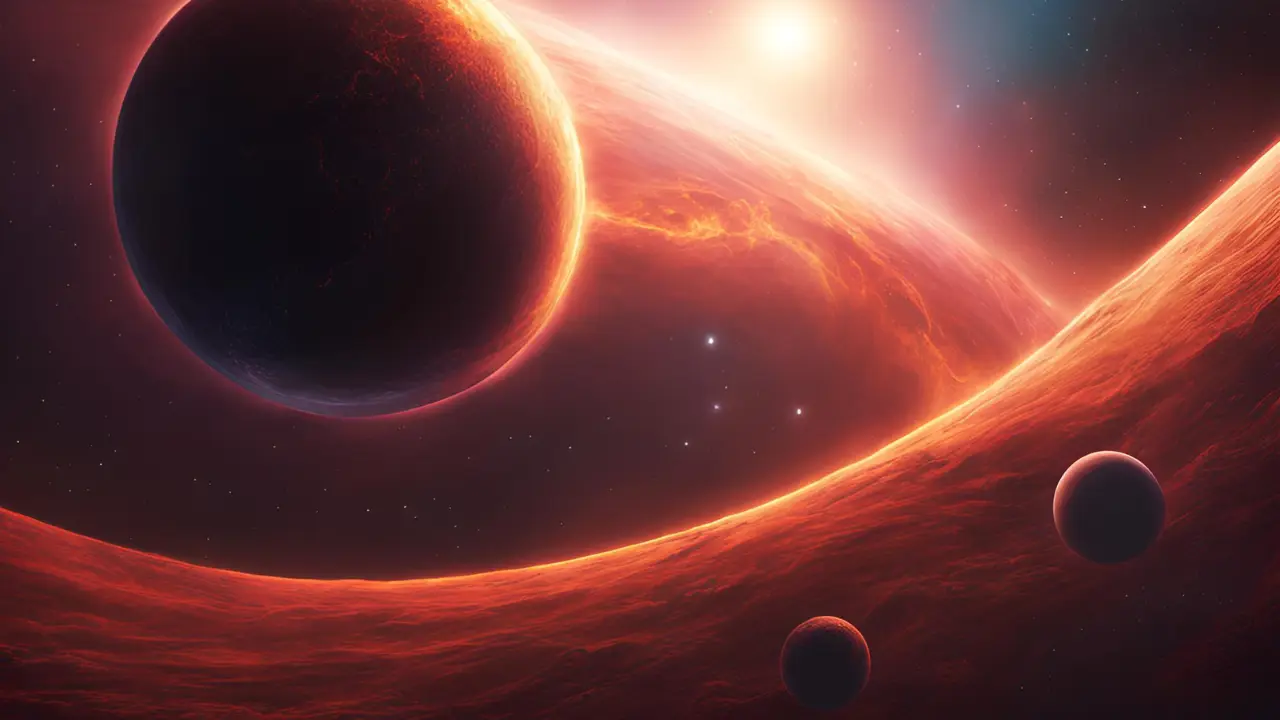
Science & Tech News - Space News - Alien life might exist somewhere in the universe, but we still don't know for sure. However, there is one way to know where it might not exist.
Scientists have been for years trying to find alien life in the vast expanse of the universe. Several probes have been launched that are still drifting in space and dozens of high-end telescopes aim to learn the possibility of life on another planet. While we are still waiting to learn if someone else is out there or not, astronomers have now cancelled out certain bodies where life can never exist so no time needs to be wasted in exploring such exoplanets.
Sulfur has emerged as the key in this case, with scientists saying that its existence on a planet is a clear indication that it is uninhabited. So, such a body can instantly be struck off the list of potential candidates where life might exist.

Searching for life through biosignatures
Right now, the way to know about the existence of life on another planet is through the presence of biosignatures, the atmospheric gases produced by life, on a planet. The problem is that it is not possible for high-end equipment, such as the James Webb Space Telescope, to identify biosignatures on nearby planets. The Habitable Worlds Observatory, which will soon be up and running, would be able to scan only a few potentially habitable exoplanets.
Looking for water vapour
)
Nigeria: Protesters take to the streets, police fire shots
)
US-Iran war: Tehran draws red lines — seven demands before any peace talks
)
Russia-Europe tensions: Polish PM warns Russian attacks could test NATO's unity
&im=FitAndFill=(700,400))
‘Not the US or China’: These are the countries leading the world in arable land
)
EXCLUSIVE | Singer Hanita Bhambri on her Toxic debut, working with Vishal Mishra and more
)
Mark Carney mimics Trump in hilarious moment over C$70 billion clean-energy investment; room erupts in laughter
)
Delhi voter roll shake-up: 3.31 million electors flagged in SIR review
)
Aravana prasadam shortage at Sabarimala temple in Kerala triggers protests, TDB questioned
)
‘End of my career...’: NSA Doval recalls tense Sikkim mission when China captured Indian intelligence team
)
Report: Iran rebuilding Taleghan 2, nuclear site tied to past weapons research, hit twice by Israel
)
Trump defends AI amid growing alarm, announces new 'AI force' and promises an 'AI czar'
)
Iran sets 7 conditions to end war with US: What are Tehran’s demands?
)
Trump announces ‘AI Force’ as debate grows over AI risks and regulation
)
China may have gained access to US's classified F-35 jets; parts meant for repairs diverted to Hong Kong, sparking Pentagon inquiry
)
Gaza under attack: Health chief's son killed in IDF strikes
)
Man breaks open wall hiding hundreds of books since 15 years
)
Arvind Kejriwal, family members, Delhi CM Rekha Gupta get SIR notices
)
AI actress Tilly Norwood glitches mid-interview, switches from English to Chinese | Watch
)
Saudi vs Houthis: Houthis claim missiles & drones used in attack on key Saudi sites
)
Ed Sheeran addresses Macklemore's removal, Gaza conflict during Philadelphia concert: 'I cannot hide how I feel'
)
Nepal forms 7-member panel to probe August 26 Bhotekoshi flood from source to downstream
)
‘Will go to any extent’: Pakistan vows to defend Saudi Arabia amid Houthi attacks
66 years of the Indus Waters Treaty: How India and Pakistan settled a bitter river dispute
)
The Verdict | When precision fails: US commits war crime in Minab school strike, UN finds
)
9 women found dead near Johannesburg: South Africans rally, demand 'enough' to femicide
)
Kampala-Ankara rift deepens: Uganda suspends military ties, seeks Fred Lumbuye's extradition
)
Several petrol pumps, other businesses to refuse UPI payments above Rs 2,000 from Oct 16: Is it legal?
)
US-Iran war: Tehran sets seven conditions to re-engage in talks with US
)
Reacher star Alan Ritchson opens up about alleged blackmail, suicide attempt during difficult period
)
Africa is splitting, and a lot sooner than estimated, giving way to a new ocean
)
Flying cars in UAE: Ras Al Khaimah signs deal with Chinese company to test new transport
)
West Indies Squad for India Series: Hetmyer included for T20Is, Holder rested
)
Trump bans CNN, MS NOW and Politico from White House over ‘FAKE NEWS’
)
Trump 2.0: Dark days ahead for America’s ‘imperial presidency’
&im=FitAndFill=(700,400))
How many F-35s does Britain, Japan and Israel have?
)
Harry Brook targets long reign at top of T20I rankings after Sri Lanka sweep
)
Russia's deadly Ukraine strikes kill 2 in Sumy, hit Dnipro mall
)
Russia holds first parliamentary elections since the beginning of the Ukraine war
&im=FitAndFill=(700,400))
Meet top 5 Indian batters with fastest T20I centuries
)
Instead of searching for biosignatures, scientists are focussing on a planet's ability to host life. Looking for the presence of water vapour in its atmosphere is one such way. If a planet has a lot of water vapour, the chances of it being able to host life are high.
Also Read: 'Cloudgazing on Mars': NASA's Curiosity rover captures colourful clouds on Mars
But this method also has a hindrance. Some planets, like Earth and Venus, appear to be similar when looked at from great distances. However, we know that they are not the same. Venus has a thick atmosphere, with temperatures reaching over 800 degrees Fahrenheit (427 degrees Celsius) and a hostile environment.
Clue for alien life lies in one gas
In this quest, a new preprint paper suggests looking for sulfur dioxide. Earth is warm and wet where rains wash away sulfur dioxide from the atmosphere. So the presence of this gas becomes a good indication of life when looking outwards. However, a small twist in the tale here is that even Venus has very little sulfur in its upper atmosphere. This is because ultraviolet radiation from the sun leads to reactions that convert sulfur dioxide to hydrogen sulfide. It moves downwards into the lower atmosphere, where it can't be detected.
When looking for life elsewhere, red dwarfs offer a solution to the above glitch. They emit very little ultraviolet radiation and a dry, uninhabitable planet around a red dwarf would hence have a lot of sulfur dioxide in its upper atmosphere. Red dwarfs are present in abundance not only in our galaxy but also in our nearest neighbours, Proxima Centauri and TRAPPIST-1. Many of them host planets as well. This makes the sulfur equation a practical way to strike out candidates when looking for otherworldly life.
It cannot tell where life exists, but it can tell where life doesn't exist. A planet revolving around a red dwarf and containing lots of sulfur can immediately be ignored as a potential candidate for hosting life.