
&imwidth=800&imheight=600&format=webp&quality=medium "Straits of Hormuz highlights limits of America’s military power")
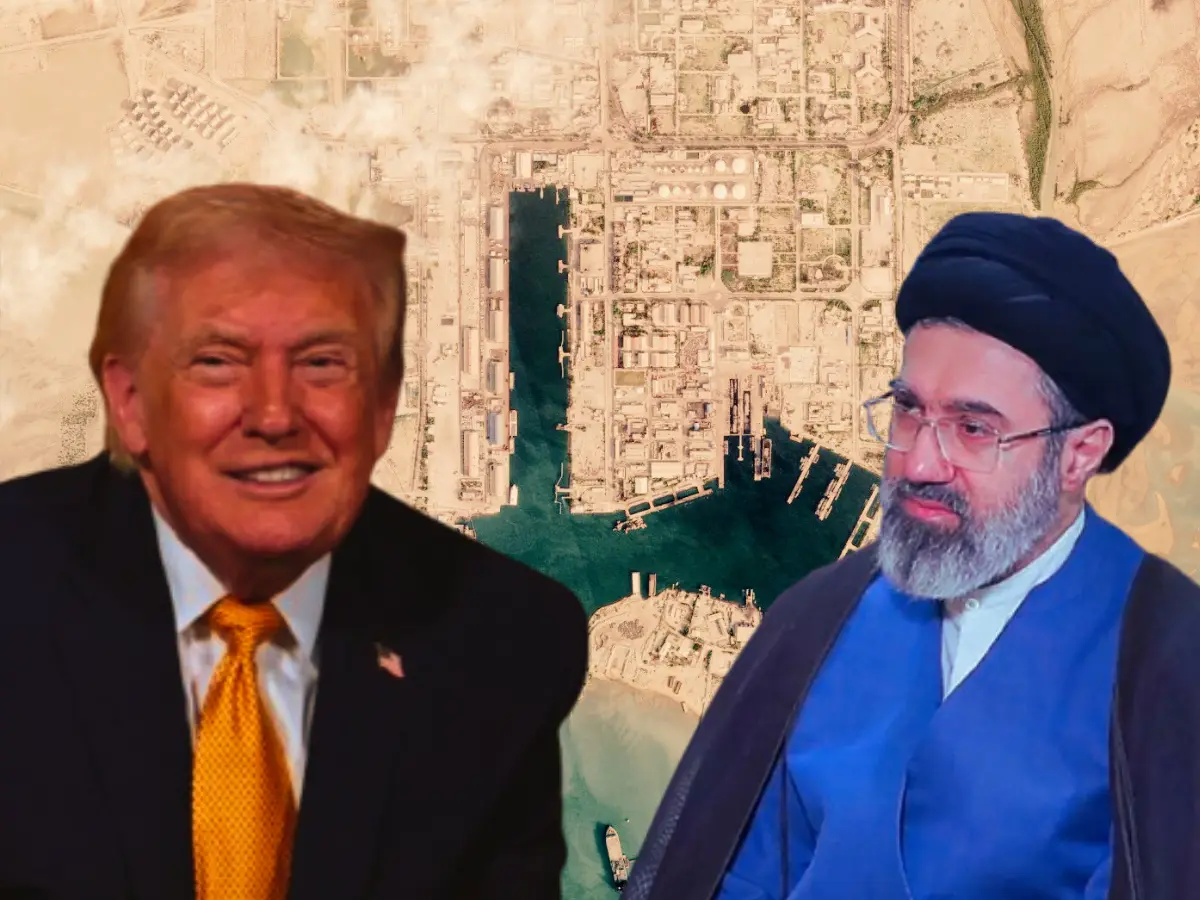
After a month of unleashing its overwhelming air power on Iran, one thing is becoming clear: the United States cannot keep the Strait of Hormuz open with bombs and rockets. Iran holds the key to the vital waterway. Its closure ignited the worst global energy supply shock in history. By the end of the first month of the war, announced by President Donald Trump in a pre-dawn social media post on February 28, the US Central Command reported that its forces had struck more than 10,000 military targets inside Iran, including 92 percent of its naval vessels, key missile facilities and numerous weapons production factories.
In terms of military tactics, Operation Epic Fury as the Pentagon termed it, has been a resounding success. But it has done nothing to allow free passage through the Straits to an estimated 2,000 oil tankers and bulk carriers stalled in the Persian Gulf for fear of being hit by Iranian missiles or mines. Faith Birol, the Executive Editor of the International Energy Agency, described the closure as “the worst global energy supply shock ever.” The Strait of Hormuz connects the Persian Gulf to global markets and carries roughly a quarters of the world’s oil exports and a fifth of its liquefied natural gas.

In the first meeting of his cabinet since he announced his war, Trump had an explanation for the effectiveness of the blockage announced by Iran, whose mountains overlook the waterway. Told by a member of his team that the air campaign had a 99 percent success rate, he said that was not enough. “The problem with the straits is this,” Trump said. “Let’s say we do a great job. We say we got 99 percent. One percent is unacceptable, because one percent is a missile going into the hull of a ship that cost $1 billion. If we do a 99 percent decimation, that’s no good.”
That reflects the thinking of military leaders who had warned him that air power alone has never forced a country into submission. Iran appears no exception although it is severely weakened by the killing of its Supreme Leader and the first two or three tiers of potential successors. But where the Strait of Hormuz is concerned, Iran enjoys a huge advantage in the asymmetrical war now unfolding. The mountainous terrain on either side of the narrow corridor provide numerous hiding places for men and missiles.
Trending Stories
)
The Early Spring is proof not everyone can talk about their real feelings, and it is perfectly OK
)
UN votes to ‘correct the map’ as India backs fairer world view
)
Nigerian Navy discovers 99,000 litres of suspected stolen, illegally refined products as it intensifies anti-crude oil theft operations
)
Who is Aditi Paudel? 17-year-old becomes Japan's first literacy ambassador
)
Bengaluru: Officials find 40 kg expired chilli at chairman's club
)
Jaishankar rejects trade link to ending Ukraine war
)
Israeli strikes on Lebanon kill three, injure 23 despite truce
)
Alpine glacier was covered with sheep wool sheets to prevent melting. It worked
)
South Korea mulls deploying military assets to Strait of Hormuz
)
World's fifth-largest economy, British army can't afford to train
)
Breaking | Vance takes the podium: First White House briefing since Leavitt's exit
)
Taiwan raises 'concerns' over China's missile test
)
BRICS 2026: $1 trillion sovereign capital set to converge in Delhi for first iBRICS Summit
)
What is Iran's Pickaxe Mountain that Trump has again threatened to bomb?
)
UN votes to correct world map that visually shrank Africa for 450 years
)
Former NewJeans member Danielle launches YouTube channel, hints at new solo journey
)
Bangladesh batter Towhid Hridoy creates history with 350 not out in South Africa
)
Brendan Fraser’s transformation fuels The Mummy 4 excitement as fans welcome back Rick O’Connell
&im=FitAndFill=(700,400))
Krishna Janmashtami 2026: From Dhaniya Panjiri to Makhana Kheer- 5 best sweet dishes perfect for celebrating Lord Krishna’s birth
)
Donald Trump plans to travel to Ireland on Qatari-donated jet amid security concerns
)
Nazi-looted art to return to Jewish heirs
)
Eight killed in Kerala’s Thrissur after car rams into lorry parked on highway
&im=FitAndFill=(700,400))
Why Russian fighter jets use bulky, low-pressure tyres compared to US jets
)
FBI-wanted fraud accused arrested in Jalandhar over $600,000 scam
&im=FitAndFill=(700,400))
Why US tanks weigh over 20 tons more than Russian tanks
&im=FitAndFill=(700,400))
New Friday OTT releases (September 4, 2026): GDN, Dhamaal 4, Jagamae Sangeetham- Watch 6 new movies and TV shows on Netflix, Prime Video and more
)
Killing the Himalayas slowly: Human urine is melting a glacier on Mount Everest
Dislodging them from the air to get to the 100 percent Trump set out as a war aim is virtually impossible. That realization appears to have prompted the decision to dispatch 2,200 Marines who arrived in the region this weekend. They are due to be joined soon by another Marine Expeditionary Unit and a combat brigade from the Army’s elite 82 Airborne Division. Eventually, the combined force of “boots on the ground,” the standard U.S. phrase for uniformed soldiers, is predicted to rise up to 15,000. What their orders are is unclear. But what is clear is that their deployment was blessed by a commander-in-chief who won elections on the promise not to start wars and get entangled in the most complex area of the world.
Trump’s approval ratings have plunged sharply since he announced the war, arguing it was necessary “to defend the American people by eliminating imminent threats from the Iranian regime.” Neither Trump nor any of his aides have explained what “imminent” meant. Those Americans who were awake at 0230 last Saturday morning might be forgiven to fear that a swarm of nuclear-tipped intercontinental ballistic weapons were hurtling towards Washington and otter major American cities.
Omission and exaggeration are important tools in propaganda. One glaring omission in Trump’s pre-dawn video was the word “Israel.” In fact, Israeli Prime Minister Benjamin Netanyahu issued a war declaration video at exactly the same time as Trump. It sad: “My brothers and sisters, citizens of Israel. A short while ago Israel and the United States embarked on a joint campaign, Operation Lion’s Roar. The aim of the operation is to out an end to the threat from the Ayatollah regime in Iran.”
For most Americans, the joint nature of the war was not immediately clear But when it became obvious, it deepened the anger of voters who opted for Trump in the 2024 elections because of his promise not to start wars and get entangled in conflicts abroad. The most furious public response came from a close aide of Trump, Joe Kent, the Director of the National Counterterrorism Center. On March 17, he resigned from his post with a public letter that shocked many of the president’s most fervent supporters. “After much reflection, I have decided to resign from my positon,” the letter said. “I cannot in good conscience support the ongoing war in Iran. Iran posed no imminent threat to our nation and it is clear that we started this war due to pressure from Israel and its powerful American lobby.”
Questioned by reporters about Israel’s influence on his decision, Trump insisted that it was his alone. But war on Iran was reported to have been the topic of a three-hour meeting between Trump and Netanyahu during an unexpected meeting to the White House on February 11.
Since the bombs began falling, Trump has made a number of bizarre statements, including “we’ve won” and “the war is very complete, pretty much.” He has called for Iran’s “unconditional surrender” and set various deadlines he extended when the Iranians ignored them. Early this week, he gave Iran five days to reopen the Strait of Hormuz or face the destruction of its power grid. The deadline was Friday, March 27. But a day before it expires, he extended the deadline for another 10 days.
What’s next after that? While Trump has repeatedly insisted, the Iranians were “begging” for talks to end the conflict, Tehran denied they wanted to negotiate and showed no sign of easing the waterway’s blockage. You need a good deal of optimism to believe that talks hosted by Pakistan on Sunday with the foreign ministers of Saudi Arabia, Turkey and Egypt will yield progress in efforts to mediate the war. But you can’t rule it out either. Pressure on Trump’s domestic front might help in finding a solution. The war of choice the American president started is deeply unpopular at home. Trump’s approval rating has fallen to 36 percent, the lowest since he returned to the White House.
