Nuclear threat from US soil: Why Asim Munir’s threats imperil South Asian stability

&imwidth=600&imheight=450&format=webp&quality=medium "Nuclear threat from US soil: Why Asim Munir’s threats imperil South Asian stability")
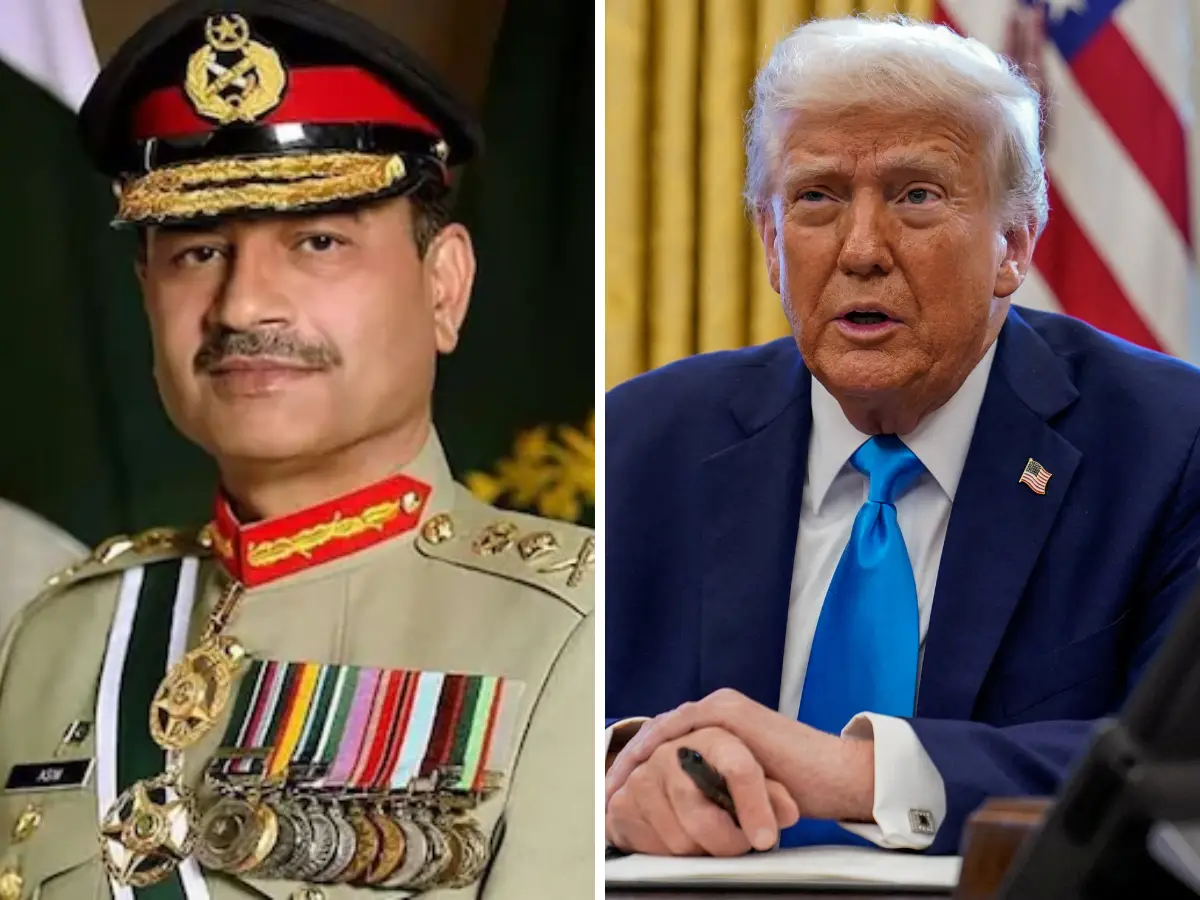
Pakistan Army Chief Field Marshal Syed Asim Munir and US President Donald Trump Photograph: (Reuters)
Along with Munir’s escalatory remarks, the ongoing rapprochement between Washington and Islamabad has added another layer to the India-Pakistan dynamics.
Pakistan Army Chief Field Marshal Syed Asim Munir’s recent nuclear threats against India, made at a private event on U.S. soil, raise the risk of another crisis in South Asia and undermine efforts to keep the post-May 2025 calm. According to The Print report, Munir said that Pakistan, as a nuclear state, facing an existential threat from India, would “take half the world down”. He also warned that Pakistan would destroy any Indian dam under the Indus Waters system “with ten missiles.” These are not normal talking points, but highly irresponsible threats coming from the most powerful person in Pakistan, who is a known religious hardliner in addition to the country’s army chief. Munir’s statements turn nuclear deterrence from a last-resort guarantee into public political signaling, and they do so at a time when India-Pakistan crisis management mechanisms are still fragile.
The timing matters for India. The four-day military conflict between India and Pakistan in May followed the Pahalgam massacre and saw exchanges of missiles, drones, and artillery before both sides halted operations. Afterward, the United States claimed credit for brokering peace between the two South Asian countries, while India publicly pushed back, saying the ceasefire resulted from direct military channels and India’s own decision to pause after meeting its operational objectives. The disagreement over “who deterred whom” creates a blurry narrative, which invites tougher public signaling in the next crisis. Munir’s nuclear sabre-rattling fits that pattern and makes India’s operating environment less stable.
India should treat Munir’s remarks as a serious data point because Pakistan’s conventional outcomes in May were, at best, mixed. After the initial exchanges, Pakistan caused “virtually no observable damage” to Indian military infrastructure or facilities beyond what New Delhi acknowledged. On the other hand, India’s retaliatory strikes targeted key airbases and air defense systems of Pakistan, causing significant damage. Therefore, since Pakistan cannot claim conventional leverage over India, its temptation to restore coercive credibility with nuclear rhetoric has increased since the May crisis, especially for domestic audiences and to pressure the international community. That shift is dangerous because it drags the nuclear option into the early days of a military conflict rather than keeping it as the last rung on the ladder.
Furthermore, Munir linked future conflict to two triggers that directly concern India. The first is water. In April, India suspended the Indus Waters Treaty on national security grounds after the Pahalgam terror attack. In his recent remarks, Munir gave a specific warning that Pakistan would destroy any dam India tries to build on the IWT rivers. The language suggests Pakistan’s military now considers civilian infrastructure in Jammu and Kashmir a legitimate target and water disputes a valid cause for escalation with India. This creates a new escalation path separate from traditional border skirmishes, where Pakistan could target vulnerable civilian infrastructure in Indian territory, which could then be justified as a retaliation for the IWT abeyance.
The second trigger is narrative: accusing India of supporting terrorism in Pakistan. Islamabad has long used this false claim to garner sympathy and to divert international attention from cross-border terrorism in Jammu and Kashmir. These efforts have increased in recent months since Pakistan began its two-year term as a UN Security Council non-permanent member earlier this year. Linking the false terror claim with water-dispute rhetoric gives Pakistan flexible excuses to take early action when the next crisis occurs. This flexibility has stretched previous flare-ups into longer conflicts. For India, the message is clear: expect more pressure from Pakistan through increased cross-border terrorist activities in J&K, along with more explicit conventional and nuclear threats.
Along with Munir’s escalatory remarks, the ongoing rapprochement between Washington and Islamabad has added another layer to the India-Pakistan dynamics. Munir’s June visit to the U.S. included a White House lunch with President Trump and warm public messaging from Washington about Pakistan’s role in “ending the war.” That visible thaw may lead Rawalpindi to assume that the United States will again step in to limit escalation, encouraging early risk-taking, while Delhi, having rejected claims of U.S. mediation, will dismiss American influence in the next crisis. However, the idea that a sitting Pakistani army chief can threaten nuclear escalation on U.S. soil and face no reputational cost sends a wrong signal in New Delhi, which considers Washington a strategic partner. It suggests that Islamabad’s nuclear brinkmanship is possibly tolerated in Washington’s corridors. As a result, future crisis management between India and Pakistan led by the U.S. will be more difficult if Washington normalizes this kind of dangerous rhetoric.
Trending Stories
&im=FitAndFill=(700,400)&imwidth=280&imheight=210&format=webp&quality=medium)
&imwidth=280&imheight=210&format=webp&quality=medium)
&imwidth=280&imheight=210&format=webp&quality=medium)
&imwidth=280&imheight=210&format=webp&quality=medium)
&imwidth=280&imheight=210&format=webp&quality=medium)
&imwidth=280&imheight=210&format=webp&quality=medium)
&imwidth=280&imheight=210&format=webp&quality=medium)
&imwidth=280&imheight=210&format=webp&quality=medium)
&imwidth=280&imheight=210&format=webp&quality=medium)
&imwidth=280&imheight=210&format=webp&quality=medium)
&imwidth=280&imheight=210&format=webp&quality=medium)
&imwidth=280&imheight=210&format=webp&quality=medium)
&imwidth=280&imheight=210&format=webp&quality=medium)
&imwidth=280&imheight=210&format=webp&quality=medium)
&imwidth=280&imheight=210&format=webp&quality=medium)
&im=FitAndFill=(700,400)&imwidth=280&imheight=210&format=webp&quality=medium)
&imwidth=280&imheight=210&format=webp&quality=medium)
&imwidth=280&imheight=210&format=webp&quality=medium)

&imwidth=280&imheight=210&format=webp&quality=medium)
&imwidth=280&imheight=210&format=webp&quality=medium)

&im=FitAndFill=(700,400)&imwidth=280&imheight=210&format=webp&quality=medium)
&imwidth=280&imheight=210&format=webp&quality=medium)
&imwidth=280&imheight=210&format=webp&quality=medium)
&imwidth=280&imheight=210&format=webp&quality=medium)
&imwidth=280&imheight=210&format=webp&quality=medium)
&imwidth=280&imheight=210&format=webp&quality=medium)
&imwidth=280&imheight=210&format=webp&quality=medium)
&im=FitAndFill=(700,400)&imwidth=280&imheight=210&format=webp&quality=medium)
&im=FitAndFill=(700,400)&imwidth=280&imheight=210&format=webp&quality=medium)
&imwidth=280&imheight=210&format=webp&quality=medium)
&imwidth=280&imheight=210&format=webp&quality=medium)
&im=FitAndFill=(700,400)&imwidth=280&imheight=210&format=webp&quality=medium)
&im=FitAndFill=(700,400)&imwidth=280&imheight=210&format=webp&quality=medium)
&imwidth=280&imheight=210&format=webp&quality=medium)
&imwidth=280&imheight=210&format=webp&quality=medium)
What happens if this rhetoric goes unchallenged is not necessarily an immediate war but a crisis system ready for faster escalation. Terrorist activities in Jammu and Kashmir will likely rise because it is the cheapest way for Pakistan to keep pressure on India. Additionally, Munir’s ideologically radical stance toward India reduces the chances for de-escalation in future crises. In April, he revived the ‘two-nation’ theory and called Kashmir Pakistan’s “jugular vein,” highlighting sharp civilizational differences with Hindus. A few days after this speech, Pakistan-based The Resistance Front (TRF), a local proxy of Lashkar-i-Tayyaba (LeT), carried out the Pahalgam massacre, killing 26 civilians. Therefore, India cannot take Munir’s recent threats lightly and must prepare appropriate responses.
India’s response should be resolute, disciplined, and aimed at preventing Pakistan from gaining any advantage from nuclear posturing. The first priority is maintaining conventional readiness for quick, decisive responses to incidents like terrorism or water disputes, enabling New Delhi to act swiftly on its own terms while avoiding escalation. The second is maintaining information discipline: proactively collecting verifiable imagery and third-party assessments of battlefield effects, and refraining from public or media exaggerations. The third is pursuing targeted diplomacy that quietly engages partners with genuine influence over Pakistan’s decisions, especially Gulf states with financial leverage, while preserving open military-to-military channels with the United States for de-escalation, without ceding any ground on core issues.
Following Operation Sindoor, New Delhi signaled a firmer policy on Pakistan: any cross-border terror attack on Indian territory will be considered ‘an act of war.’ This stance, along with Prime Minister Narendra Modi’s statement that India has only paused military action and will respond on its own terms if attacked again, aims to clarify deterrence and reduce space for coercive narratives from Pakistan.
On the other hand, as a strategic partner, the United States also has a significant role to play in the India-Pakistan military conflict. If the U.S. seeks credibility as a crisis manager, then nuclear brinkmanship by Munir, a serving Pakistani army chief, should face public and private opposition, not indifference. Normalizing such dangerous rhetoric on U.S. soil suggests that nuclear threats are tolerated in Washington, allowing Pakistan to continue its nuclear sabre-rattling with little consequence. This creates a poor foundation for any future U.S. role in the military crisis between India and Pakistan.
India’s main goal is to take Munir’s threats seriously, not just dismiss them. To maintain stable deterrence, it must bridge the gap between Pakistan’s words and the real consequences it would face if it escalates. The alternative is a South Asia where nuclear rhetoric becomes routine, and every lull after a crisis turns into a preview of the next conflict. India can and should break this cycle by adopting an assertive military posture, implementing a strong information warfare strategy, and conducting discreet yet firm diplomacy with aligned partners. That is how New Delhi can protect its interests, minimize misunderstandings, and keep the region safe from Munir’s self-destructive tactics.
