
&imwidth=800&imheight=600&format=webp&quality=medium "In Trump’s America, fictitious drug numbers and a new definition of war")
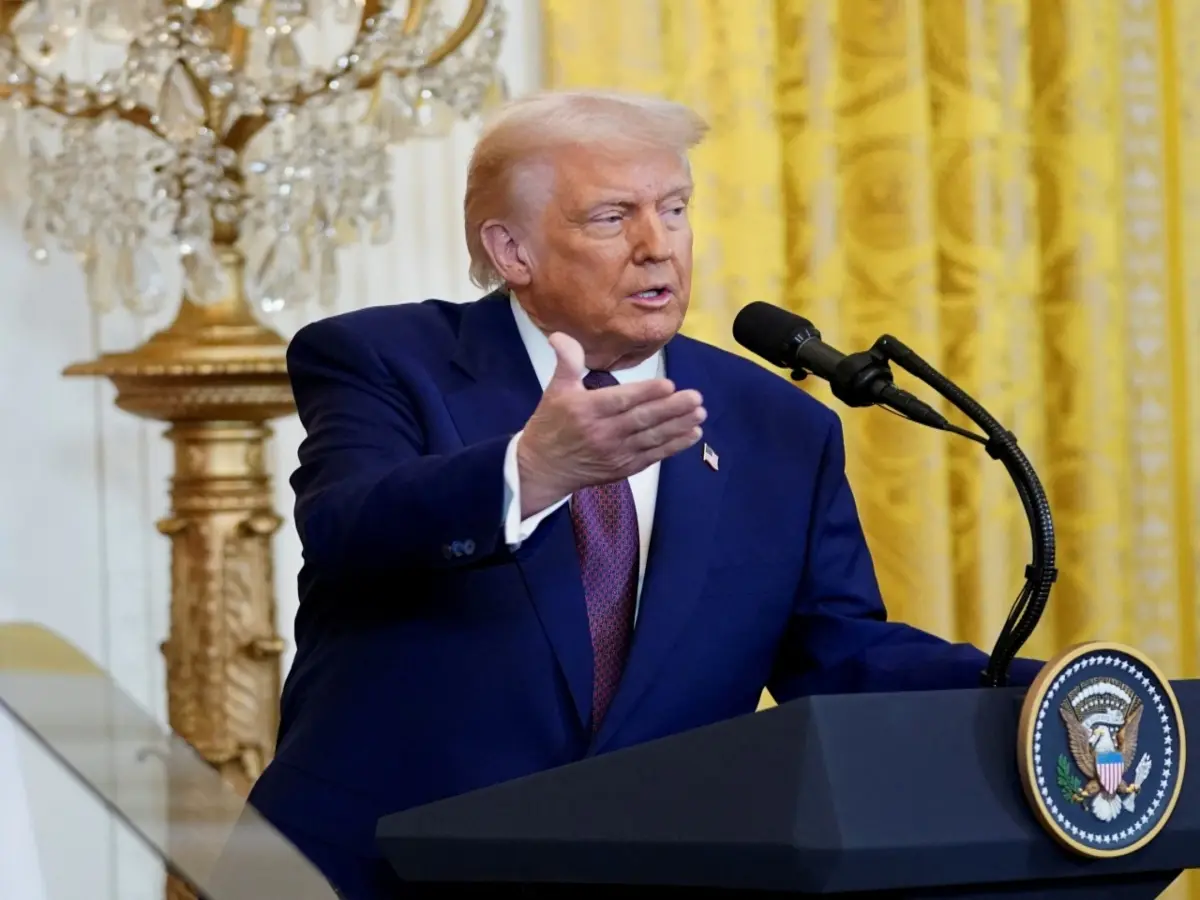
To hear US President Donald Trump and his aides tell it, a military campaign to blow up suspected drug-carrying boats in international waters off Latin America has saved more than 2.3 million Americans from drug overdose deaths. How so?
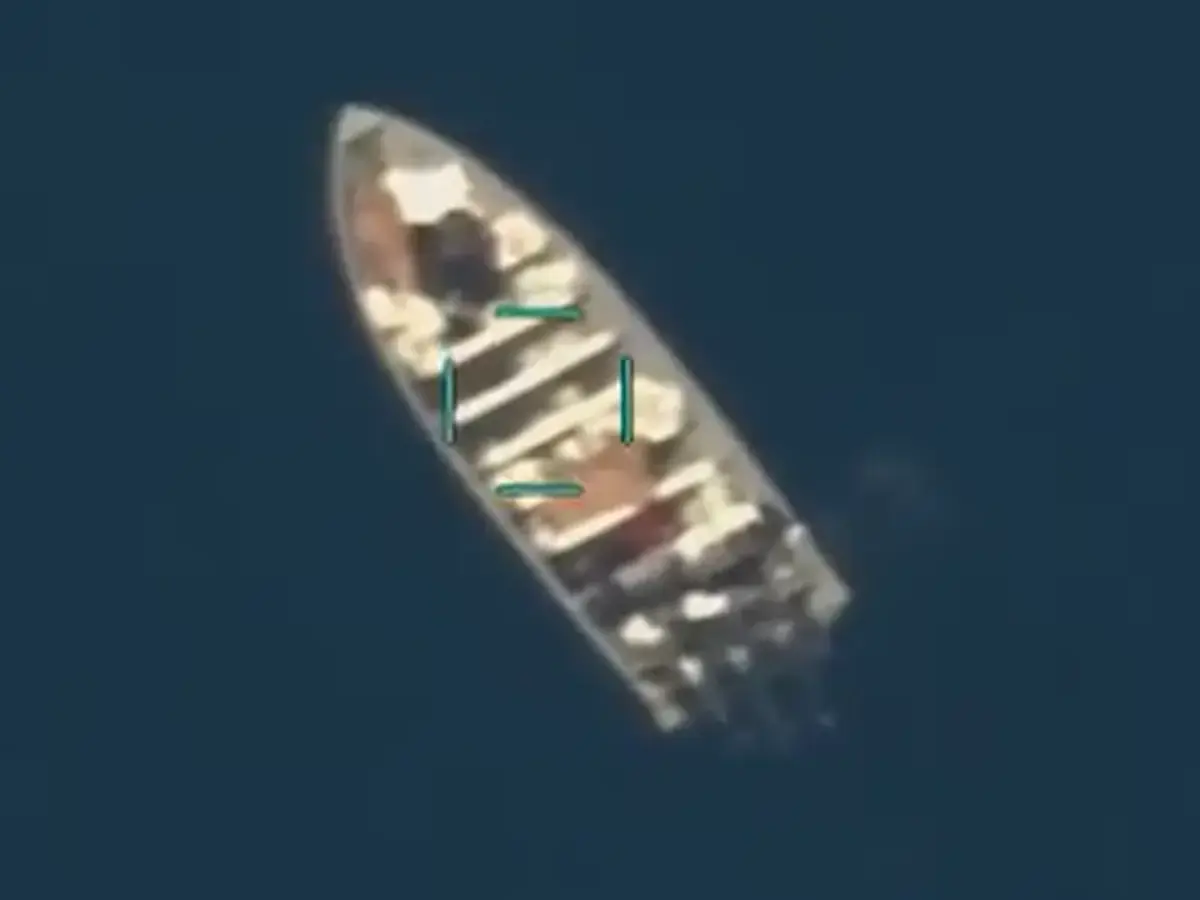
Beginning on September 2, bomb and missile strikes have blown apart 25 fast boats suspected of carrying drugs. Trump has repeatedly insisted that each boat carried enough drugs to kill 25,000 Americans. Multiply that by 25 and you arrive at 2,375,000 as of mid-December.
Compare that with statistics provided by the government’s Center for Disease Control (CDC) which recorded 80,391 drug overdose deaths in the United States in all of 2024, a decline of 27 percent of the estimated 110,037 in 2023.

In short, Trump’s claim of 25,000 lives saved for each boats sunk is pure fiction, crude propaganda to back up his assertion, backed up by Defence Secretary Pete Hegseth, that the United States is in “armed conflict” with Latin American drug cartels.
The administration is describing drug cartels as “non-state armed groups” and people involved with them as “unlawful combatants.” Thus, the argument goes, they must be fought as soldiers not as criminals with a right to legal process.
The aim of the “unlawful combatants,” according to Trump and Hegseth, who now calls himself Secretary of War, is to poison and kill Americans. This is simply nonsense. The aim of the globe-spanning criminal organisations that grow, process and traffic drugs is to make money.
Trending Stories
)
The Early Spring is proof not everyone can talk about their real feelings, and it is perfectly OK
)
UN votes to ‘correct the map’ as India backs fairer world view
)
Nigerian Navy discovers 99,000 litres of suspected stolen, illegally refined products as it intensifies anti-crude oil theft operations
)
Who is Aditi Paudel? 17-year-old becomes Japan's first literacy ambassador
)
Bengaluru: Officials find 40 kg expired chilli at chairman's club
)
Jaishankar rejects trade link to ending Ukraine war
)
Israeli strikes on Lebanon kill three, injure 23 despite truce
)
Alpine glacier was covered with sheep wool sheets to prevent melting. It worked
)
South Korea mulls deploying military assets to Strait of Hormuz
)
World's fifth-largest economy, British army can't afford to train
)
Breaking | Vance takes the podium: First White House briefing since Leavitt's exit
)
Taiwan raises 'concerns' over China's missile test
)
BRICS 2026: $1 trillion sovereign capital set to converge in Delhi for first iBRICS Summit
)
What is Iran's Pickaxe Mountain that Trump has again threatened to bomb?
)
UN votes to correct world map that visually shrank Africa for 450 years
)
Former NewJeans member Danielle launches YouTube channel, hints at new solo journey
)
Bangladesh batter Towhid Hridoy creates history with 350 not out in South Africa
)
Brendan Fraser’s transformation fuels The Mummy 4 excitement as fans welcome back Rick O’Connell
&im=FitAndFill=(700,400))
Krishna Janmashtami 2026: From Dhaniya Panjiri to Makhana Kheer- 5 best sweet dishes perfect for celebrating Lord Krishna’s birth
)
Donald Trump plans to travel to Ireland on Qatari-donated jet amid security concerns
)
Nazi-looted art to return to Jewish heirs
)
Eight killed in Kerala’s Thrissur after car rams into lorry parked on highway
&im=FitAndFill=(700,400))
Why Russian fighter jets use bulky, low-pressure tyres compared to US jets
)
FBI-wanted fraud accused arrested in Jalandhar over $600,000 scam
&im=FitAndFill=(700,400))
Why US tanks weigh over 20 tons more than Russian tanks
&im=FitAndFill=(700,400))
New Friday OTT releases (September 4, 2026): GDN, Dhamaal 4, Jagamae Sangeetham- Watch 6 new movies and TV shows on Netflix, Prime Video and more
)
Killing the Himalayas slowly: Human urine is melting a glacier on Mount Everest
Global Financial Integrity, a Washington-based think tank, in October valued global drug trafficking between $840 billion and $1.44 trillion. Given the nature of criminal enterprises, estimates are difficult but GFI reckons that transnational crime as a whole generates up to seven percent of world GDP, with drug trafficking yielding the most profit.
One way “unlawful combatants” go about killing Americans, according to Trump and Hegseth, is to smuggle into the country fentanyl, a powerful synthetic opioid.
On December 15, the president signed an executive order declaring fentanyl a “weapon of mass destruction.”
The order termed fentanyl a national security threat. It followed the official classification of drug cartels as Foreign Terrorist Organisations, a term previously used for groups like ISIS and al-Qaeda. According to the CDC, 48,000 Americans died of fentanyl overdoses in 2024.
Hyperbole has become so much part of the Trump administration’s vocabulary that many Americans just shrug it off. Drug experts saw the “weapons of mass destruction” designation as political exercise with little practical effect.
Bombing boats suspected of carrying drugs across the Caribbean is not likely to make much of a dent into the overall criminal enterprise. The 95 crew killed make up a small part of those who risk crossing the seas for payments of a few thousand dollars, experts say.
Tump’s proclaimed alarm over smuggled drugs stood in sharp contrast to his pardon for former Honduran president Juan Orlando Hernandez who was found guilty in March 2024 by a federal court jury of conspiring to import 400 tons of cocaine into the U.S. His sentence: 45 years in prison.
There was jubilation across Honduras when Hernandez was sentenced in New York after more than two years of investigations. A week after Trump granted him “a full pardon”, the Attorney General of Honduras issued a fresh arrest warrant for Hernandez and requested that Interpol execute the order now that Hernandez is free.
In Tegucigalpa, the Honduran capital, hundreds took to the streets in protest against the unpopular former president’s release less than a year into his sentence.
Asked for an explanation for the pardon, Trump said the Honduran leader had been the victim of political persecution and “many Hondurans” had asked him to grant the pardon. Not coincidentally, it was given a few days before Honduran elections. A Trump-endorsed candidate held a razor-thin lead before a recount which is still not complete two weeks after the vote.
In Washington, the campaign to blow up suspected smuggling vessels off Latin America has led to a bitter debate over the legality of the operation. For the past
week, much of it has been a matter of lawmakers failing to see the wood for the trees.
How so? The first strike, on September 2, wrecked the boat but left two survivors cling to a piece of wreckage the size of a dining table. Admiral Mitch Bradley, following general instructions by Hegseth, ordered a second strike to kill the survivors.
The “double-tap” strike drew criticism from both sides of the political divide. The bluntest rebuke came from a Rand Paul, a Republican senator from Kentucky, who said “shooting unarmed people floundering in the water, clinging to wreckage, is not who we are as a people.”
He and others viewed the killing of the survivors as a war crime. The debate, that followed included a demand for the public to see the full, un-edited version of the video which showed only the first hit of the boat. Hegseth has refused to show the double-tap, declaring its classification as top secret.
While the argument over the survivors, the trees mentioned above, dragged on, the wood tended to be ignored. What is the wood? The entire campaign treating civilian criminals as combatants, with the commander-in-chief and his “secretary of war” in the role of judge, jury and executioner.
You can find none of the labels the administration has pasted on the civilian smugglers international law. Not “unlawful combatants.” Not “unprivileged belligerents.” Not “narco-terrorist.”
There are international armed conflicts between two or more states; there are non-international armed conflicts defined as armed confrontations within the territory of a single state between government armed forces and one or more armed groups.
This does not apply to civilians who seek profit rather than armed confrontation.
If you take the Trump administration’s present “armed conflict” argument to its logical conclusion, you might well conclude that the government would have been justified to kill sales executives of Purdue Pharma, the company that aggressively marketed the prescription painkiller OxyContin.
It was promoted as a painkiller with a low risk of addiction. That claim was false. OxyContion was addictive. Crushed and snorted, it was widely abused and led to
thousands of overdose deaths. Purdue and three of its top executives pleaded guilty to criminal charges of misbranding OxyContin.
The company faced thousands of lawsuits but none of those involved in producing, promoting , or selling the drug was executed. Unlike the drivers of the Caribbean boats crewed by profit-seeking civilians
