HAL’s LUH: Quiet over the ridges, curing the Himalayan wobble

&imwidth=600&imheight=450&format=webp&quality=medium "HAL’s LUH: Quiet over the ridges, curing the Himalayan wobble")
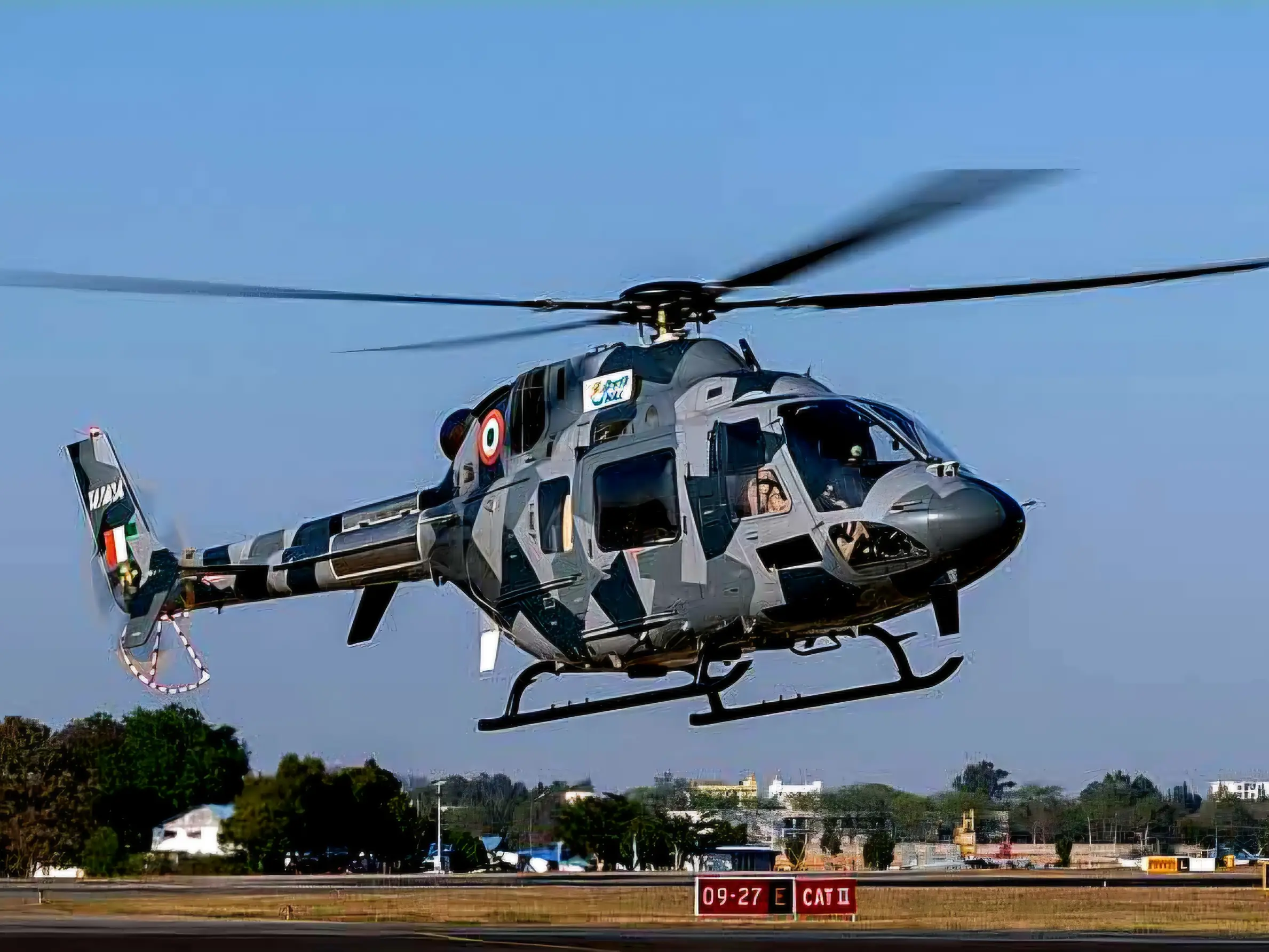
Hindustan Aeronautics Limited’s Light Utility Helicopter Photograph: (WION)
HAL has reduced vibrations in its Light Utility Helicopter by up to 40 per cent, improving its reliability and suitability for demanding high-altitude Himalayan operations.
Somewhere on a high Himalayan ridge, where the air is thin and the snow never fully leaves, a soldier waits for the sound of rotor blades. That sound can mean food, a spare part, a way home, or in the worst hours, a stretcher and a chance to live. Behind that one simple landing sit years of patient engineering, and the newest chapter of that work is about something most of us never think about while looking up at a helicopter: shaking.
Hindustan Aeronautics Limited says its Light Utility Helicopter, the LUH, now shakes far less than before. After careful changes to the body of the aircraft itself, overall shaking has come down by 30 to 40 per cent. In one important kind of up-and-down shaking, the drop is close to 50 per cent. On paper these look like dry numbers from a test report. In real life, they touch almost everything the machine is meant to do.
Think of a jeep on a bad village road. Passengers feel every bump, bags rattle, and bolts slowly loosen. A helicopter lives with a far harsher version of the same problem. The big main rotor keeps cutting through the air, the engine keeps producing power, the gearbox keeps sending that power upward, and the small tail rotor works without pause to hold the nose straight. All of this creates shake, and that shake travels into the body of the aircraft.
What it reaches is what matters. It reaches the pilot, whose hands must stay steady after long hours in the air. It reaches soldiers and the wounded being carried out. It reaches radios, instruments and medical equipment that were never meant to be rattled for years on end. Over time it also reaches the metal and composites themselves, quietly wearing them out. Less shake therefore means a less tired crew, safer patients, longer-lasting parts, easier maintenance, and a helicopter that stays flying instead of sitting in a hangar.
The need becomes sharper when you see where this machine must serve. The LUH is a single-engine helicopter of about 3.15 tonnes, built for moving troops, watching the ground, bringing out the injured, and carrying stores across difficult country. Above all, it is meant for India's high Himalayas, and height is a harsh teacher. The air grows thin, so the rotor has less to bite and the engine has less to breathe. Landing spots shrink to a ledge of rock. Weather can turn within minutes. Steep walls and narrow valleys leave almost no room for error. In such places, every extra kilogram and every extra shake becomes a risk.
Trending Stories
)
)
)
)
)
)
)
)
)
)
)
)
)
)
)
&im=FitAndFill=(700,400))
)
)
)
)
)
&im=FitAndFill=(700,400))
)
)
)
)
)
)
)
)
)
)
)
)
)
)
)
This is also a story of taking over. The LUH is meant to replace the ageing Chetak and Cheetah helicopters that have served the Indian Armed Forces for decades, flying to some of the highest military posts on earth. Their record is a proud one, and that is exactly why their successor must earn trust the hard way.
What makes this achievement interesting is how the shaking was reduced. Engineers did not simply add more pads and dampers. They changed the structure itself. Picture a wooden table that wobbles. You can push folded paper under one leg, or you can open up the joint and fix it properly. The second way is harder, and it is also far better. Small changes in shape, in where weight sits, and in stiffness can change how the whole aircraft behaves.
Such care is necessary because of the way the LUH is built. Its main rotor does not use the old-style hinges, and its tail rotor does not use the old-style bearings. Older helicopters needed many moving joints so the blades could flap and flex. Here, that movement comes from the natural spring of composite materials, rather like a fishing rod bending where a hinge would otherwise open. Fewer moving parts mean less trouble later, but they also demand that the body of the helicopter be designed with great precision.
The quiet lesson sits underneath the numbers. Building an Indian helicopter is only the first step. The harder work begins after the first flight: measure, question, improve, and keep improving until the crew who fly it, and the soldier waiting on a freezing ridge, can place their lives in it without a second thought. That is the real revolution here, not merely a new machine, but a machine that shakes less exactly where shaking can cost lives.