From inventory to architecture: The Drone General’s real achievement

&imwidth=600&imheight=450&format=webp&quality=medium "From inventory to architecture: The Drone General’s real achievement")
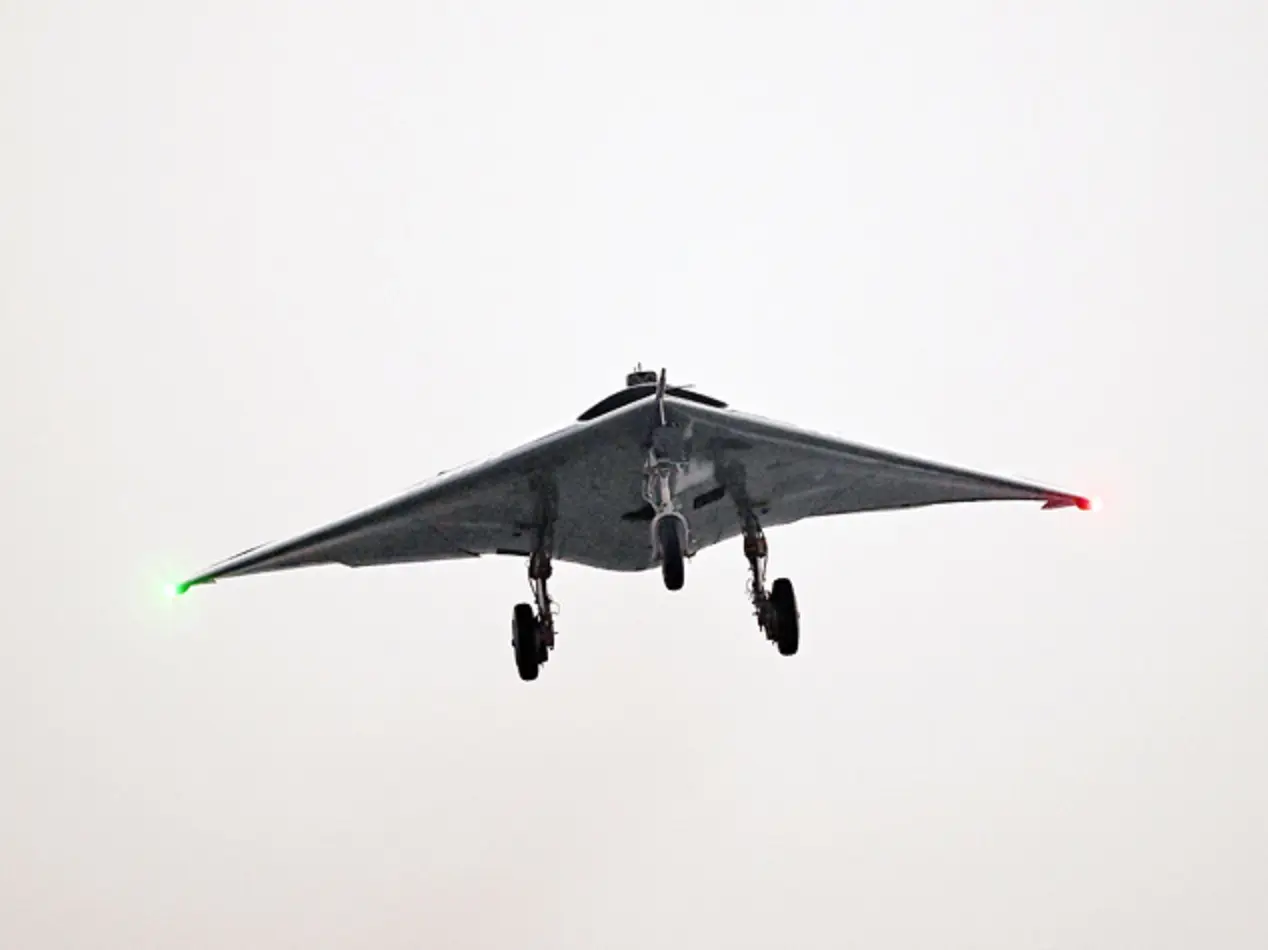
New warfighting formations were built to embed drone employment at every echelon. Photograph: (X)
During Operation Sindoor, the integration of drones, loitering munitions, electronic warfare and real-time intelligence in a single coordinated campaign demonstrated not just that individual systems worked, but that the architecture connecting them functioned under operational conditions.
When the history of India’s drone revolution is written, General Upendra Dwivedi’s name will appear not merely as a procurement champion but as the officer who understood the difference between buying drones and building a drone-capable force. That distinction, between inventory and architecture, is the Drone General’s real and most technically significant contribution.
The numbers are well established. From a few hundred drones at the start of his tenure to over 50,000 by the time he retires on June 30, 2026. More than 25 Drone and Counter-Drone Hubs have been established across military stations. Precision engagement and surveillance systems extended to ranges approaching 500 kilometres. These figures represent genuine capability growth, but they are outputs. The more interesting question is what produced them.
The answer lies in infrastructure, doctrine and indigenous development, pursued simultaneously rather than sequentially. The Drone and Counter-Drone Hubs were not simply storage facilities. They were designed as integrated nodes for training, induction, maintenance, and operational employment, giving the Army the ability to sustain drone operations across multiple theatres rather than concentrating capability in a handful of specialist units.
New warfighting formations were built to embed drone employment at every echelon. Bhairav Battalions at the formation level, Ashni Platoons at the sub-unit level, Divyastra Batteries and Shaktibaan Regiments at higher formations, together with the continuing evolution of Integrated Battle Groups, represent a layered architecture in which unmanned systems are integral to combined arms operations rather than bolted on as an afterthought.
The indigenous dimension is technically significant. Partnerships with DRDO, private sector firms, start-ups and MSMEs accelerated the development of Indian-designed and manufactured drones, counter-drone systems and AI-enabled battlefield technologies. This matters not just for self-reliance, but for adaptability, domestically produced systems can be modified, upgraded and tailored to specific operational requirements in ways that off-the-shelf foreign acquisitions cannot.
Counter-drone capability received equal attention, a reflection of mature thinking. A force that invests heavily in offensive drone capacity while neglecting protection against adversary systems creates a dangerous asymmetry. The Drone General understood that the same revolution making drones central to Indian operations was simultaneously making Indian forces more vulnerable to adversary drones. The hub network and the counter-drone formations were built as a paired response to that reality.
Trending Stories
)
)
)
)
)
)
)
)
)
)
)
)
)
)
)
)
)
)
)
)
)
)
)
)
)
)
)
)
)
)
)
)
)
)
&im=FitAndFill=(700,400))
)
)
)
)
Operation Sindoor served as the system-level test. The integration of drones, loitering munitions, electronic warfare and real-time intelligence in a single coordinated campaign demonstrated not just that individual systems worked, but that the architecture connecting them functioned under operational conditions. That is the harder problem, and its resolution in a live context carries more weight than any exercise outcome.
Nearly 25 doctrines and policy documents issued during his tenure provided the conceptual scaffolding. The ambition stated explicitly within them, that every soldier should be drone-capable, set a training and readiness standard that will define capability assessments for years to come.
The Drone General leaves behind not a collection of unmanned systems but a force-wide architecture for employing them. That is the achievement that will endure.
(Disclaimer: The views of the writer do not represent the views of WION or ZMCL. Nor does WION or ZMCL endorse the views of the writer.)