Earthquake rocks Russia, ripples reach US; will climate change end geopolitical wars?

&imwidth=600&imheight=450&format=webp&quality=medium "Earthquake rocks Russia, ripples reach US; will climate change end geopolitical wars?")
Representative Image Photograph: (ANI)
As geopolitical tensions, from the Ukraine war to U.S.-Russia rivalries, dominate global discourse, the earthquake and tsunami serve as a grim reminder that climate change and natural calamities are humanity’s true common enemies, demanding urgent, united action.
The world, on Wednesday, July 30, awoke to chaos as a massive 8.8-magnitude earthquake struck Russia’s Kamchatka Peninsula, the strongest in the region since 1952. Hours later, tsunami waves up to 4 metres high crashed into the coasts of Russia and Japan, triggering evacuations and causing structural damage. The tremors’ ripple effects were felt as far away as the U.S. West Coast, where rising water levels and strong currents sparked alarm. This natural disaster, reminiscent of the catastrophic 2004 Indian Ocean tsunami that killed over 230,000 people across 14 countries, underscores the indiscriminate fury of nature. As geopolitical tensions, from the Ukraine war to U.S.-Russia rivalries, dominate global discourse, the earthquake and tsunami serve as a grim reminder that climate change and natural calamities are humanity’s true common enemies, demanding urgent, united action.
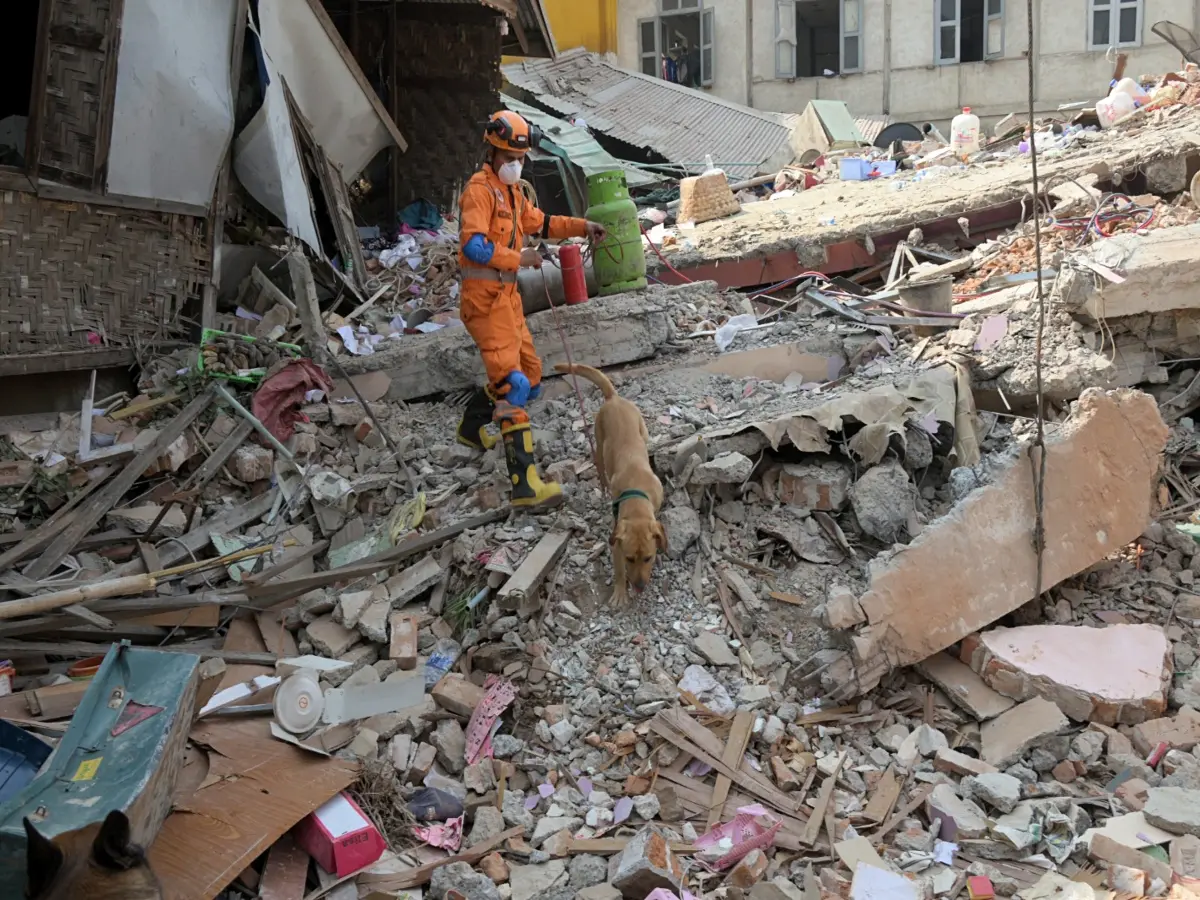
The Kamchatka earthquake, centered off Russia’s eastern coast, unleashed waves that battered coastal towns, uprooting infrastructure and forcing thousands to flee to higher ground. Japan, no stranger to seismic activity, activated its early warning systems, evacuating coastal areas in Hokkaido and Tohoku. The Japan Meteorological Agency reported minor injuries but no fatalities, though damaged buildings and disrupted power lines painted a picture of disarray. Across the Pacific, the U.S. National Tsunami Warning Center issued alerts for California, Oregon, and Washington, as tidal surges caused flooding in low-lying areas. The U.S. Geological Survey noted that the quake’s transcontinental impact highlights the interconnectedness of global geophysical systems, a reality often overshadowed by political rivalries.
The 2004 Indian Ocean tsunami, triggered by a 9.1–9.3-magnitude quake near Sumatra, remains a haunting benchmark. It devastated coastal communities in Thailand, Sri Lanka, India, and beyond, displacing millions and exposing the vulnerability of densely populated coastlines. India’s Andaman and Nicobar Islands and Tamil Nadu bore heavy losses, with over 12,000 deaths. The 2025 Kamchatka event, while less deadly, reignites fears of such catastrophes, particularly as climate change amplifies their severity. Rising sea levels, melting glaciers, and destabilized coastal sediments—driven by human-induced greenhouse gas emissions—make tsunamis more destructive. In countries like Japan, Indonesia, Bangladesh, and coastal India, even a modest 0.5-meter sea-level rise can double the impact of tsunami surges, according to a 2023 UN Climate Report.
Climate change is no longer a distant threat but a present crisis, disrupting economies and lives across every continent. The Paris Agreement, effective since November 4, 2016, urges nations to limit global temperature rise to below 2°C, ideally 1.5°C, to mitigate climate impacts. Yet, global emissions continue to climb, with 2024 recording a 1.3 percent increase in CO2 levels, per the International Energy Agency. Changing weather patterns, rising sea levels, and extreme events like heatwaves and floods are now commonplace. In India, erratic monsoons and coastal erosion threaten livelihoods, with 40 percent of the population living in vulnerable coastal areas, as per the Ministry of Environment. The Kamchatka tsunami underscores how climate factors, such as warming oceans, intensify natural disasters, making them more frequent and far-reaching.
The irony is stark: while nations like the US and Russia remain locked in geopolitical tussles—evident in the ongoing Ukraine conflict and Cold War-era rivalries—they face a shared adversary in climate-induced disasters. The US, despite its economic might, saw its Pacific coast rattled by the Kamchatka quake’s aftershocks. Russia, grappling with its own economic sanctions, now faces reconstruction costs in Kamchatka. “Nature spares no one, not even superpowers,” noted environmentalist Sunita Narain, emphasizing the need for global cooperation. The UN has repeatedly called for collective action to curb emissions, yet major powers remain distracted by arms races and trade wars, diverting resources from climate resilience.
India, too, is at a crossroads. Its 7,500-km coastline, home to bustling ports and tourist hubs, is increasingly at risk. The National Disaster Management Authority (NDMA) has invested in early warning systems since 2004, saving lives in events like Cyclone Amphan in 2020. However, rising sea levels threaten cities like Mumbai and Chennai, with a 2024 World Bank study estimating USD 1.2 trillion in potential losses by 2050 if climate measures falter. India’s push for renewable energy, targeting 500 GW by 2030, is commendable, but it must accelerate adaptation strategies like mangrove restoration and coastal defenses to mitigate tsunami risks.
Trending Stories
&imwidth=280&imheight=210&format=webp&quality=medium)
&imwidth=280&imheight=210&format=webp&quality=medium)
&imwidth=280&imheight=210&format=webp&quality=medium)
&imwidth=280&imheight=210&format=webp&quality=medium)
&imwidth=280&imheight=210&format=webp&quality=medium)
&imwidth=280&imheight=210&format=webp&quality=medium)
&imwidth=280&imheight=210&format=webp&quality=medium)
&imwidth=280&imheight=210&format=webp&quality=medium)
&imwidth=280&imheight=210&format=webp&quality=medium)
&imwidth=280&imheight=210&format=webp&quality=medium)
&imwidth=280&imheight=210&format=webp&quality=medium)
&imwidth=280&imheight=210&format=webp&quality=medium)
&imwidth=280&imheight=210&format=webp&quality=medium)
&imwidth=280&imheight=210&format=webp&quality=medium)
&imwidth=280&imheight=210&format=webp&quality=medium)
&imwidth=280&imheight=210&format=webp&quality=medium)
&imwidth=280&imheight=210&format=webp&quality=medium)
&imwidth=280&imheight=210&format=webp&quality=medium)
&imwidth=280&imheight=210&format=webp&quality=medium)
&im=FitAndFill=(700,400)&imwidth=280&imheight=210&format=webp&quality=medium)
&imwidth=280&imheight=210&format=webp&quality=medium)

&im=FitAndFill=(700,400)&imwidth=280&imheight=210&format=webp&quality=medium)
&imwidth=280&imheight=210&format=webp&quality=medium)
&imwidth=280&imheight=210&format=webp&quality=medium)
&imwidth=280&imheight=210&format=webp&quality=medium)
&imwidth=280&imheight=210&format=webp&quality=medium)
&imwidth=280&imheight=210&format=webp&quality=medium)
&imwidth=280&imheight=210&format=webp&quality=medium)
&imwidth=280&imheight=210&format=webp&quality=medium)
&imwidth=280&imheight=210&format=webp&quality=medium)
&imwidth=280&imheight=210&format=webp&quality=medium)
&im=FitAndFill=(700,400)&imwidth=280&imheight=210&format=webp&quality=medium)
&imwidth=280&imheight=210&format=webp&quality=medium)
&imwidth=280&imheight=210&format=webp&quality=medium)
&imwidth=280&imheight=210&format=webp&quality=medium)
&imwidth=280&imheight=210&format=webp&quality=medium)
&imwidth=280&imheight=210&format=webp&quality=medium)
&imwidth=280&imheight=210&format=webp&quality=medium)
&imwidth=280&imheight=210&format=webp&quality=medium)
Notably, the India-UK Free Trade Agreement, signed on July 24, 2025, offers a silver lining. By promoting sustainable trade practices and green technology exchanges, the FTA can bolster India’s climate resilience. UK expertise in offshore wind and India’s solar advancements could drive joint projects, reducing emissions and strengthening coastal infrastructure. “Global challenges like climate change demand partnerships beyond borders,” said Commerce Minister Piyush Goyal, highlighting the FTA’s role in supporting India’s green goals. Collaborative efforts could fund early warning systems and disaster-preparedness programs, critical for vulnerable regions.
The Kamchatka disaster is a wake-up call. While nations bicker over boundaries, climate change unites them in vulnerability. The Paris Agreement’s goals remain elusive without concerted action. India, with its Viksit Bharat vision, must lead by example, investing its Rs. 2,541.06 crore tourism budget to build climate-resilient hospitality infrastructure. Globally, redirecting defence budgets—estimated at USD 2.24 trillion in 2024 by the Stockholm International Peace Research Institute(SIPRI)—towards climate mitigation could save millions from disasters like tsunamis. As the world grapples with nature’s fury, it’s time to set aside geopolitical rivalries and fight the real enemy: climate change.