Americans are falling out of love with Israel

&imwidth=600&imheight=450&format=webp&quality=medium "Americans are falling out of love with Israel")
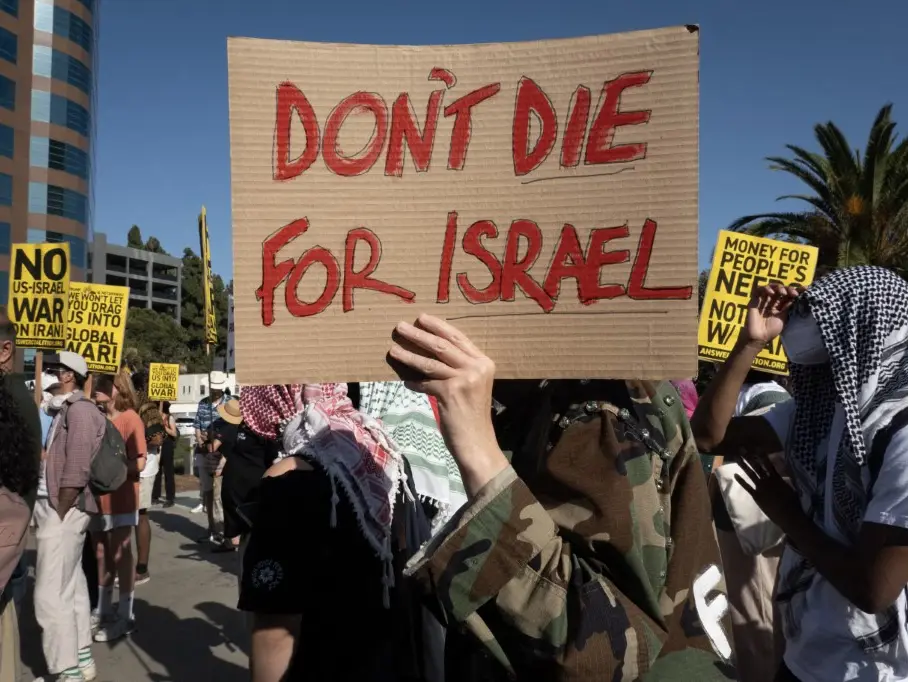
Demonstrators protest U.S. involvement in the Israel/Iran conflict at the Westwood Federal Building complex on June 18, 2025 in Los Angeles, California. Photograph: (AFP)
The most striking example of how much has changed is the fact that New York City, home to as many Jews as Jerusalem, has a mayor so critical of Israel that he threatened to arrest Israel’s Prime Minister when he visits New York for September’s U.N. General Assembly meeting.
WASHINGTON – For much of Israel’s turbulent history, most Americans viewed the Jewish state as a force for good, deserving to be the largest recipient of U.S. economic and military assistance in the world. That attitude is becoming history, according to public opinion surveys.
One of the most striking came from Gallup, one of the world’s most respected polling firms, which tracked American sympathies for the main players in the Middle East conflict since 1921. Earlier this year, it found that for the first time, more Americans sympathise more with Palestinians than with Israelis – 41% to 38%.
Other surveys have come to similar results, and experts agree that this shift points to a profound generational divide. Americans aged between 18 and 34 hold significantly more negative views than older generations. The figures: 53 percent sympathise more with Palestinians, 23 percent more with Israelis.
The Washington-based Pew Research Center describes this as a record low for Israel support for this age group. This contrasts with 49 percent of older Americans (55 and older) favouring Israel and 31 percent for Palestinians. The pollsters note that this means that for the first time in decades, less than half of older Americans side with Israel.
Those numbers stand in stark contrast with decades of a relationship so close that unquestioned support for Israel was one of the few issues in divided America on which, with very few exceptions, Democrats and Republicans agreed.
The relationship had an auspicious start: U.S. President Harry Truman was the first foreign leader to recognise Israel when it declared independence on May 14, 1948. Truman issued a statement granting U.S. recognition of the new state just 11 minutes after its proclamation in Tel Aviv.
Trending Stories
&imwidth=280&imheight=210&format=webp&quality=medium)
&im=FitAndFill=(700,400)&imwidth=280&imheight=210&format=webp&quality=medium)
&imwidth=280&imheight=210&format=webp&quality=medium)
&imwidth=280&imheight=210&format=webp&quality=medium)
&imwidth=280&imheight=210&format=webp&quality=medium)
&im=FitAndFill=(700,400)&imwidth=280&imheight=210&format=webp&quality=medium)
&imwidth=280&imheight=210&format=webp&quality=medium)
&imwidth=280&imheight=210&format=webp&quality=medium)
&imwidth=280&imheight=210&format=webp&quality=medium)
&imwidth=280&imheight=210&format=webp&quality=medium)
&imwidth=280&imheight=210&format=webp&quality=medium)
&imwidth=280&imheight=210&format=webp&quality=medium)
&imwidth=280&imheight=210&format=webp&quality=medium)
&imwidth=280&imheight=210&format=webp&quality=medium)
&imwidth=280&imheight=210&format=webp&quality=medium)
&imwidth=280&imheight=210&format=webp&quality=medium)
&imwidth=280&imheight=210&format=webp&quality=medium)
&imwidth=280&imheight=210&format=webp&quality=medium)
&imwidth=280&imheight=210&format=webp&quality=medium)
&imwidth=280&imheight=210&format=webp&quality=medium)
&imwidth=280&imheight=210&format=webp&quality=medium)
&imwidth=280&imheight=210&format=webp&quality=medium)
&imwidth=280&imheight=210&format=webp&quality=medium)
&imwidth=280&imheight=210&format=webp&quality=medium)
&im=FitAndFill=(700,400)&imwidth=280&imheight=210&format=webp&quality=medium)
&imwidth=280&imheight=210&format=webp&quality=medium)
&imwidth=280&imheight=210&format=webp&quality=medium)
&imwidth=280&imheight=210&format=webp&quality=medium)
&imwidth=280&imheight=210&format=webp&quality=medium)
&imwidth=280&imheight=210&format=webp&quality=medium)
&imwidth=280&imheight=210&format=webp&quality=medium)
&imwidth=280&imheight=210&format=webp&quality=medium)
&imwidth=280&imheight=210&format=webp&quality=medium)
&imwidth=280&imheight=210&format=webp&quality=medium)
&imwidth=280&imheight=210&format=webp&quality=medium)
Although the “special relationship” the two countries established proved durable for decades, much to the frustration of its hostile Arab neighbours, it now seems truly over.
The most striking example of how much has changed is the fact that New York City, home to as many Jews as Jerusalem, has a mayor so critical of Israel that he threatened to arrest Israel’s Prime Minister when he visits New York for September’s U.N. General Assembly meeting.
Mayor Zohran Mamdami, who took office in January, cited an arrest warrant issued by the International Criminal Court (ICC) in 2024 on charges of war crimes committed by Israel in Gaza. Mamdami first issued the arrest threat when he was still campaigning to become mayor. He backed off 19 months later, saying the city had no legal authority to execute the arrest.
A YouGov poll published in July found that 49 percent of Americans (68 percent Democrats, 55 percent Independents, and 24 percent Republicans) showed support for Mamdami’s arrest threat.
More dissatisfaction with U.S. policies on Israel became apparent in Democratic primary races in advance of mid-term elections in November for the 435 seats in the House of Representatives. The one that made most headlines was in Michigan, where Abdul El-Sayed beat the pro-Israel Haley Stevens, who outspent her challenger by a 12-to1 margin.
More than $31 million of her war chest came from the American Israel Public Affairs Committee (AIPAC), the powerful pro-Israel lobby which has played a major role in past elections.
What is the reason for the deep generational gap in views of Israel? Older Americans grew up with memories of the Holocaust still fresh. Israel was perceived as a beleaguered nation surrounded by hostile Arabs whose superior armies attacked the country twice, in the 1967 six-day war an again in 1973.
Outgunned and outmanned, Israel won. Moshe Dayan, the eye-patched defence chief, became an internationally acclaimed hero for leading the David vs Goliath fight that ensured Israel’s survival and eventual role as the Middle East’s dominant military and economic power.
Younger generations came of age during Israel’s occupation of land that had been slated to become a sovereign Palestinian state under a 1947 partition plan developed by the United Nations. But the “two-state” solution never became reality. The prolonged peace process of the 1990s failed, and the system Israel developed drew comparisons with South Africa’s Apartheid.
An agreement to bring peace looks even more remote after the October 7, 2023 attack on southern Israeli communities by militants of Hamas, a Sunni Islamist group based in Gaza. The attackers broke through the border fence, killed 1,200 people, including hundreds attending a music festival, in an orgy of stomach-turning violence. Another 250 were abducted and taken as hostages to Gaza.
Shifts in American public opinion were underway before the Hamas attack, but they sharpened when Israel struck back with a ferocious bombing campaign U.N. Secretary-General António Guterres described as collective punishment. It killed more than 73,000 Palestinians, according to local health authorities.
Much of Gaza has been turned into fields of rubble, and the misery inflicted on civilians, livestreamed over social media for more than two years, has helped change perceptions even among committed backers of Israel.
An anti-Israeli backlash has become a feature of U.S. domestic politics and will play a role in the mid-term elections. For years, calls for downgrading the relationships have come mainly from the political left, but recently prominent figures in the MAGA (Make America Great Again) sphere have spoken up, too.
Once unthinkable for right-wingers like Tucker Carlson, Steve Bannon, and Marjory Taylor-Green, their arguments mirror those of the left – Israel is dragging the United States into foreign wars that suck up resources America should use at home.
Dissent on the right also comes from citizens who feel U.S. President Donald Trump broke most of the promises that helped him win a second term at the White House. They included “No more foreign wars”. Instead, Trump started a war against Iran. No end to that conflict, now in its sixth month, is in sight.
