Addressing misconceptions regarding India’s military reforms

&imwidth=600&imheight=450&format=webp&quality=medium "Addressing misconceptions regarding India’s military reforms")
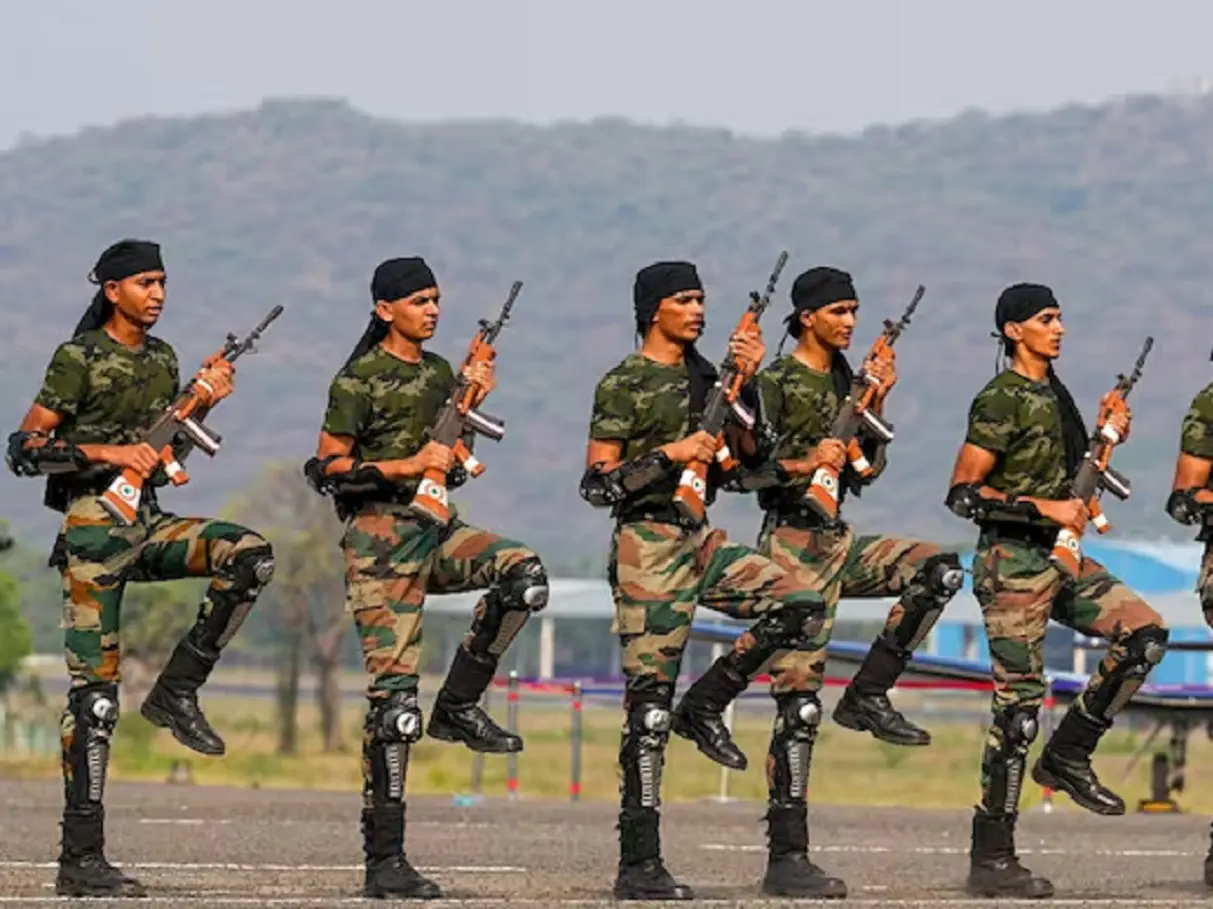
The Agnipath scheme, launched in 2022, had inducted over 1.75 lakh Agniveers by the end of 2025. Photograph: (X)
India’s approach does not choose between land and maritime power; it deliberately sustains both. Land forces continue to anchor continental deterrence and provide strategic depth, while air and naval assets are developed for power projection and sea denial.
The Ministry of Defence’s decision to designate 2025 as the Year of Reforms is not a bureaucratic exercise in rebranding. It is a considered response to a security environment that has grown more demanding, not less. Anchored in Defence Forces Vision 2047, the initiative pursues greater jointness and integration among the three services and works toward the establishment of Integrated Theatre Commands (ITCs). These are not reforms undertaken in the abstract; they are shaped by the reality of over 5,000 kilometres of disputed land borders shared with two nuclear-armed neighbours, and a coastline whose strategic significance continues to grow. Criticism framing these efforts as risking ‘continentalisation’, weakening interoperability, or unleashing unmanageable institutional disruption does not hold up against the geographic facts, the doctrinal record, or the progress already made on the ground.
On the question of continentalisation
The concern about ‘continentalisation’ would carry more weight if India’s strategic circumstances bore any resemblance to those of its critics’ preferred comparisons. China’s reductions in ground forces took place in a setting where direct land threats were considerably fewer. India does not have that luxury. The LAC and the LoC remain live, contested frontiers—not theoretical concerns—and any reform framework that ignores this would be strategically irresponsible.
India’s approach does not choose between land and maritime power; it deliberately sustains both. Land forces continue to anchor continental deterrence and provide strategic depth, while air and naval assets are developed for power projection and sea denial. The structure of the three proposed ITCs reflects precisely this balance. The Northern Theatre Command, headquartered in Lucknow, will manage the China frontier stretching from Ladakh to Arunachal Pradesh. The Western Theatre Command, based in Jaipur, will focus on the Pakistan front. The Maritime Theatre Command at Thiruvananthapuram will be dedicated exclusively to naval imperatives. Each will be led by a unified four-star commander drawing together all three services. Carrier battle groups, island defence, and anti-access and area-denial operations are not afterthoughts in this framework—they have a dedicated command structure of their own.
On force structure and interoperability
According to Global Firepower 2026 rankings, India maintains approximately 1.43 million active military personnel, with the Army accounting for the largest share. This is not the result of institutional inertia or bias toward land power; it reflects operational reality. The reforms do not challenge this—they build upon it. Additional Army formations are being restructured into Integrated Battle Groups, with Air Force close air support, Navy coastal assets, and joint logistics woven into their fabric rather than bolted on as an afterthought.
Trending Stories
&im=FitAndFill=(700,400)&imwidth=280&imheight=210&format=webp&quality=medium)
&imwidth=280&imheight=210&format=webp&quality=medium)
&imwidth=280&imheight=210&format=webp&quality=medium)
&imwidth=280&imheight=210&format=webp&quality=medium)
&imwidth=280&imheight=210&format=webp&quality=medium)
&imwidth=280&imheight=210&format=webp&quality=medium)
&imwidth=280&imheight=210&format=webp&quality=medium)
&imwidth=280&imheight=210&format=webp&quality=medium)
&imwidth=280&imheight=210&format=webp&quality=medium)
&imwidth=280&imheight=210&format=webp&quality=medium)
&imwidth=280&imheight=210&format=webp&quality=medium)
&imwidth=280&imheight=210&format=webp&quality=medium)
&imwidth=280&imheight=210&format=webp&quality=medium)
&imwidth=280&imheight=210&format=webp&quality=medium)
&imwidth=280&imheight=210&format=webp&quality=medium)
&imwidth=280&imheight=210&format=webp&quality=medium)
&imwidth=280&imheight=210&format=webp&quality=medium)
&imwidth=280&imheight=210&format=webp&quality=medium)
&im=FitAndFill=(700,400)&imwidth=280&imheight=210&format=webp&quality=medium)
&imwidth=280&imheight=210&format=webp&quality=medium)
&imwidth=280&imheight=210&format=webp&quality=medium)
&imwidth=280&imheight=210&format=webp&quality=medium)
&imwidth=280&imheight=210&format=webp&quality=medium)
&imwidth=280&imheight=210&format=webp&quality=medium)
&imwidth=280&imheight=210&format=webp&quality=medium)
&imwidth=280&imheight=210&format=webp&quality=medium)
&im=FitAndFill=(700,400)&imwidth=280&imheight=210&format=webp&quality=medium)
&imwidth=280&imheight=210&format=webp&quality=medium)
&imwidth=280&imheight=210&format=webp&quality=medium)
&imwidth=280&imheight=210&format=webp&quality=medium)
&imwidth=280&imheight=210&format=webp&quality=medium)
The June 2025 decision to empower the CDS to issue binding Joint Instructions and Joint Orders across all three services was a meaningful step, not a ceremonial one. It has already begun to cut through the resource allocation silos that have long complicated joint planning.
On interoperability, the criticism is frankly dated. Invoking the 1991 Gulf War as a reference point for evaluating India’s joint capabilities today reflects an unfamiliarity with two decades of quiet but substantive progress in C4ISR—Command, Control, Communications, Computers, Intelligence, Surveillance, and Reconnaissance. The Department of Military Affairs has driven the standardisation of common protocols across services: the expansion of Integrated Material Management Online Systems, the building of tri-service data links, shared encryption standards, and the codification of joint doctrines. Exercises such as TROPEX and Gagan Shakti are not symbolic displays—they are annual tests of whether these systems actually work together. The CDS’s authority, extended in June 2025, to issue single-point operational directives means that sound practices from any one service can now be applied across all three in joint planning.
On indigenisation and procurement
The Atmanirbhar Bharat framework has moved defence indigenisation from aspiration to measurable output. Drones, missiles, radars, and major platforms are increasingly domestically sourced, and this has not come at the cost of operational quality. In the financial year 2025–26, Acceptance of Necessity was accorded for proposals valued at over ₹6.73 lakh crore, with a clear emphasis on joint systems. The tri-service Common Operating Picture—drawing together ISRO satellites, MQ-9B drones, and ground-based sensors—is close to becoming fully operational. The honest assessment is that no core capability has been traded away. What these reforms are building is a more coherent, more responsive force—one better suited to the hybrid and multi-domain scenarios that modern conflict increasingly demands.
On institutional risk and sequencing
The worry that running the Agnipath scheme, the IBG rollout, and theatre command formation simultaneously courts organisational chaos deserves a direct answer. The Swiss Cheese model of cumulative failure that critics invoke is a legitimate framework—but it describes unmanaged change, not what is actually happening here. India’s reform process is governed by iterative wargaming, phased field trials, and sequencing under direct CDS oversight. These are not reforms being pushed through in haste.
The Agnipath scheme, launched in 2022, had inducted over 1.75 lakh Agniveers by the end of 2025. Each inductee undergoes six months of foundational training before moving to unit-specific skill development. The first cohort completes its four-year engagement in 2026. Retention, currently set at 25% and subject to review by the Army Commanders' Conference, is performance-based, selecting those who demonstrate the qualities the force needs for the long term. The demographic effect is deliberate and significant: the average age of the soldier is expected to fall from around 32 to 26 years, bringing with it a generation of personnel comfortable with drones, AI systems, and networked warfare. The fiscal benefit—reduced pension liability freeing funds for capital investment—is a consequential gain, not a minor footnote.
The Rudra Brigade, approved on 26 July 2025, gives concrete form to what IBGs mean in practice. Under a single commander, it brings together infantry, mechanised forces, armour, artillery, special forces—including the newly raised Bhairav light commando battalions—alongside drone units and logistics. It is designed for rapid, multi-axis operations across varied terrain, drawing on Cold Start principles and the operational lessons of recent standoffs. At a target strength of 3,000 to 5,000 personnel, these formations offer a meaningfully different kind of agility from the large divisional structures they are designed to supplement.
On theatre command timelines
Theatre commands have achieved near-unanimous consensus among the services—a degree of institutional alignment that should not be taken for granted. Operational rollout is on track for May 2026, timed to coincide with the extended tenure of the CDS, who will oversee the transition. The logic of sequencing—jointness first, structural integration second—is sound. It keeps operational command distinct from the administrative Raise-Train-Sustain functions, ensuring that the command structure being built is oriented toward warfighting from the outset.
What is taking shape is a force that is leaner without being hollowed out, more technologically capable without having sacrificed proven strengths, and genuinely joint in a way that earlier structures never fully achieved. The spectrum of threats India faces — from high-altitude border confrontations to maritime competition to operations in cyberspace — demands exactly this kind of force. Continued investment in indigenisation, joint training, and careful resource stewardship will carry this forward. The armed forces' commitment to mission readiness is not a slogan at the end of a policy document. It is the standard against which every one of these reforms will ultimately be judged.
(Disclaimer: The views of the writer do not represent the views of WION or ZMCL. Nor does WION or ZMCL endorse the views of the writer.)