EC appointment law: Why is the 2023 act controversial, and what happens next? WION explains

&imwidth=600&imheight=450&format=webp&quality=medium "EC appointment law: Why is the 2023 act controversial, and what happens next? WION explains")
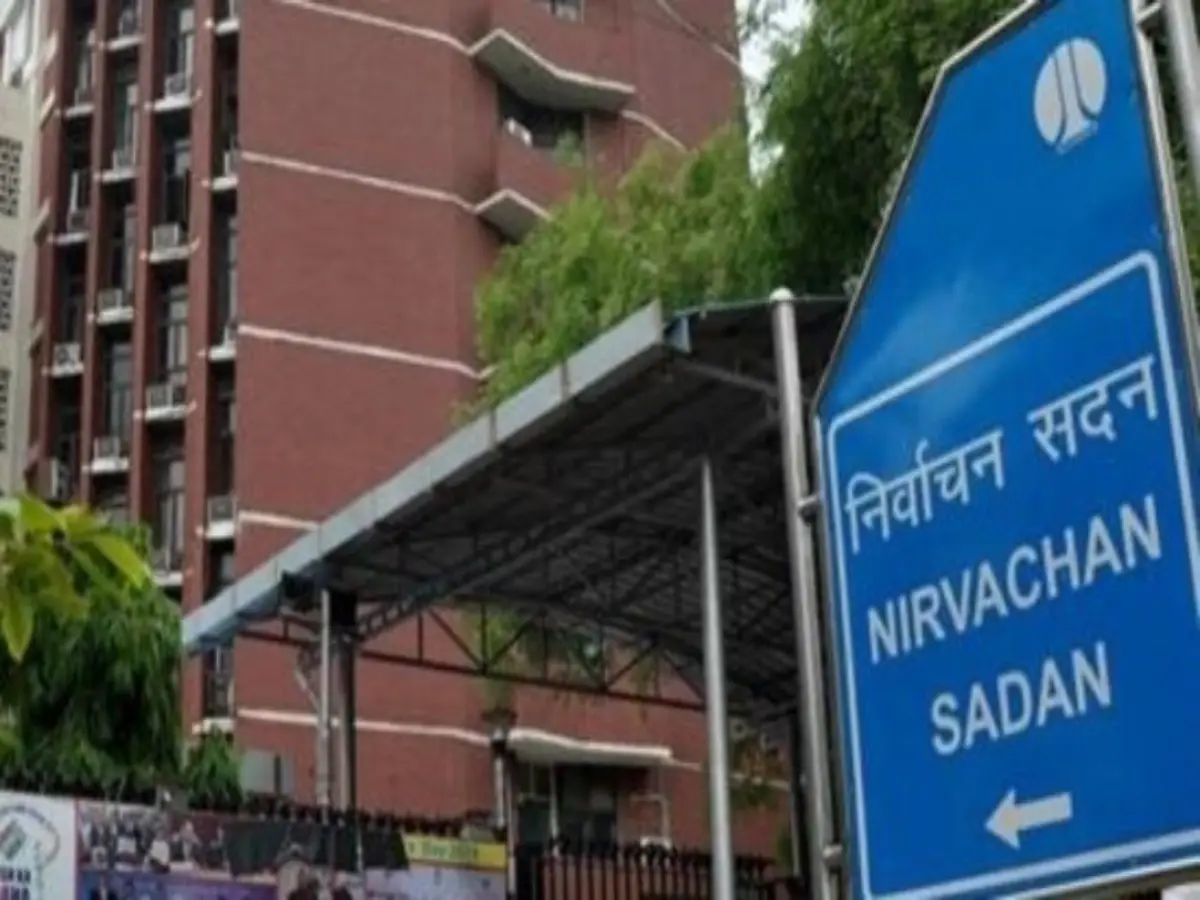
Election commission building
It is being alleged by opposition parties that several provisions of the Chief Election Commissioner and Other Election Commissioners Act, 2023 gives the executive "overwhelming" power.
The petitions challenging the 2023 law governing the appointment process for the Chief Election Commissioners and Election Commissioners was referred by the Supreme Court of India to a larger bench on Wednesday (Spet 23). The two-judge bench of Justice Dipankar Datta and Justice Satish Chandra Sharma disagreed on the matter but came to the conclusion that it should be placed before the CJI and not be referred to a three-judge bench, which is the normal procedure, to avoid further delay.
What was the joint order?
The bench agreed that referring the matter to a 3-judge bench on the preliminary point of reference would make it tedious and time taking and not solve the purpose. This was despite Justice Datta holding the view that the Union's demand for a larger bench reference was unwarranted and Justice Sharma thinking otherwise.
"Thus, we direct that the papers be placed before the CJI for considering the desirability of constituting a constitution bench of such number of judges to decide the question of vires of Sec 7 and the other provisions of Act," the bench said.
Why is the 2023 EC appointment law controversial?
It is being alleged by opposition parties that several provisions of the Chief Election Commissioner and Other Election Commissioners (Appointment, Conditions of Service and Term of Office) Act, 2023 gives the executive "overwhelming" power to appoint its nominee as election commissioner. The selection panel composed of the PM, a Cabinet minister and the leader of the opposition which tilts it in "favour" of the government.
Trending Stories
)
)
)
)
)
)
)
)
)
)
)
)
)
)
)
)
)
)
)
)
)
&im=FitAndFill=(700,400))
)
)
)
)
)
)
)
)
&im=FitAndFill=(700,400))
)
)
&im=FitAndFill=(700,400))
)
The 2023 law was framed to replace an SC verdict which had directed that selection be done by a committee of the PM, CJI and leader of the opposition until Parliament determined the composition by passing a law.
ECI rift in open, opposition demands EC Gyanesh Kumar be impeached
The transfer of petition by the SC has come at a time when the rift in the Election Commission of India is out in the open. According to a report by the Indian Express, Election Commissioners Sukhbir Singh Sandhu and Vivek Joshi formally objected 14 times over a period of ten months, four times on a single day, to decisions and processes under CEC Gyanesh Kumar specifically tied to the Special Intensive Revision (SIR) of electoral rolls. The exercise has affected roughly 13 crore voters across India.
The ECI has attempted to shrug off the controversy, stating that differing opinions among Election Commission members are “a normal part” of the decision-making, while opposition parties have voiced their concern and demanded impeachment of the Chief Election Commissioner, Gyanesh Kumar.
