Why did Rahul Gandhi refer to '21st Century Ettappans' while speaking of delimitation exercise?

&imwidth=600&imheight=450&format=webp&quality=medium "Why did Rahul Gandhi refer to '21st Century Ettappans' while speaking of delimitation exercise?")
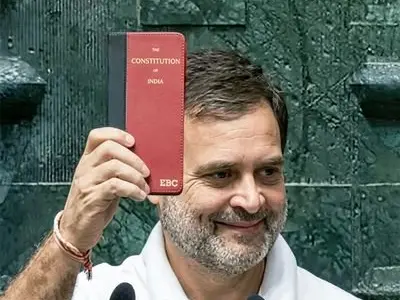
A file photo of Rahul Gandhi Photograph: (Others)
Rahul Gandhi recently called the supporters of the proposed delimitation exercise “21st-century Ettappans”. The remark revives the Ettappan legacy in Tamil Nadu amid debate over Lok Sabha seat redistribution.
Rahul Gandhi recently called supporters of the proposed national delimitation exercise "21st-century Ettappans". He made these remarks on August 1 while addressing the press in Mamallapuram in the southern state of Tamil Nadu. Who was Ettappan and why did India's Leader of Opposition refer to him? What is the context of the delimitation exercise in Tamil Nadu?
What did Rahul Gandhi say about Ettappan?
Rahul Gandhi claimed that the ruling Bharatiya Janata Party (BJP) government's proposed delimitation exercise is designed to reduce the political representation and influence of Tamil Nadu. He warned political parties against supporting the constitutional and legislative changes required to implement the exercise.
"Anyone who supports delimitation is betraying Tamil Nadu, betraying the future of Tamil Nadu, and allowing the RSS and BJP to attack the people of Tamil Nadu and its future. Such a person is a 21st-century Ettappan," he said, speaking after a training camp for Congress district presidents.
Also read: 'Delimitation designed to disenfranchise Tamil Nadu': Rahul Gandhi urges parties to oppose Bill
Who was Ettappan?
Trending Stories
&imwidth=280&imheight=210&format=webp&quality=medium)
&imwidth=280&imheight=210&format=webp&quality=medium)
&imwidth=280&imheight=210&format=webp&quality=medium)
&imwidth=280&imheight=210&format=webp&quality=medium)
&imwidth=280&imheight=210&format=webp&quality=medium)
&imwidth=280&imheight=210&format=webp&quality=medium)
&imwidth=280&imheight=210&format=webp&quality=medium)
&imwidth=280&imheight=210&format=webp&quality=medium)
&imwidth=280&imheight=210&format=webp&quality=medium)
&imwidth=280&imheight=210&format=webp&quality=medium)
&imwidth=280&imheight=210&format=webp&quality=medium)
&imwidth=280&imheight=210&format=webp&quality=medium)
&imwidth=280&imheight=210&format=webp&quality=medium)
&imwidth=280&imheight=210&format=webp&quality=medium)
&imwidth=280&imheight=210&format=webp&quality=medium)
&imwidth=280&imheight=210&format=webp&quality=medium)
&imwidth=280&imheight=210&format=webp&quality=medium)
&imwidth=280&imheight=210&format=webp&quality=medium)
&im=FitAndFill=(700,400)&imwidth=280&imheight=210&format=webp&quality=medium)
&imwidth=280&imheight=210&format=webp&quality=medium)
&imwidth=280&imheight=210&format=webp&quality=medium)
&imwidth=280&imheight=210&format=webp&quality=medium)
&imwidth=280&imheight=210&format=webp&quality=medium)
&im=FitAndFill=(700,400)&imwidth=280&imheight=210&format=webp&quality=medium)
&imwidth=280&imheight=210&format=webp&quality=medium)
&imwidth=280&imheight=210&format=webp&quality=medium)
&imwidth=280&imheight=210&format=webp&quality=medium)
&imwidth=280&imheight=210&format=webp&quality=medium)
&imwidth=280&imheight=210&format=webp&quality=medium)
&imwidth=280&imheight=210&format=webp&quality=medium)
&imwidth=280&imheight=210&format=webp&quality=medium)
&imwidth=280&imheight=210&format=webp&quality=medium)
&imwidth=280&imheight=210&format=webp&quality=medium)
&imwidth=280&imheight=210&format=webp&quality=medium)
&imwidth=280&imheight=210&format=webp&quality=medium)
&imwidth=280&imheight=210&format=webp&quality=medium)
Ettappan is a reference to Ettappa Nayak, the Raja of Ettayapuram, an 18th-century chieftain in present-day Tamil Nadu. In popular historical memory, he is accused of having aided the British East India Company in capturing the legendary freedom fighter Veerapandiya Kattabomman, although some historians have questioned this portrayal. In Tamil political discourse over the years, the name "Ettappan" has become synonymous with a traitor or betrayer.
Why is the delimitation exercise opposed by some parties in Tamil Nadu?
The delimitation exercise envisages a population-based allocation of seats among the states in Parliament, following the next Census and subject to the constitutional and legislative framework adopted by Parliament. The proposed exercise is opposed by Tamil Nadu's Dravida Munnetra Kazhagam (DMK), the Congress party, and Tamilaga Vettri Kazhagam or TVK led by Chief Minister Vijay. Their general argument is that a purely population-based allocation of seats would penalise southern states who had successfully controlled population growth over past decades.
The Centre and BJP, however, strongly support the process, arguing it will modernise parliamentary representation by aligning it more closely with population distribution.
Read more: Delimitation Bill explained: Why is it triggering a North-South political battle in India?
India's delimitation exercise: Permutations, combinations and doubts
The strength of the Lok Sabha could expand from 543 at present to around 850 seats if and when the delimitation exercise is completed, although the final number will depend on the legislation passed by Parliament. A study by PRS Legislative Research projected that, under one possible redistribution model, Tamil Nadu's share of Lok Sabha seats could fall from the current 39 seats to around 31 or 32 if the total strength of the lower House of Parliament were not expanded proportionately. Northern states such as Uttar Pradesh and Bihar with fast-growing populations would gain additional seats if demographics is the principal criterion.
Some other projections cited in the media claim that Tamil Nadu's absolute seat count could increase to about 59 seats. The BJP also maintains that Tamil Nadu's seats will rise under an expanded Lok Sabha rather than shrink.
Even if the absolute number of Members of Parliament from Tamil Nadu increases, there is concern in the state that its relative share of seats in the Lok Sabha could decline from the current 7.18 per cent to about 5.88 per cent under some projections. Critics argue that this would reduce the state's proportional influence in national lawmaking, even if its total number of MPs increases.