What really happened on 8 August, 1942? Check why this date was key moment in India's freedom struggle

&imwidth=600&imheight=450&format=webp&quality=medium "What really happened on 8 August, 1942? Check why this date was key moment in India's freedom struggle")
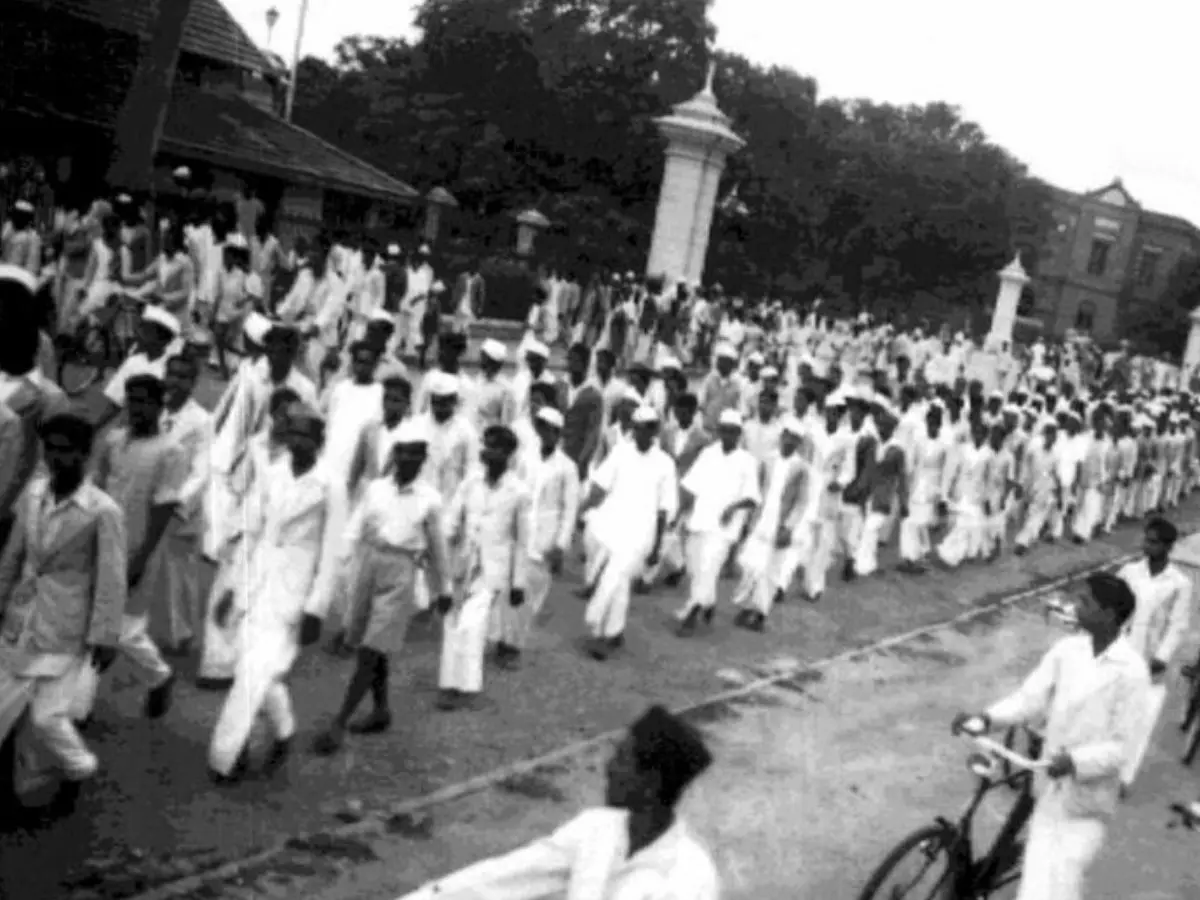
The movement unified diverse groups in the fight against colonialism Photograph: (Wikimedia commons)
Although the movement didn’t bring immediate independence, but it played a major role in India’s fight for freedom. The British tried to stop it by using force and arresting thousands of people.
The Quit India Movement, also known as the August Kranti, was a major protest launched on 8 August, 1942 by Mahatma Gandhi. It was a strong call for the British and their army to leave India. Mahatma Gandhi gave his well-known "Do or Die" speech during a meeting of the All India Congress Committee in Bombay and called for immediate end of British rule. At the same meeting, the Congress party approved the Quit India Resolution, which clearly demanded that the British must quit India. This event became a key moment in the country’s fight for freedom.
Background of the Quit India Movement (1942)
- Cripps Mission (setting up of an Indian dominion) failed to offer India full independence.
- World War II caused serious economic problems in India.
The people of India were already in anger because of the early struggles like the Civil Disobedience Movement and the demand for Purna Swaraj (complete independence).
With Britain busy in the World War II and weaker than before, Mahatma Gandhi saw that time as the right time to launch a final push for the freedom.
Causes of the Quit India Movement
Trending Stories
)
)
)
)
)
)
)
)
)
)
)
)
)
)
)
)
)
)
)
)
)
)
)
)
)
)
)
)
)
&im=FitAndFill=(700,400))
)
)
)
)
)
)
)
)
&im=FitAndFill=(700,400))
)
)
)
The main reasons behind the Quit India movement were:
- Failure of the Cripps Mission
- Worsening economy due to World War II
- Fear of Japanese invasion as they approached India’s borders
- Growing anger among Indians due to years of British rule and suffering
Significance and impacts of the Quit India Movement
Even though the movement was crushed by the British by 1944, it had a big impact on India’s freedom struggle. Some of its impacts are -
A powerful and widespread protest
The movement saw more energy and action in people than the earlier protests like the Non-Cooperation Movement or Civil Disobedience Movement. It became more radical and intense, especially in villages and among poor workers, as these workers and people gets affected by rising prices during the war.
Mass participation
Though many top leaders were jailed early, but ordinary people like youth, farmers, tribal groups and women took the lead inthe protest and the protest became a true people’s movement led from the grassroots level.
Rise of new leaders
Young leaders like Jayaprakash Narayan, Ram Manohar Lohia and Aruna Asaf Ali emerged as strong voices during this time.
Aruna Asaf Ali alone became a symbol of bravery and resistance.
Impact on British Rule
Though the British did not leave immediately but their control over Indians became weaker. The movement inspired future protests, like those during the INA trials and helped to build the momentum toward India’s independence in 1947.