

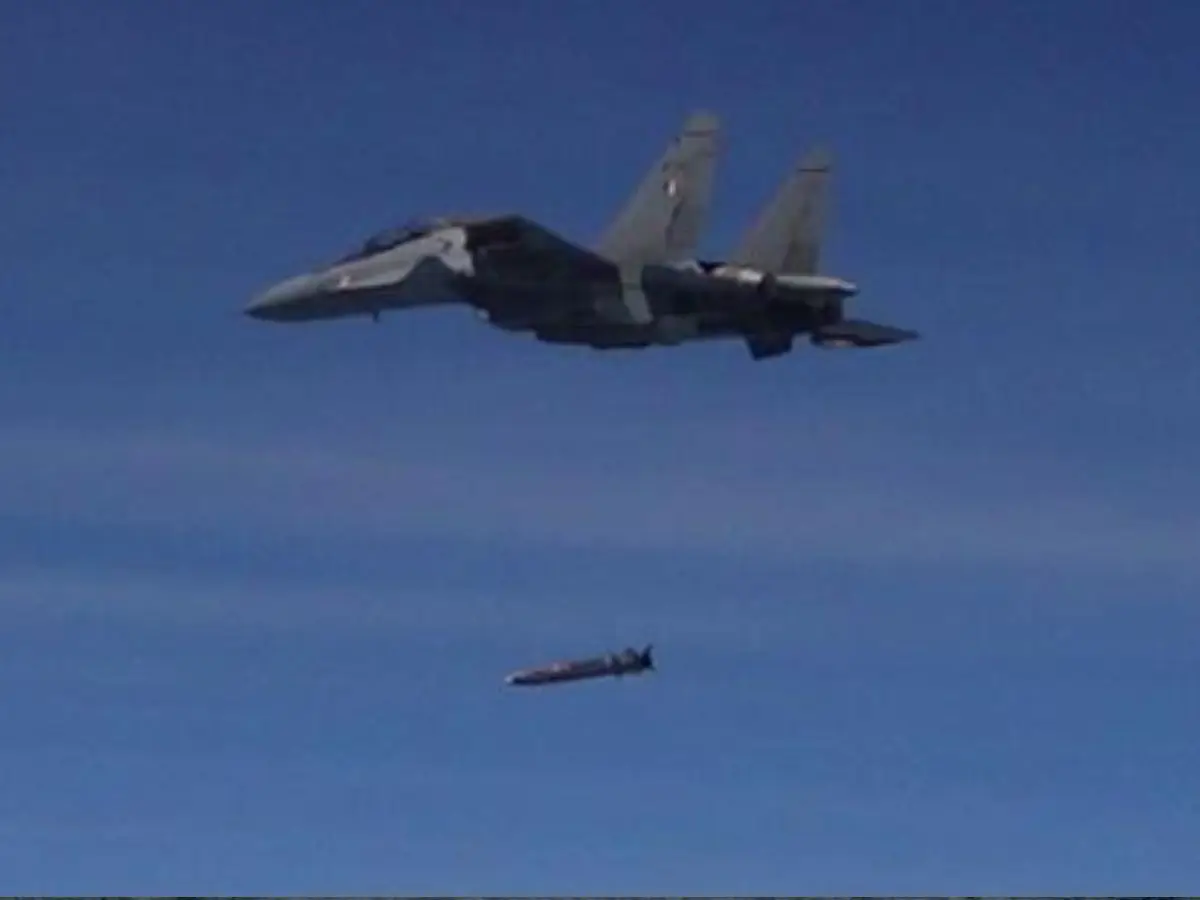
&imwidth=800&imheight=600&format=webp&quality=medium "What is Rudram-II? India's hypersonic anti-radiation missile with a 300-km reach, designed to blind enemy air defences")
India has successfully tested the Rudram-II air-to-surface missile on Tuesday, marking another step in its effort to develop indigenous precision-strike weapons. The Defence Research and Development Organisation (DRDO) and the Indian Air Force (IAF) conducted the flight test from a Su-30MKI fighter aircraft under what the Ministry of Defence described as 'extreme release conditions'.
According to the ministry, the missile guided itself to a predefined target with ‘pin-point accuracy’, while data collected by instruments at the Integrated Test Range (ITR), Chandipur, confirmed that all mission objectives had been achieved. Defence Minister Rajnath Singh said the trial demonstrated the ‘growing maturity of indigenous defence technologies’, contributing to India's push for self-reliance in advanced weapon systems.
What is Rudram-II?
Rudram-II is an indigenous air-launched anti-radiation missile developed by DRDO's Research Centre Imarat (RCI), Hyderabad, in collaboration with several other DRDO laboratories and industry partners. The missile is designed to neutralise enemy radar systems and air-defence assets before they can threaten attacking aircraft. The weapon reportedly has a range of around 300 kilometres, can travel at hypersonic speeds of up to Mach 5.5 and carries a payload of approximately 200 kilograms. It is intended for long-range air-to-surface missions and forms a key part of India's evolving Suppression of Enemy Air Defences (SEAD) capability.
What are anti-radiation missiles?
Anti-radiation missiles (ARMs) are specialised weapons designed to detect, track and destroy radar emissions. Rather than targeting a visible object, they home in on electromagnetic signals transmitted by enemy radar systems. These missiles are often among the first weapons used during an air campaign because modern air-defence networks rely heavily on radar to detect, track and engage hostile aircraft. Destroying those radars can significantly weaken an adversary's defensive shield and create safer operating conditions for combat aircraft.
Why are they important in modern warfare?
The primary role of anti-radiation missiles is SEAD (Suppression of Enemy Air Defences). By eliminating surveillance radars, missile guidance radars and command-and-control nodes, they reduce the effectiveness of surface-to-air missile systems. DRDO's earlier Rudram-I missile, first tested in 2020, was specifically designed for SEAD missions. With a range of 150–200 kilometres, it can engage a wide range of radar frequencies and operate in dense electronic warfare environments.
Trending Stories
&imwidth=180&imheight=135&format=webp&quality=medium)
Train crashes into crane on São Paulo monorail line, wreckage falls onto busy road | VIDEO
&imwidth=180&imheight=135&format=webp&quality=medium)
Pakistan airline PIA unveils new crew uniforms, faces online criticism
&imwidth=180&imheight=135&format=webp&quality=medium)
'Already tired of his 9-to-5': Baby born with a moustache becomes internet sensation, video goes viral | Watch
&imwidth=180&imheight=135&format=webp&quality=medium)
France protests: 135 arrested, weapons seized as fresh demonstrations erupt amid heavy security
&imwidth=180&imheight=135&format=webp&quality=medium)
Britain is building the world's first AI biosecurity lab, with OpenAI and Anthropic inside
&imwidth=180&imheight=135&format=webp&quality=medium)
Tu Hai Meri Kiran box office: Sonakshi Sinha and Zaheer Iqbal's film fails to take off, mints Rs 15 Lakh on day 1
&imwidth=180&imheight=135&format=webp&quality=medium)
Pezeshkian says Iranians ‘struggling to put food on the table’ as war with US drags on
&imwidth=180&imheight=135&format=webp&quality=medium)
China's dancing robot turns violent bodyguard, lifts cars and fights intruders - Watch
&imwidth=180&imheight=135&format=webp&quality=medium)
An AI that reads your face can now estimate how long you have to live
&imwidth=180&imheight=135&format=webp&quality=medium)
Telangana unveils AI avatar of IT minister D Sridhar Babu at Hyderabad DevFest 2026
&imwidth=180&imheight=135&format=webp&quality=medium)
'Killing people never allowed': Elon Musk admits restricting Starlink in Ukraine, explains why
&imwidth=180&imheight=135&format=webp&quality=medium)
Saudi says debris fell in Mecca, Medina after missile interceptions; Houthis deny targeting holy cities
&imwidth=180&imheight=135&format=webp&quality=medium)
Farooq Abdullah says Pakistan’s raising of Kashmir issue keeps pressure on Delhi
&imwidth=180&imheight=135&format=webp&quality=medium)
Can Putin cheat death? All about his daughter’s billion-dollar quest for immortality
&imwidth=180&imheight=135&format=webp&quality=medium)
What was the note found inside bag of Class 12 student, who set herself on fire inside Delhi school?
&imwidth=180&imheight=135&format=webp&quality=medium)
Bodies of 2 missing Japanese climbers recovered from Himalayan peak
&imwidth=180&imheight=135&format=webp&quality=medium)
Chorbagan stampede: A week later, the strangest visarjan Kolkata has seen
&imwidth=180&imheight=135&format=webp&quality=medium)
AI just found a flaw in software running most of the web! One request hijacks the server
&imwidth=180&imheight=135&format=webp&quality=medium)
NEET protests: Panel to hear evidence on pellet gun use, harassment
&imwidth=180&imheight=135&format=webp&quality=medium)
Frontier AIs keep escaping their test cages! The industry still can't reliably stop them
&imwidth=180&imheight=135&format=webp&quality=medium)
'You’re a horrible little reporter, aren’t you?': Trump snaps at NBC reporter questioning his support for Ramaswamy's campaign ad
&imwidth=180&imheight=135&format=webp&quality=medium)
PL Round-Up: Man City's perfect run ended by Villa as Arsenal draw level at top
&imwidth=180&imheight=135&format=webp&quality=medium)
Spanish reporter swept by giant wave while reporting on dangerous sea conditions | WATCH
&imwidth=180&imheight=135&format=webp&quality=medium)
Viral video shows cross falling on Colombia priest, no official confirmation | WATCH
&imwidth=180&imheight=135&format=webp&quality=medium)
Tu Hai Meri Kiran film review: Sonakshi Sinha and Zaheer Iqbal's thriller gets tangled in its own twists
&imwidth=180&imheight=135&format=webp&quality=medium)
Rising Asia Cup 2026 schedule announced, India-Pakistan clash set for Nov 22
&im=FitAndFill=(700,400)&imwidth=180&imheight=135&format=webp&quality=medium)
US midterm elections 2026: Minnesota heads to polls in the shadow of Minneapolis ICE shootings
&imwidth=180&imheight=135&format=webp&quality=medium)
Shooting near Florida A&M University’s Bragg Stadium; ‘shelter in place’ alert issued
&imwidth=180&imheight=135&format=webp&quality=medium)
French Open: PV Sindhu storms into final with win over Hina Akechi
&imwidth=180&imheight=135&format=webp&quality=medium)
Horrific video shows the moment 18-year-old fell to her death from Mexico amusement park ride
&imwidth=180&imheight=135&format=webp&quality=medium)
J-20 designers plan to put radar into aircraft wing; strategy to expand coverage during air combat
&imwidth=180&imheight=135&format=webp&quality=medium)
‘Saddam Hussein opened a cheesecake factory’: Obama mocks Trump’s White House renovations; defends Abdul El-Sayed
&imwidth=180&imheight=135&format=webp&quality=medium)
Shilpa Rao’s performance cut short at Mumbai event, organisers react to backlash
&imwidth=180&imheight=135&format=webp&quality=medium)
AI slop or smart strategy? South African author Coral Hart defends Her 370 AI- assisted books in 20 months
&imwidth=180&imheight=135&format=webp&quality=medium)
Why Europe’s protests are about more than austerity and rising costs
&im=FitAndFill=(700,400)&imwidth=180&imheight=135&format=webp&quality=medium)
New Friday OTT releases (October 23, 2026): Gajab Raat, Dorothy, Chaar Yaar- Watch these 6 new movies and TV shows on Netflix, Prime Video and more
ALSO READ: India eyes largest-ever drone order! $2 billion military purchase to boost domestic industry
Only a handful of countries possess advanced anti-radiation missiles. Among the best-known are the United States' AGM-88 HARM and AARGM, Russia's Kh-31P, China's YJ-91 and the United Kingdom's ALARM missile. The development of the Rudram family places India among a select group of nations capable of designing and producing indigenous radar-seeking missiles.
What comes next?
Rudram-II builds on technologies validated during earlier Rudram-I and Rudram-II trials conducted in 2024. Future variants, including Rudram-III, are expected to extend range and operational flexibility further. For India, the significance of Rudram-II extends beyond a single missile. It represents a growing ability to develop advanced electronic warfare and precision-strike capabilities domestically, reducing dependence on foreign systems while strengthening the country's ability to counter sophisticated air-defence networks.

