West Bengal Elections 2026: From Suvendu Adhikari to Humayun Kabir - A look at key faces and seats in Phase 1

&imwidth=600&imheight=450&format=webp&quality=medium "West Bengal Elections 2026: From Suvendu Adhikari to Humayun Kabir - A look at key faces and seats in Phase 1")
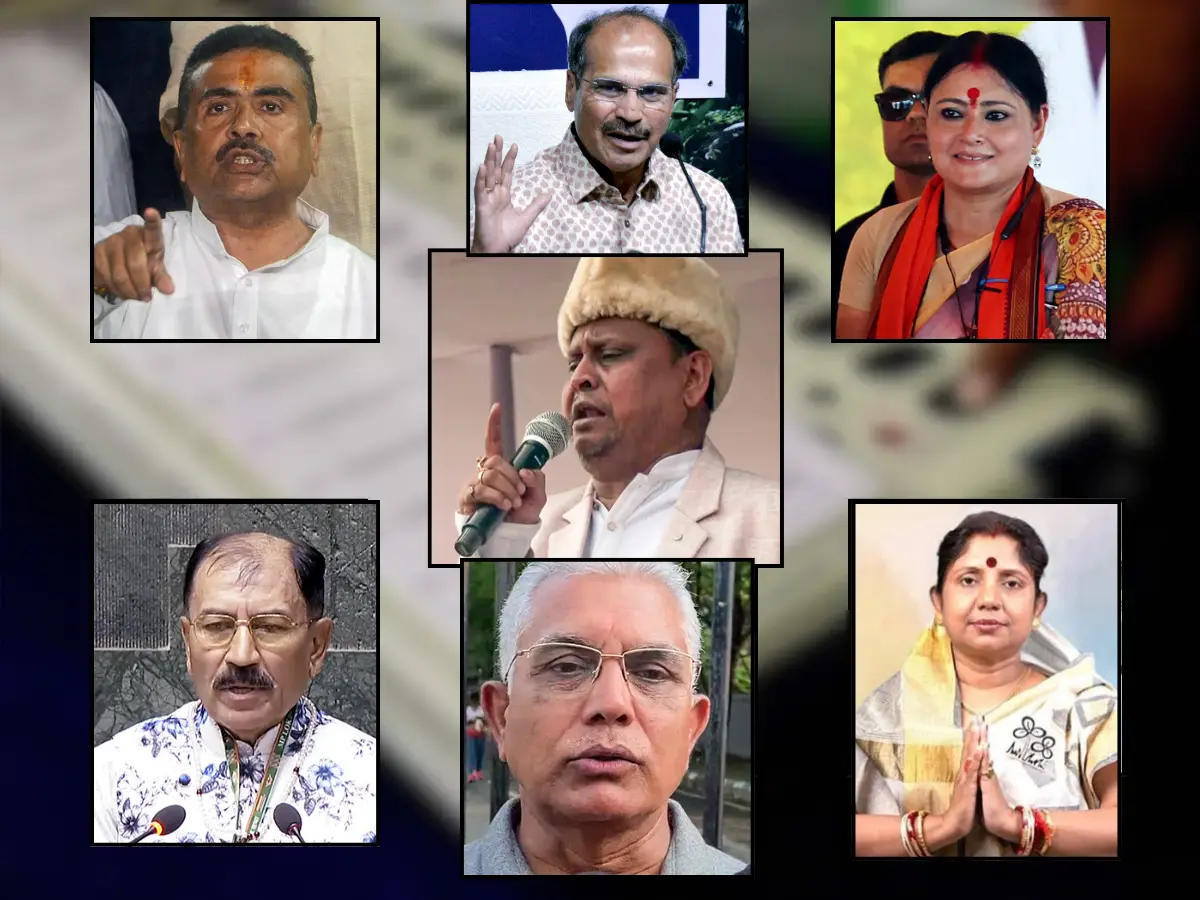
West Bengal Elections 2026 Phase 1 key candidates Photograph: (ANI/Facebook/WION Combination image)
Mamata Banerjee and Suvendu Adhikari lead a fierce BJP–TMC battle as West Bengal begins phase 1 polling. Key contests across 152 seats feature leaders like Dilip Ghosh, shaping the high-stakes election outcome.
The first phase of the West Bengal Assembly Elections 2021 is set for April 23, marking a crucial moment in the state’s high-stakes political battle. This phase covers several key constituencies and has drawn national attention due to intense campaigning and sharp political rivalries. Among the prominent candidates is Suvendu Adhikari, considered a major face of the BJP in the state. The contest reflects a broader struggle for power between dominant regional forces and national parties, making the opening phase a significant indicator of the election’s overall direction.
Nandigram: Suvendu Adhikari vs Pabitra Kar
In Nandigram, the spotlight is once again on BJP's main face in Bengal - Suvendu Adhikari - who faces Pabitra Kar of the TMC. Adhikari, once a close aide of Mamata Banerjee, has since become one of her fiercest rivals. He is contesting again from Nandigram, a seat he famously won in 2021 by defeating Banerjee, and is also in the fray from Bhabanipur. Nandigram holds deep political significance for Banerjee, as it was the epicentre of the 2007 anti-land acquisition movement that propelled her and the TMC to power in West Bengal. Her defeat here in 2021 was both symbolic and politically significant. This makes the constituency not just an electoral battleground, but a prestige fight closely tied to Banerjee’s political legacy.
Baharampur: Adhir Ranjan Chowdhury vs Subrata Maitra
In Baharampur, a high-profile contest is unfolding between Adhir Ranjan Chowdhury and Subrata Maitra. A veteran leader of the Indian National Congress, Chowdhury is a five-time MP from Baharampur and has served as the Leader of Opposition in the Lok Sabha. He is now contesting the assembly election after his defeat in the 2024 parliamentary polls. Facing him is Maitra of the Bharatiya Janata Party, the sitting MLA, making this a closely watched battle with significant political stakes in the constituency.
Trending Stories
&im=FitAndFill=(700,400)&imwidth=280&imheight=210&format=webp&quality=medium)
&imwidth=280&imheight=210&format=webp&quality=medium)
&imwidth=280&imheight=210&format=webp&quality=medium)
&imwidth=280&imheight=210&format=webp&quality=medium)
&imwidth=280&imheight=210&format=webp&quality=medium)
&imwidth=280&imheight=210&format=webp&quality=medium)
&imwidth=280&imheight=210&format=webp&quality=medium)
&imwidth=280&imheight=210&format=webp&quality=medium)
&imwidth=280&imheight=210&format=webp&quality=medium)
&imwidth=280&imheight=210&format=webp&quality=medium)
&imwidth=280&imheight=210&format=webp&quality=medium)
&imwidth=280&imheight=210&format=webp&quality=medium)
&imwidth=280&imheight=210&format=webp&quality=medium)
&im=FitAndFill=(700,400)&imwidth=280&imheight=210&format=webp&quality=medium)
&imwidth=280&imheight=210&format=webp&quality=medium)
&imwidth=280&imheight=210&format=webp&quality=medium)
&imwidth=280&imheight=210&format=webp&quality=medium)
&imwidth=280&imheight=210&format=webp&quality=medium)
&imwidth=280&imheight=210&format=webp&quality=medium)
&imwidth=280&imheight=210&format=webp&quality=medium)
&imwidth=280&imheight=210&format=webp&quality=medium)
&imwidth=280&imheight=210&format=webp&quality=medium)
&imwidth=280&imheight=210&format=webp&quality=medium)
&im=FitAndFill=(700,400)&imwidth=280&imheight=210&format=webp&quality=medium)
&imwidth=280&imheight=210&format=webp&quality=medium)
&imwidth=280&imheight=210&format=webp&quality=medium)
&imwidth=280&imheight=210&format=webp&quality=medium)
&imwidth=280&imheight=210&format=webp&quality=medium)
&imwidth=280&imheight=210&format=webp&quality=medium)
&imwidth=280&imheight=210&format=webp&quality=medium)
&imwidth=280&imheight=210&format=webp&quality=medium)
&imwidth=280&imheight=210&format=webp&quality=medium)
&imwidth=280&imheight=210&format=webp&quality=medium)
&imwidth=280&imheight=210&format=webp&quality=medium)
&imwidth=280&imheight=210&format=webp&quality=medium)
Asansol Dakshin: Agnimitra Paul vs Tapas Banerjee
Agnimitra Paul, a prominent BJP face in the state, returns to defend her position after her 2021 win. She is challenged by TMC’s Tapas Banerjee, a seasoned politician who previously held the seat for a decade.
Kharagpur Sadar: Dilip Ghosh vs Pradip Sarkar
In Kharagpur Sadar, the contest brings together two strong political figures: Dilip Ghosh of the Bharatiya Janata Party and Pradip Sarkar of the All India Trinamool Congress. A senior BJP leader and former state president of the party, Ghosh previously won this seat in 2016 and is seeking to reclaim it, banking on his organisational strength and grassroots appeal. His rival, Pradip Sarkar, represents the ruling TMC and had secured victory in the 2019 bypoll, giving the party control over the constituency. The contest is seen as a direct face-off between BJP’s early expansion in the region and TMC’s consolidation of its position in subsequent years.
Mathabhanga: Nisith Pramanik vs Sablu Barman
In Mathabhanga (SC), the contest features a high-profile face-off between Nisith Pramanik of the BJP and Sablu Barman of the TMC. Pramanik, a former Union minister and influential BJP leader in North Bengal, is seen as a key figure in the party’s efforts to consolidate its base in the region’s Scheduled Caste constituencies.On the other side, Sablu Barman represents the ruling TMC’s attempt to retain control of the seat amid a multi-cornered contest that also includes candidates from the Communist Party of India (Marxist) and the Indian National Congress.
Domkal: Humayun Kabir vs Mostafijur Rahaman
Former IPS officer Humayun Kabir, once known for his tough policing and crackdown on organised crime, is contesting from Domkal in Murshidabad district.
Kabir, a 2003-batch IPS officer of the West Bengal cadre, had earned a reputation of taking on hardened criminals, including the arrest of notorious gangster “Hathkata Dilip.” Now re-entering the electoral fray, he has been fielded by TMC from Domkal instead of Debra, where he had previously contested. He is up against Mostafijur Rahaman of the Communist Party of India (Marxist).
Rejinagar: Humayun Kabir vs Ataur Rahaman
Humayun Kabir, a former TMC MLA from Bharatpur who was expelled from the party in December 2025 following controversies surrounding the proposed construction of a Babri Masjid replica, is contesting from Rejinagar and Naoda (Nowda) in Murshidabad district. A former TMC minister, now contesting under his own banner, the Aam Janata Unnayan Party, after his expulsion from the TMC. He is up against Ataur Rahaman of TMC. The BJP has nominated Bapan Ghosh, and Congress candidate is Jillu Sheikh. In 2021, TMC won the seat. Interestingly, HUmayun Kabir is also contesting from Nowda against BJP's Rana Mondal, TMC's Shaina Momtaz Khan and Congress' Matiur Rahman.
Maldaha (SC): Lipika Barman Ghosh vs Gopal Chandra Saha
The Maldaha (SC) seat is witnessing a keen contest between Lipika Barman Ghosh of the TMC and Gopal Chandra Saha of the BJP. The constituency holds strategic importance within the SC/ST belt of Malda district, where electoral dynamics have been evolving rapidly. Once considered a bastion of the Indian National Congress (INC), the region saw a notable shift during the 2019 elections, when the BJP made significant inroads.
Raiganj: Kaushik Choudhury vs Krishna Kalyani
TMC's Krishna Kalyani, who had earlier won the seat on a BJP ticket in 2024 before switching sides, is now contesting against BJP’s Kaushik Choudhury. Raiganj has emerged as a crucial battleground, with a significant Muslim electorate—around 42–49percent—often playing a decisive role in determining the outcome. Over the past decade, the seat has witnessed major political shifts, moving from Congress to CPI(M) in 2014, then to the BJP in 2019, and now becoming a closely fought contest between the BJP and TMC. Bordering Bangladesh, the constituency is sensitive to issues such as cross-border movement, the role of border security forces, and policies like the Citizenship Amendment Act (CAA) and National Register of Citizens (NRC), all of which influence voter sentiment.
Other key constituencies
Other key constituencies to watch include Balurghat, Onda, Darjeeling, and Jangipur, each reflecting distinct regional and political dynamics. In Jangipur, the All India Trinamool Congress has fielded Jakir Hossain, a prominent businessman known as the “bidi king.” ADR report highlight his significant financial profile, with declared assets worth around ₹133 crore, making him the richest candidates in the fray. In Onda, the contest draws attention due to the presence of Subrata Dutta, who has been noted in reports for having the highest number of criminal cases among candidates in this set of constituencies. The seat remains a key TMC–BJP battleground, reflecting both anti-incumbency concerns and organisational strength on the ground. In Balurghat, rural and border-area issues dominate the narrative. Darjeeling continues to remain politically sensitive in the hill region, where identity, autonomy, and regional party alliances play a decisive role, with the BJP and its local partners competing against the TMC’s expansion efforts.
Which day will decide the fate of West Bengal Assembly?
The Election Commission of India (ECI) announced that polling for all 294 Assembly constituencies in West Bengal will take place in two phases on April 23 and April 29. The counting of votes is set for May 4, with the entire election process expected to conclude by May 6. The state has a total electorate of over 6.45 crore voters. According to the ECI, the first phase will cover 152 constituencies. The deadline for filing nominations is April 6, followed by scrutiny on April 7, while candidates can withdraw their nominations until April 9. The second phase will include 142 constituencies, with its notification scheduled for April 2, 2026. Candidates can submit nominations until April 9, with scrutiny on April 10 and withdrawal permitted until April 13. In the last West Bengal Assembly election held in 2021, the All India Trinamool Congress (TMC), led by Mamata Banerjee, won a decisive landslide victory.

