UK honours exiled Indian princess who fought for women's right to vote in UK elections

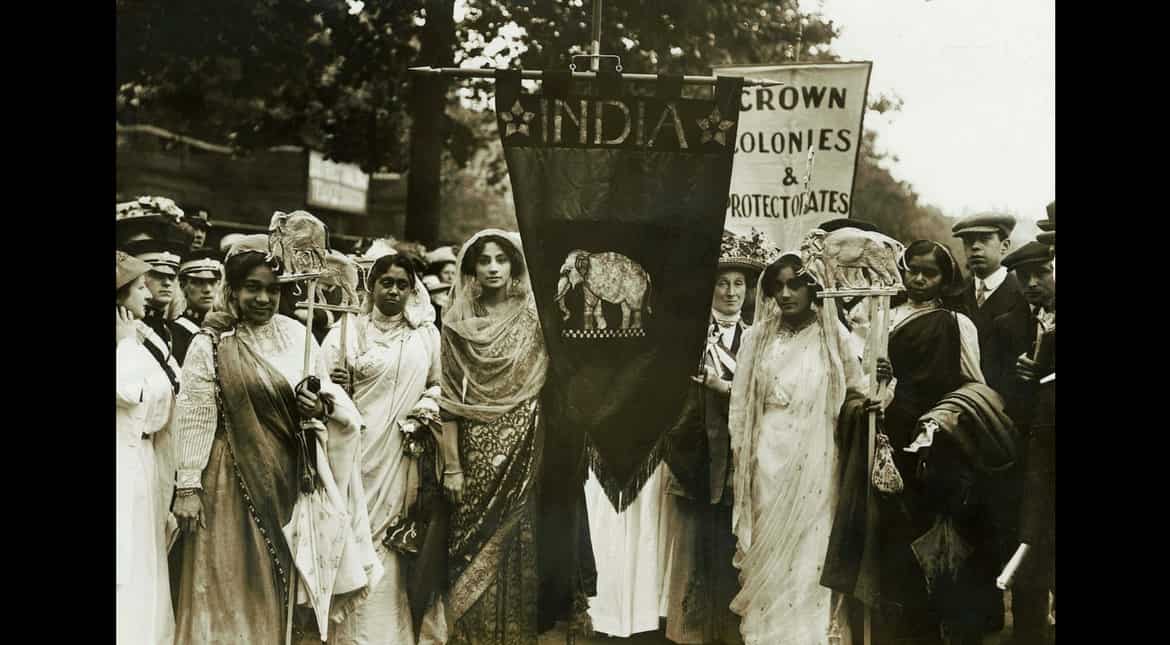
Princess Sophia Duleep Singh
Princess Sophia Duleep Singh, Maharaja Ranjit Singh's granddaughter honoured with a Royal Mail stamp fro her rights activism
In a celebratory news,Maharaja Ranjit Singh’s granddaughter, Princess Sophia Duleep Singh was honoured with a Royal Mail stamp Tuesday for her women's rights activism that led to women getting right to vote in UK parliamentary elections.
The stamp features a photograph of Sophia -- daughter of Bamba Mueller and Maharaja Duleep Singh, the last ruler of the Sikh empire -- selling copies of the Suffragette newspaper in 1913 outside Hampton Court Palace.
She is now celebrated as a symbol and unsung heroine ofthe British movement to get equal voting rights for women.

The £1.57 stamp is one of the eight stamps issued by the Royal Mailto “mark the centenary of the Representation of the People Act (in the UK) where for the first time women won the right to vote in parliamentary elections.” The stamps will be released for public use on February 15.
With this stamp, it will be the first time aperson of Sikh background has been featured on a Royal Mail stamp.
Sophia and her Indian connection
&im=FitAndFill=(700,400)&imwidth=180&imheight=135&format=webp&quality=medium)
Navratri 2026: 9 days, 9 forms of Goddess Durga and 9 colours- Check the complete list
&imwidth=180&imheight=135&format=webp&quality=medium)
Is America trying to ‘destabilise’ India or change its regime? How influence operations became a recurring theme in political rhetoric
&imwidth=180&imheight=135&format=webp&quality=medium)
Researchers believe AI could cure cancer patients around the world
&imwidth=180&imheight=135&format=webp&quality=medium)
US considering use of ‘mother of all bombs’ in its war with Iran: Report
&imwidth=180&imheight=135&format=webp&quality=medium)
Russian woman and Bihar boy's love story goes viral after she reaches India to marry him
&imwidth=180&imheight=135&format=webp&quality=medium)
Arijit Singh 9-city India stadium tour to start from January: Check venue and ticket prices
&imwidth=180&imheight=135&format=webp&quality=medium)
F1 set to return to Africa for first time since 1993
&imwidth=180&imheight=135&format=webp&quality=medium)
'Don't ever mess with nature!': Trump’s tiger attack post triggers social media backlash as victim's family issues heartbreaking tribute
&imwidth=180&imheight=135&format=webp&quality=medium)
Ankita Bhandari’s parents detained after overnight India Gate protest; released later: Why are they protesting
&imwidth=180&imheight=135&format=webp&quality=medium)
US judge blocks Trump administration sanctions on human rights groups supporting Gaza war crimes investigation
&imwidth=180&imheight=135&format=webp&quality=medium)
Washington calls for 'de-escalation' as Ethiopia-Eritrea tensions fuel war fears
&imwidth=180&imheight=135&format=webp&quality=medium)
US midterms: Trump rallies behind Husted as Brown mounts challenge in crucial Ohio race
&imwidth=180&imheight=135&format=webp&quality=medium)
US police foil alleged mass shooting plot targeting Illinois Hindu temple during Navratri; 19-year-old’s manifesto called Indians ‘subhumans’
&imwidth=180&imheight=135&format=webp&quality=medium)
Group of men cheered and asked 'when’s it my turn?' as woman was assaulted inside bathroom at University of Chicago frat party
&imwidth=180&imheight=135&format=webp&quality=medium)
‘Rise up, young patriots!’: American singer Mary Millben says US donors funding CJP, backs Modi govt
&imwidth=180&imheight=135&format=webp&quality=medium)
Nobel Peace Prize winner Navi Pillay calls on US to 'get back to' being defender of human rights
&imwidth=180&imheight=135&format=webp&quality=medium)
Who is Abu Dhabi royal Mahrah Al Nahyan, found unconscious on London street with toddler after cocaine use
&imwidth=180&imheight=135&format=webp&quality=medium)
Iranian woman, 23, handed death sentence for ‘blasphemy’ in social media post; appeals for help
&imwidth=180&imheight=135&format=webp&quality=medium)
'Turn approver, resign, we'll forgive you': Rahul Gandhi claims receiving messages from CEC Gyanesh Kumar
&imwidth=180&imheight=135&format=webp&quality=medium)
'Leakers should be shot': Trump rages over leak of US military plans to attack Iran, slams media
&imwidth=180&imheight=135&format=webp&quality=medium)
Bangladesh man killed after mob storms hospital, drags him away over blasphemy allegations
&imwidth=180&imheight=135&format=webp&quality=medium)
‘My president, I mean my husband’: Trump's new press secretary Katie Zacharia's first briefing goes off the rails in 14 minutes
&imwidth=180&imheight=135&format=webp&quality=medium)
Mars is not for man: Human heart is too weak to survive the trip, study shows
&imwidth=180&imheight=135&format=webp&quality=medium)
Girl 'dead' for 8 hours wakes up at her own funeral, dad insists she wasn't breathing
&imwidth=180&imheight=135&format=webp&quality=medium)
India-Afghanistan relations: Growing India-Kabul ties to rattle Islamabad?
&im=FitAndFill=(700,400)&imwidth=180&imheight=135&format=webp&quality=medium)
New OTT releases this week (October 12-18, 2026): Sacrifice, Koffee with Karan S9, Roadies Rebirth- 6 titles coming on Netflix, JioHotstar and more
&imwidth=180&imheight=135&format=webp&quality=medium)
Actor Imran Khan asked to leave India by the Mumbai Police days after participating in CJP-led protest
&imwidth=180&imheight=135&format=webp&quality=medium)
Did the US withhold missile warnings? Ukraine questions Washington's 'bad weather' explanation after Russian strikes kill six, cut power to 600,000
&imwidth=180&imheight=135&format=webp&quality=medium)
'Troubling pattern of threats': Hindu groups issue advisory after man arrested for alleged plot to target Illinois temple
&imwidth=180&imheight=135&format=webp&quality=medium)
Global energy crisis hits Indian economy
&imwidth=180&imheight=135&format=webp&quality=medium)
Hidden video recording device found on Australian Navy ship amid claims of secret filming
&imwidth=180&imheight=135&format=webp&quality=medium)
'White supremacist' terror plot against Illinois Hindu temple foiled by jammed gun: Who is Alexandros Paporakis?
&imwidth=180&imheight=135&format=webp&quality=medium)
Zelensky feels betrayed by Trump, urges Musk to restore Starlink in Ukraine; Musk responds
&imwidth=180&imheight=135&format=webp&quality=medium)
'Girls are uncomfortable': Salman Khan calls out paparazzi for bad angles, speaks on PR on Koffee With Karan
&imwidth=180&imheight=135&format=webp&quality=medium)
After flydubai co-pilot attack, Air France bans Pakistani, Muslim-majority crew on Israel flights
&imwidth=180&imheight=135&format=webp&quality=medium)
US midterms 2026: Trump under election watch? Democrats deploy 100 observers across nine states
Sophia was the youngest of Maharaja Duleep Singh’s five surviving children. She was born in the UK in 1876 during her father’s lifelong exile -- had Queen Victoria for godmother and was brought up as “a thoroughly anglicized aristocrat,” till she swapped the English high society for the Suffragettes, much against the likingof the royal family and the British government of that time.
She transformed from a British aristocrat to a conscientious woman of her age after she started travelling to India. Her visits to India in1902 and 1906 made her aware of India’s freedom struggle and her own heritage.
She was inspired by the story of freedom fighterLala Lajpat Rai. His death after being lathi-charged by the British played a significant role in her change of heart.
Sophia initially served as a nurse in WWI focusing on the welfare of Indian soldiers. She started with serving mainly the Punjabis who were fighting on the Western front. Subsequently, she became a prominent member of the women’s rights group, the Suffragettes.On 18 November 1910, known as ‘Black Friday’, she led a 400-strong demonstration to UK Parliament together with Mrs Emmeline Pankhurst, the leader of the British suffragette movement. As clashes broke out, over 150 women were physically assaulted.
Sophia was not the only Indian suffragette, just the most prominent one, according to the British Library. An Indian women’s group took part in the 1911 coronation procession of 60,000 suffragettes.
It is said that King George V hated her guts. He wanted her thrown out of Hampton Court where she and her siblings had been given “grace and favour” rooms by Queen Victoria. She was arrested several times and charged, but never jailed.
Sophia also belonged to the Women’s Tax Resistance League, whose slogan was ‘No Vote, No Tax’.
She died in August 1948, a year after India gained independence, but she was crematedin India.