India's Supreme Court scraps 'unconstitutional' laws that promote caste-based discrimination in jails


Supreme Court of India
In a path-breaking development, India's Supreme Court on Thursday (Oct 3) banned all caste-based discrimination in Indian jails, terming them as “unconstitutional.” The court calls for immediate reforms across all states and Union Territories (UTs) against the various jail manual provisions like scavenging and cleaning by the marginalised inmates, as this violates their right to dignity and equality.
The verdict was delivered by Chief Justice of India (CJI) Dhananjaya Y Chandrachud, specifically addressing the entrenched discriminatory practices against marginalised communities, including scheduled castes (SC), scheduled tribes (ST) and denotified tribes (DNTs) in Indian prisons.
Also Read |Couple in India's UP dupes people of millions with promise of 'age reversal.' Here's what happened

“The right to live with dignity extends even to the incarcerated. Not providing dignity to prisoners is a relic of the colonisers and pre-colonial mechanisms, where oppressive systems were designed to dehumanise and degrade those under the control of the State,” the SC bench said.
These discriminatory provisions are part of the pre-colonial-era Prisons Act of 1894, but they continue in independent India despite manuals and Acts framed by the Centre as recently as last year, the apex court found.
“The rule that a prisoner of a high caste be allowed to refuse food cooked by other castes is a legal sanction by the state authorities to untouchability and the caste system,” the bench, which included Justice J BPardiwala and Justice Manoj Misra, said.
&imwidth=180&imheight=135&format=webp&quality=medium)
US considering use of ‘mother of all bombs’ in its war with Iran: Report
&imwidth=180&imheight=135&format=webp&quality=medium)
Russian woman and Bihar boy's love story goes viral after she reaches India to marry him
&imwidth=180&imheight=135&format=webp&quality=medium)
Arijit Singh 9-city India stadium tour to start from January: Check venue and ticket prices
&imwidth=180&imheight=135&format=webp&quality=medium)
'Don't ever mess with nature!': Trump’s tiger attack post triggers social media backlash as victim's family issues heartbreaking tribute
&imwidth=180&imheight=135&format=webp&quality=medium)
88 days apart, twice: Mystery signal detected coming from empty region of space
&imwidth=180&imheight=135&format=webp&quality=medium)
Mumbai gears up for Marco Rubio’s visit as US Secretary of State prepares for India trip
&imwidth=180&imheight=135&format=webp&quality=medium)
Saudi Arabia executes two Bangladeshi nationals over ‘immoral acts’ inside Mecca mosque
&imwidth=180&imheight=135&format=webp&quality=medium)
Turkey Floods: Heavy rains flood homes and submerge vehicles in Istanbul
&imwidth=180&imheight=135&format=webp&quality=medium)
Leap second could go by 2027. What it means, as timekeepers gather in Versailles
&imwidth=180&imheight=135&format=webp&quality=medium)
Women who eat meat have a higher chance of living to 100: Study
&imwidth=180&imheight=135&format=webp&quality=medium)
Katie Zacharia, White House Press Secretary admits she never passed bar exam amid credentials controversy
&imwidth=180&imheight=135&format=webp&quality=medium)
Ukraine blinded: Musk deflects blame on Trump, Putin sharpens attack | Gravitas
&imwidth=180&imheight=135&format=webp&quality=medium)
Oregon school shooting: At least four killed, including three children; suspected shooter dead
&imwidth=180&imheight=135&format=webp&quality=medium)
‘False accusations’: Maduro, wife plead not guilty to new US torture charges
&imwidth=180&imheight=135&format=webp&quality=medium)
Who is Abu Dhabi royal Mahrah Al Nahyan, found unconscious on London street with toddler after cocaine use
&imwidth=180&imheight=135&format=webp&quality=medium)
Ukraine running out of patriot missiles as Russian ballistic attacks intensify: Report
&imwidth=180&imheight=135&format=webp&quality=medium)
Iranian woman, 23, handed death sentence for ‘blasphemy’ in social media post; appeals for help
&imwidth=180&imheight=135&format=webp&quality=medium)
Australian woman charged for adding snail poison to lover's curry at work
&imwidth=180&imheight=135&format=webp&quality=medium)
Central Park in Delhi shut on October 16, 17 amid CJP's protest call
&im=FitAndFill=(700,400)&imwidth=180&imheight=135&format=webp&quality=medium)
Inside the Peshawar school tragedy: 34 dead, building's condition under scrutiny and owner arrested. Here's what all happened
&imwidth=180&imheight=135&format=webp&quality=medium)
‘My president, I mean my husband’: Trump's new press secretary Katie Zacharia's first briefing goes off the rails in 14 minutes
&imwidth=180&imheight=135&format=webp&quality=medium)
IND-W vs ZIM-W, 1st T20I: When and where to watch live streaming in India?
&imwidth=180&imheight=135&format=webp&quality=medium)
NASA captures strange structure with tentacle-like formation from space
&im=FitAndFill=(700,400)&imwidth=180&imheight=135&format=webp&quality=medium)
World's 7 most innovative countries in 2026 REVEALED: Did India make the list? | In Pics
&imwidth=180&imheight=135&format=webp&quality=medium)
Trump's tariff strategy faces new test: India wants preferential access and tariff stability
&imwidth=180&imheight=135&format=webp&quality=medium)
Girl 'dead' for 8 hours wakes up at her own funeral, dad insists she wasn't breathing
&imwidth=180&imheight=135&format=webp&quality=medium)
The war premium, in rupees: How the Iran conflict could hit India’s import bill as US midterms near
&imwidth=180&imheight=135&format=webp&quality=medium)
US business activity grows in June, but tariffs and inflation cloud outlook
&imwidth=180&imheight=135&format=webp&quality=medium)
Yemen’s govt says PM, cabinet survived Houthi missile attack on presidential palace in Aden
&imwidth=180&imheight=135&format=webp&quality=medium)
Abhishek Sharma sets all-time record for most T20I sixes in a year
&imwidth=180&imheight=135&format=webp&quality=medium)
India’s naval priorities: Ex-Navy Chief calls for third aircraft carrier, more warships and submarines
&imwidth=180&imheight=135&format=webp&quality=medium)
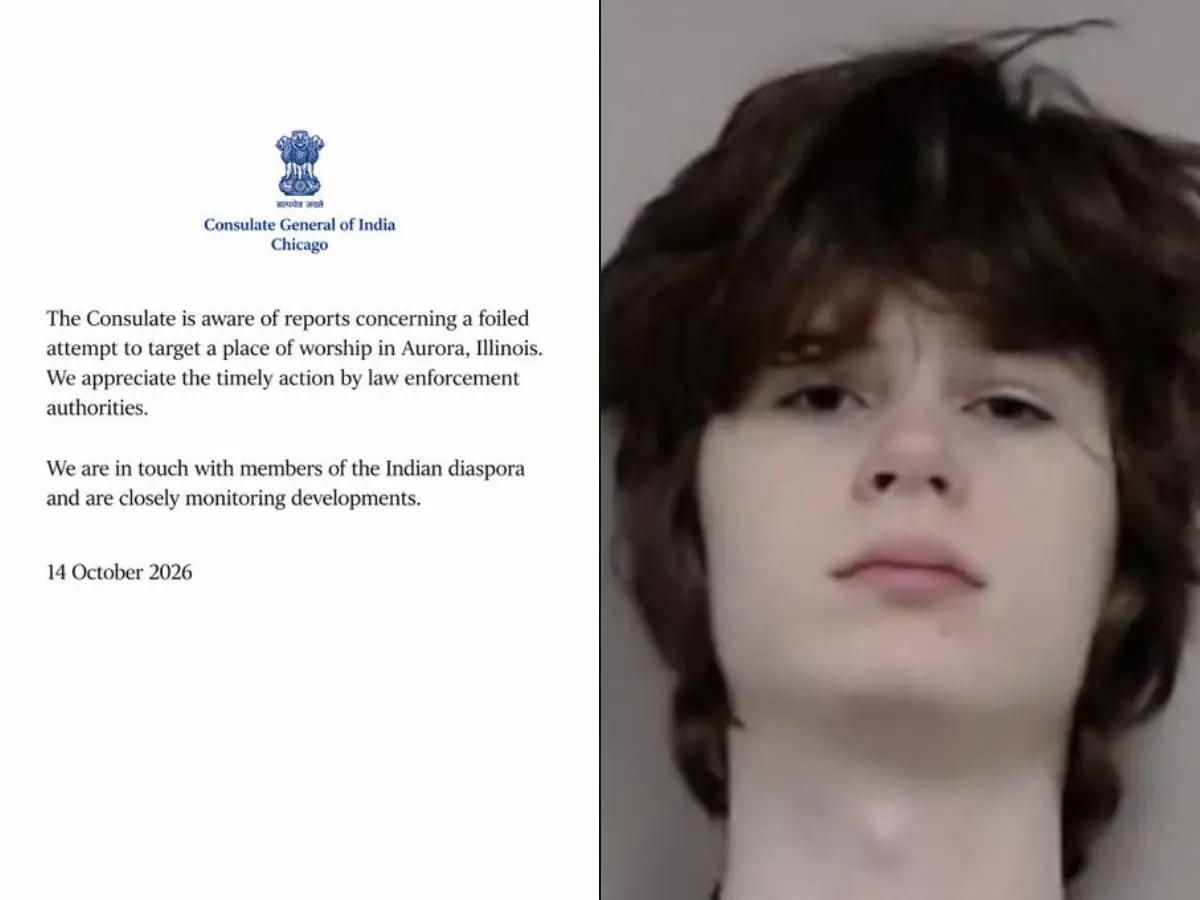
'Troubling pattern of threats': Hindu groups issue advisory after man arrested for alleged plot to target Illinois temple
&imwidth=180&imheight=135&format=webp&quality=medium)
Netanyahu defies Trump, blocks Gaza military base for Board of Peace | Gravitas
&imwidth=180&imheight=135&format=webp&quality=medium)
India to overtake Japan, become 4th-largest economy by 2027? What IMF’s latest projection reveals
&imwidth=180&imheight=135&format=webp&quality=medium)
'White supremacist' terror plot against Illinois Hindu temple foiled by jammed gun: Who is Alexandros Paporakis?
The provision that food is to be cooked by prisoners from a “suitable caste” allows jail officials to discriminate against the marginalised castes, it said.
Also Read |Pilgrims can now see Mount Kailash from inside Indian territory. Here's how
It frowned upon the imposition of work such as cleaning latrines and sweeping only on “Mether, Hari caste or Chandal” and similar castes, saying it amounted to “forced labour”. The top court condemned such practice, calling it a clear violation of human dignity.
“We therefore find that the impugned provisions are violative of Articles 14 (equality), 15 (non-discrimination), 17 (untouchability), 21 (life and liberty), and 23 (prohibition against forced labour),” the SC bench said.
The bench also asked the central government to make the necessary changes to the Model Prison Manual 2016 and the Model Prisons and Correctional Services Act 2023 within three months.
(With inputs from agencies)