

&imwidth=800&imheight=600&format=webp&quality=medium "South Africa High Commissioner Prof Sooklal says PM Modi’s G20 visit shows India-South Africa bond; hopes for IIT campus")
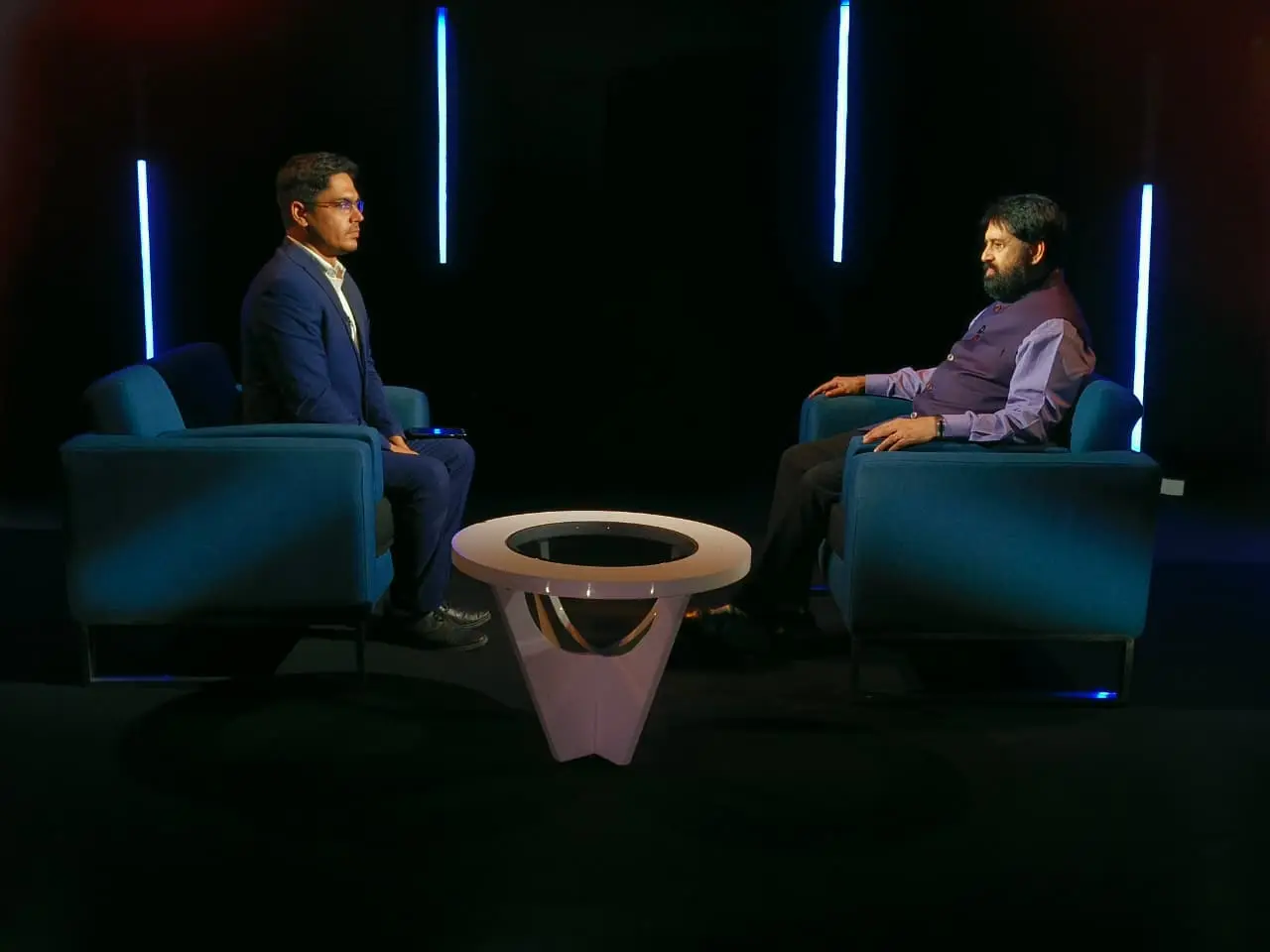
Ahead of the Indian PM Modi's South Africa visit to attend the G20 summit, the country's High Commissioner to IndiaProf. Anil Sooklal has said that the upcoming visit "signifies the importance that India attaches to the relationship with South Africa" & the "bond" that always existed. This will be PM Modi's first visit to South Africa for the 4th time since 2014, and will include attending the IBSA summit, holding key bilateral talks with President Cyril Ramaphosa.
Speaking to WION's Sidhant Sibal, the High Commissioner hoped that India would open its prestigious IIT institute in South Africa, pointing out, "we have a shortageof skills, and especially what your IITs have done for India, and how you have provided experts to the major multinationals globally. This is one area where we'd like to see deeper cooperation".
South Africa hosts the historic first African G20 Summit in Johannesburg on Nov 22–23, 2025, with a focus on global south debt relief, energy transitions, and inequality reduction. The event, however, is being boycotted by US President Donald Trump, a choice High Commissioner Sooklal cast in blunt terms. “By not being present, it’s not just a snub to the G20, it’s not just a snub to South Africa,” he said. “It’s a snub to an entire continent of 1.4 to 1.5 billion people—and that’s how Africa sees it. It’s also a snub to the entire Global South.” HC Sooklal, who has been South Africa's sherpa for BRICS, also spoke about that grouping, and other issues
How do you see the India-South Africa ties?
India, SouthAfrica's relationsare rooted in a common history, a shared history of struggle, a rich history that has brought both countries together on many fronts. We are connected not just on the bilateral level. We are connected on so many fronts at the multilateral level. We are members of BRICS, we are members of IBSA, we are members of the G20. We have a shared vision of the world, and we come from the same kind of background, having had a history of colonialism, of exploitation, and we have overcome that. So we have triumphed over adversity, and we are building our respective countries through cooperation. India and South Africa have always had this bond between ourselves, between our governments, between our people, even during the dark days of struggle. India was at the forefront in championing the liberation struggle of South Africa on the global scene.
Now, how do you see the trajectory of the relationship going forward with high-level visits? Like PM Modi visiting South Africa?
Trending Stories
&imwidth=180&imheight=135&format=webp&quality=medium)
'My name has always been Ilhan Omar': Congresswoman hits back at Trump, calls him a 'creep'
&imwidth=180&imheight=135&format=webp&quality=medium)
Gravitas | US attack could trigger WW III: Russian planes in Tehran, Israeli jets, US warships in action
&imwidth=180&imheight=135&format=webp&quality=medium)
Viral video shows cross falling on Colombia priest, no official confirmation | WATCH
&imwidth=180&imheight=135&format=webp&quality=medium)
'This is humiliation': Vijay Deverakonda under fire over controversial marriage proposal remark on Koffee With Karan 9
&imwidth=180&imheight=135&format=webp&quality=medium)
US Navy, Marine Corps boards defy Trump's transgender military ban, vote to retain troops
&imwidth=180&imheight=135&format=webp&quality=medium)
Will the US attack Iran this weekend? Trump's envoy says, 'absolutely'
&im=FitAndFill=(700,400)&imwidth=180&imheight=135&format=webp&quality=medium)
Why do army tanks have different types of armour?
&imwidth=180&imheight=135&format=webp&quality=medium)
India-China face-off continues near Arunachal’s Taksing, reveals ITBP chief in first official confirmation of tensions
&imwidth=180&imheight=135&format=webp&quality=medium)
Nairobi building collapse: Several feared trapped after 16-storey structure crumbles; rescue operation underway
&imwidth=180&imheight=135&format=webp&quality=medium)
Pakistan airline PIA unveils new crew uniforms, faces online criticism
&imwidth=180&imheight=135&format=webp&quality=medium)
Did Neha Bora call for Bangladesh-like GenZ protest, 'anarchy' in India? WION Fact-checks viral claim
&imwidth=180&imheight=135&format=webp&quality=medium)
Horrific video shows the moment 18-year-old fell to her death from Mexico amusement park ride
&imwidth=180&imheight=135&format=webp&quality=medium)
IND-W vs ZIM-W, 1st ODI: Rawal, Charani star in India’s nine-wicket win over Zimbabwe
&imwidth=180&imheight=135&format=webp&quality=medium)
Massive 7.2 magnitude quake off Vanuatu triggers tsunami warning for coasts within 300 km
&imwidth=180&imheight=135&format=webp&quality=medium)
Microsoft AI diagnoses complex medical cases more than twice as accurately as doctors, study finds
&imwidth=180&imheight=135&format=webp&quality=medium)
Google Fitbit Air’s new health guardian feature tracks trends: How it works
&imwidth=180&imheight=135&format=webp&quality=medium)
US midterms 2026: Trump revises Canada tariffs as Susan Collins faces tight re-election race in Maine
&imwidth=180&imheight=135&format=webp&quality=medium)
US midterms 2026: Viral video claims Lindsey Graham paid underage men for sex; clip released weeks before his sister's Senate race
&imwidth=180&imheight=135&format=webp&quality=medium)
IND vs NZ 2nd T20I: Shreyas Iyer on brink of breaking Rohit Sharma’s record
&imwidth=180&imheight=135&format=webp&quality=medium)
AI deepfakes are spreading online: Why is removing them so difficult?
&imwidth=180&imheight=135&format=webp&quality=medium)
China's dancing robot turns violent bodyguard, lifts cars and fights intruders - Watch
&imwidth=180&imheight=135&format=webp&quality=medium)
Global cybersecurity alert: PHP flaws trigger website shutdowns as hack attempts surge into millions
&imwidth=180&imheight=135&format=webp&quality=medium)
'You’re a horrible little reporter, aren’t you?': Trump snaps at NBC reporter questioning his support for Ramaswamy's campaign ad
&imwidth=180&imheight=135&format=webp&quality=medium)
Apple’s first touchscreen MacBook Pro may cost Rs 4 lakh in India: What to expect on October 28
&imwidth=180&imheight=135&format=webp&quality=medium)
US charges two former FBI officials with lying to Congress about Hunter Biden probes. 'Politically motivated' Trump grievance or something else?
&im=FitAndFill=(700,400)&imwidth=180&imheight=135&format=webp&quality=medium)
New Friday OTT releases (October 23, 2026): Gajab Raat, Dorothy, Chaar Yaar- Watch these 6 new movies and TV shows on Netflix, Prime Video and more
&imwidth=180&imheight=135&format=webp&quality=medium)
Anthropic security chief issues grim cyberattack warning: ‘It’s going to get a lot worse’
&imwidth=180&imheight=135&format=webp&quality=medium)
Tu Hai Meri Kiran film review: Sonakshi Sinha and Zaheer Iqbal's thriller gets tangled in its own twists
&imwidth=180&imheight=135&format=webp&quality=medium)
First Lady Melania Trump secures ceasefire between Russia, Ukraine in Oleshky: White House
&imwidth=180&imheight=135&format=webp&quality=medium)
One man, 8 months of work, and a river dirty again: Why Bittu Tabahi may quit
&imwidth=180&imheight=135&format=webp&quality=medium)
Jenna Ortega plans TV break after Wednesday: ‘I want to leave time for new things’
&imwidth=180&imheight=135&format=webp&quality=medium)
Five killed, several injured after explosion in Bihar's Siwan as firecrackers catch fire
&imwidth=180&imheight=135&format=webp&quality=medium)
Iran targeting US diplomats? Intelligence warns of 'advanced' assassination plots: Report
&imwidth=180&imheight=135&format=webp&quality=medium)
Emmanuel Macron calls Paris suburb shooting a 'racist terrorist attack' after one killed, several injured
Well, the high-level visits are critical in cementing ties and further consolidating cooperation between our countries. We've been very fortunate in that the leaders of our two nations have meton a regularbasis. This is Prime Minister Modi's fourth visit to South Africa in less than a decade. And that is substantial. It also signifies the importance that India attaches to the relationship with South Africa.
In 2019, President Ramaphosa was the chief guest at India's Republic Day. So the leaders meeting on a regular basis gives us an opportunity to reflect on the progress we are making in terms of the relationship and to chart new avenues of cooperation. So as much as Prime Minister Modi is going to be attending the G20 Summit, as well as the IBSA Summit, which is also taking place on the margins of the G20 Summit, he will also have a bilateral meeting with President Ramaphosa, and I think again, they will take stock of this relationship and also look at measures that can be put in place to further expand a very solid relationship, and to look at cooperation in addressing global challenges, not just at the bilateral level, but also in the multilateral institutions that we work so closely together.
Perhaps you can shed some light on areas like defence, like development cooperation, like agriculture. What kind of cooperation do both sides have?
We have excellent cooperationin allof these sectors. In fact, if you look at the relationship, since we opened up diplomatic ties between our two countries just over three decades ago, it has grown at such a rapid pace. Now, if you look at cooperation in terms of the key sectors where we have tremendous growth, therearefive or six key sectors. India is known as the pharmaceutical hub of the world. You have a very strong pharmaceutical medical sector, and we saw this during Covid, when you offered assistance to the global community, including South Africa and Africa. And we cooperate very strongly. We have a number of the major Indian pharmaceutical companies housed in South Africa, and we are looking at joint manufacturing in partnership with the Indian companies. Medical pharmaceutical sector is expanding tremendously. But of course, India has tremendous strength in new technologies, ICT. So I think in terms of new technologies, India is at the forefront and I think Prime Minister Modi has been very magnanimous in saying that whatever new technologies Indiadiscovers, they are prepared to share with the global partners, and they're doing that with South Africa.
We have had delegations coming to India to look at, for example, the issue of DPI, where India is a global leader, and that's something that South Africa is also trying to put in place. Also, if you look at cooperation in terms of skills and capacity, you have the ITEC program. A number of South Africans have benefited from the ITEC program. India has been an important resource for us in addressing our skill shortages and building capacity.
But are you looking at some kind of cooperation on education? Because India has been increasingly going abroad to establish its campuses. We saw the IIT campus being established in Africa.
Yes, education is a very important area of cooperation. In fact,I was raisedwith MEA, when the first IIT was established in Zanzibar about three years ago, and I spoke then to MEA to say, why don't you also bring a similar model to South Africa, because that is our need. Wehave a shortageof skills, and especially what your IITs have done for India, and how you have provided experts to the major multinationals globally. This is one area where we'd like to see deeper cooperation, and I hope sometime soon we'll have an IIT in South Africa as well.
What has been their response?
They have been quite happy to look at it. I think we will take these discussions forward, and hopefully these are some of the areas that our leaders will speak about in terms of strengthening cooperation, because education is the future of any nation. As President Mandela said, Education is the most powerful weapon that can be used to change society.
Both countries are part of the BRICS grouping. You have been the Sherpa of the BRICS grouping at a very historic juncture where the grouping got that major expansion as well. Perhaps if you can talk about the future of this grouping and some inside scoops about how the expansion happened.
Well, look, I think first and foremost, I was reflecting on the fact that BRICS started as an informal gathering of foreign ministers way back in 2006 and next year will mark the 20th anniversary of BRICS coming together as a group. And I think it's very appropriate that India is taking over the chairship at a very critical time. BRICS has become a powerful force in the global scenario. It is no longer a group that is trying to find its feet. It's firmly established itself. It's a powerful group of countries, and as you rightfully pointed out, in 2023 when we chaired, there were over 40 countries asking to become members of BRICS, and everyone was surprised, including our partners from the Global North.
Why this sudden surge from the global community in wanting to associate it with one global grouping, but no other global grouping, but BRICS. Obviously, BRICS has been doing something that has been positive and has had a positive impact on the global community. Therefore, the surge of countries and of course, expansion was not an easy process, because when you have small group of five countries that have found mechanisms and a comfort zone in terms of cooperating together and suddenly to expand by another five countries, as was the case in 2023, 100% expansion of the group, that is not easy to assimilate new members. But fortunately, we are like-minded countries, the new members have been able to assimilate and consolidate, and BRICS hasn't faltered.
There are countries that perceive BRICS as a threat, and the President of the United States has been particularly singling out BRICS in terms of the grouping, saying that the tariffs will be imposed on these countries. What's your sense like?
The rise of the power BRICS in the global scenario, not just its political importance, but also the gravity it has, economically, the gravity it has in terms of new technologies and of course, when you speak of power, you also speak of military gravity. Now, these are not light countries. These are weighty countries. And perhaps for the first time since the dawn of the post-Second World War period, you have countries outside the domain of the so-called Global West that are powerful countries, that can stand on their own two feet, no matter how much you politicise or weaponise trade through tariffs. That's a short-term issue. It cannot endure, because we live in an interdependent world today where trade is interrelated and interlocked, and we have to cooperate with each other. Gone are the days when one country can dominate the trade space or the investment space, or any other space of development; those days are over, because if you look at what is happening in the world economy today, the fastest-growing economies of the world today are coming from the Global South, and that is what is sustaining and underpinning global growth.
What will be the main agenda for South Africa when the world leaders gather in your country for the G20?
This is a historical moment, not just for South Africa as the only African member state in the G20 but for the African continent. I think symbolically, this very powerful message that Africa is capable of showing leadership, and that Africa is an integral part of the global community. From a symbolic point of view, having the most powerful global platform assembled in South Africa for the summit, that is I think, a major boost for the African continent, and I think it's also a major boost for the global south in terms of showing that the global south can provide leadership, and that an African country can be at the forefront of this.
Also Read: 'I don’t want to destroy...': Trump’s major remark on foreign students in the US amid visa crackdown
The US president is boycotting the G20 Summit. How do you see its impact on the summit that is going to happen? Do you think that with his boycott, the grouping will weaken?
It's unfortunate, as I've said, that the first G20 Summit, it was the USA that convened it in Washington in November 2008, which played a leading role and saw the need for such a body, and saw the need for us to act as a collective. And it's unfortunate that, as the most powerful global economy that we don't have the USA around the table. Yes, it will hurt the G20 but not at the level wherethat willundermine the outcome of the summit, because the G20 today is far bigger than any one of the 19 member states or the two regional organizations that make up the G20. It is not dependent on any one nation to succeed.
The G20 has been and continues to be, a group of countries addressing our common challenges and working together in an inclusive way. So if one country is absent from the table, it doesn't mean the whole table is paralysed. Yes, there's a gap there, but you have 18 other countries and two major regional organisations sitting around the table, working together in tandem. So I actually think it's a lost opportunity that the USA is not around the table. We would have liked to have them around thetable. SouthAfrica, welcome the whole world to the G20 summit. The invitation is still open, but I can assure you, we will have a substantive Summit, because we have the full commitment of all G20 members that are attending, as well as all of the heads of the major multilateral institutions that are part of the G20 and all of the guest countries that are so keen to be around the table.
USPresident is boycotting it. The Indian Prime Minister will be there. The Chinese President Xi Jinping is expected to be there. How do you see countries who are part of the global South, big economies attending it?
South Africa has strong relations with the Global South. South-South cooperation is embedded in our foreign policy. In fact, it has been embedded in our foreign policy since the dawn of our democracy under President Mandela, and it has been a solid pillar of cooperation for us. And we know that we can count on the entire global south to support South Africa, and we're seeing countries like India, China, Brazil and the global south as a whole, and not just the global South.
I must say that important pillar of our foreign policy is strengthening north - south cooperation, and we have excellent relations with the entire global north, and that is why you will see all of the leaders of the G20 from the global north, with the exception of one, are quite excited to be part of the summit, because they recognize the importance of the African continent. By not being present at the summit in Johannesburg, it's not just a snub to the G20, it's not just a snub to South Africa. It's a snub to an entire continent of 1.4-1.5 billion, and that's how the African continent sees it. It's also a snub to the entire global South, and I think that is why we appreciate the support we get from India. India is a leading voice of the global south. So is South Africa, and we know that we can count on the support of India to ensure the success of the summit. We have no doubt about that.
