

&imwidth=800&imheight=600&format=webp&quality=medium "Semiconductors to biogas: What’s really on the table at the Modi-Takaichi summit? | WION Decodes")
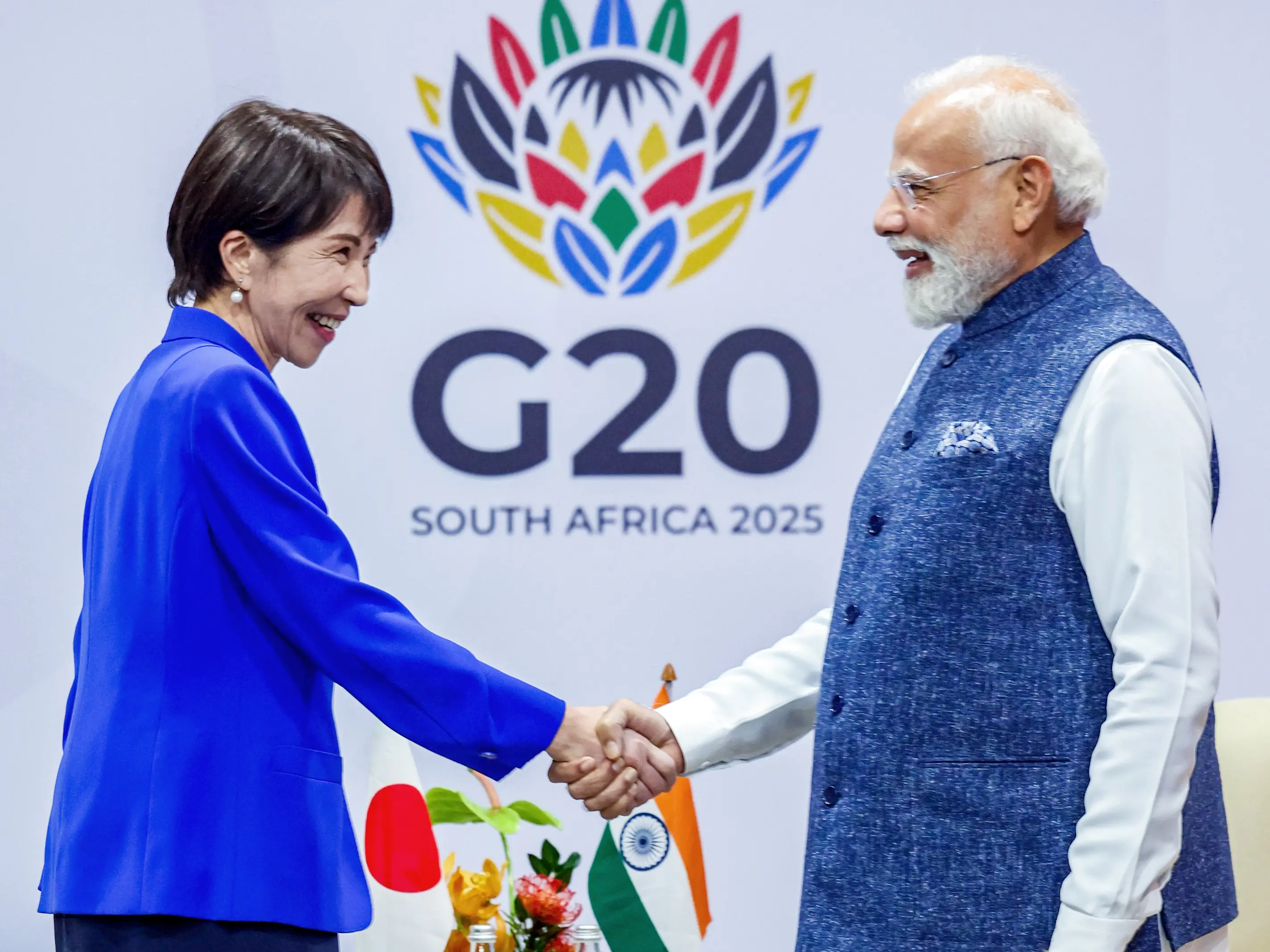
Japanese Prime Minister Sanae Takaichi arrives in New Delhi this week for her first official state visit to India. According to India's Ministry of External Affairs, the summit offers a chance to "review and strengthen the full spectrum of bilateral cooperation as well as exchange views on regional and global issues of mutual interest."
What are New Delhi and Tokyo actually trying to get done? WION Decodes.
The Core Agenda
The upcoming talks will cover everything from microchips and rare earths to clean energy and workforce migration. The timing is no coincidence. Both nations are actively trying to insulate their economies from China while handling an increasingly volatile Indo-Pacific.
Also read | The ¥10 trillion test: Can Japan double its India investment push after early ¥5 trillion success?
Japan’s Ministry of Foreign Affairs confirmed the visit, noting that the two leaders want to advance the "Japan-India Joint Vision for the Next Decade"—a framework established during Prime Minister Modi's visit to Japan last September. The goal is simple: tie Japan's tech and capital to India's scale to build economic security.
Trending Stories
&im=FitAndFill=(700,400)&imwidth=180&imheight=135&format=webp&quality=medium)
Navratri 2026: 9 days, 9 forms of Goddess Durga and 9 colours- Check the complete list
&imwidth=180&imheight=135&format=webp&quality=medium)
Is America trying to ‘destabilise’ India or change its regime? How influence operations became a recurring theme in political rhetoric
&imwidth=180&imheight=135&format=webp&quality=medium)
Researchers believe AI could cure cancer patients around the world
&imwidth=180&imheight=135&format=webp&quality=medium)
US considering use of ‘mother of all bombs’ in its war with Iran: Report
&imwidth=180&imheight=135&format=webp&quality=medium)
Russian woman and Bihar boy's love story goes viral after she reaches India to marry him
&imwidth=180&imheight=135&format=webp&quality=medium)
Arijit Singh 9-city India stadium tour to start from January: Check venue and ticket prices
&imwidth=180&imheight=135&format=webp&quality=medium)
F1 set to return to Africa for first time since 1993
&imwidth=180&imheight=135&format=webp&quality=medium)
'Don't ever mess with nature!': Trump’s tiger attack post triggers social media backlash as victim's family issues heartbreaking tribute
&imwidth=180&imheight=135&format=webp&quality=medium)
Ankita Bhandari’s parents detained after overnight India Gate protest; released later: Why are they protesting
&imwidth=180&imheight=135&format=webp&quality=medium)
US judge blocks Trump administration sanctions on human rights groups supporting Gaza war crimes investigation
&imwidth=180&imheight=135&format=webp&quality=medium)
Washington calls for 'de-escalation' as Ethiopia-Eritrea tensions fuel war fears
&imwidth=180&imheight=135&format=webp&quality=medium)
US midterms: Trump rallies behind Husted as Brown mounts challenge in crucial Ohio race
&imwidth=180&imheight=135&format=webp&quality=medium)
US police foil alleged mass shooting plot targeting Illinois Hindu temple during Navratri; 19-year-old’s manifesto called Indians ‘subhumans’
&imwidth=180&imheight=135&format=webp&quality=medium)
Group of men cheered and asked 'when’s it my turn?' as woman was assaulted inside bathroom at University of Chicago frat party
&imwidth=180&imheight=135&format=webp&quality=medium)
‘Rise up, young patriots!’: American singer Mary Millben says US donors funding CJP, backs Modi govt
&imwidth=180&imheight=135&format=webp&quality=medium)
Nobel Peace Prize winner Navi Pillay calls on US to 'get back to' being defender of human rights
&imwidth=180&imheight=135&format=webp&quality=medium)
Who is Abu Dhabi royal Mahrah Al Nahyan, found unconscious on London street with toddler after cocaine use
&imwidth=180&imheight=135&format=webp&quality=medium)
Iranian woman, 23, handed death sentence for ‘blasphemy’ in social media post; appeals for help
&imwidth=180&imheight=135&format=webp&quality=medium)
'Turn approver, resign, we'll forgive you': Rahul Gandhi claims receiving messages from CEC Gyanesh Kumar
&imwidth=180&imheight=135&format=webp&quality=medium)
'Leakers should be shot': Trump rages over leak of US military plans to attack Iran, slams media
&imwidth=180&imheight=135&format=webp&quality=medium)
Bangladesh man killed after mob storms hospital, drags him away over blasphemy allegations
&imwidth=180&imheight=135&format=webp&quality=medium)
‘My president, I mean my husband’: Trump's new press secretary Katie Zacharia's first briefing goes off the rails in 14 minutes
&imwidth=180&imheight=135&format=webp&quality=medium)
Mars is not for man: Human heart is too weak to survive the trip, study shows
&imwidth=180&imheight=135&format=webp&quality=medium)
Girl 'dead' for 8 hours wakes up at her own funeral, dad insists she wasn't breathing
&imwidth=180&imheight=135&format=webp&quality=medium)
India-Afghanistan relations: Growing India-Kabul ties to rattle Islamabad?
&im=FitAndFill=(700,400)&imwidth=180&imheight=135&format=webp&quality=medium)
New OTT releases this week (October 12-18, 2026): Sacrifice, Koffee with Karan S9, Roadies Rebirth- 6 titles coming on Netflix, JioHotstar and more
&imwidth=180&imheight=135&format=webp&quality=medium)
Actor Imran Khan asked to leave India by the Mumbai Police days after participating in CJP-led protest
&imwidth=180&imheight=135&format=webp&quality=medium)
Did the US withhold missile warnings? Ukraine questions Washington's 'bad weather' explanation after Russian strikes kill six, cut power to 600,000
&imwidth=180&imheight=135&format=webp&quality=medium)
'Troubling pattern of threats': Hindu groups issue advisory after man arrested for alleged plot to target Illinois temple
&imwidth=180&imheight=135&format=webp&quality=medium)
Hidden video recording device found on Australian Navy ship amid claims of secret filming
&imwidth=180&imheight=135&format=webp&quality=medium)
'White supremacist' terror plot against Illinois Hindu temple foiled by jammed gun: Who is Alexandros Paporakis?
&imwidth=180&imheight=135&format=webp&quality=medium)
Zelensky feels betrayed by Trump, urges Musk to restore Starlink in Ukraine; Musk responds
&imwidth=180&imheight=135&format=webp&quality=medium)
'Girls are uncomfortable': Salman Khan calls out paparazzi for bad angles, speaks on PR on Koffee With Karan
&imwidth=180&imheight=135&format=webp&quality=medium)
After flydubai co-pilot attack, Air France bans Pakistani, Muslim-majority crew on Israel flights
&imwidth=180&imheight=135&format=webp&quality=medium)
Indonesia Wildfires: Thousands deployed to fight massive wildfire
&imwidth=180&imheight=135&format=webp&quality=medium)
US midterms 2026: Trump under election watch? Democrats deploy 100 observers across nine states
Here is a breakdown of what is driving the talks behind closed doors.
Semiconductors: Tying together equipment and scale
Microchips are expected to feature prominently in the talks. India is spending billions in subsidies to turn itself into a global electronics manufacturing hub. Japan, meanwhile, doesn’t just make chips; it controls the specialised chemicals, precision equipment, and advanced machinery required to build them.
The two countries laid the groundwork last year with the India-Japan Economic Security Initiative. During the upcoming July 1 to 3 summit, officials are expected to focus on moving beyond high-level agreements to secure actual technology transfers, factory investments, and bulletproof supply chains.
Critical minerals: Breaking the monopoly on rare earths
Building semiconductors or electric vehicles without critical minerals isn’t possible, and right now, China controls the lion's share of them. Tokyo has spent over a decade trying to diversify its supply of rare earths, lithium, and cobalt. India, meanwhile, boasts the world’s third-largest reserves at 7.2 million tonnes.
The summit will likely yield concrete plans for joint exploration, processing, and sourcing agreements. The goal is to create a secure pipeline of materials for EV batteries, defence hardware, and green tech that doesn't rely on a single geopolitical rival.
Clean energy: The shift to biogas
Energy security is a massive vulnerability for both countries. Thus, this summit is expected to also focus on biogas-powered mobility.
Notably, Japanese automaker Suzuki is already producing biogas in India, using agricultural waste to power vehicles. It fits perfectly with New Delhi's push to cut its massive crude oil import bill.
Supply chains: The China factor
The pandemic and rising geopolitical friction proved that concentrated supply chains are a massive liability. Japan and India increasingly view each other as trusted partners. Modi and Takaichi are also expected to look into expanding alternative manufacturing networks for pharmaceuticals, automotive parts, and advanced industrial goods.
Talent exchange: Filling Japan's labour gap
One of the most significant pieces of this partnership isn't about freight; it’s about people. During the August 2025 summit in Tokyo, Modi and Takaichi’s predecessor, Ishiba Shigeru, unveiled a human resource Action Plan aimed at exchanging over 500,000 people over five years.
A major pillar of that plan includes sending 50,000 skilled Indian professionals to Japan to help ease critical labour shortages in the tech and engineering sectors.
Defence and Indo-Pacific security
Finally, we can expect a heavy focus on security. Last year, the two nations signed a landmark Joint Declaration on Security Cooperation, pledging deeper military ties. According to Japan’s Kyodo news agency, the two sides pledged to bolster security cooperation and agreed to expand drills between Japan's Self-Defence Forces and the Indian Armed Forces.

