

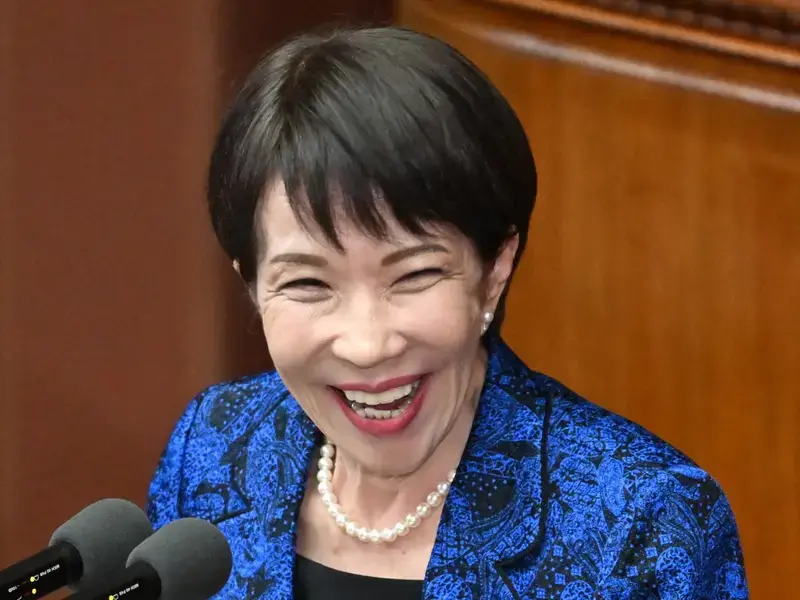
&imwidth=800&imheight=600&format=webp&quality=medium "Japan's PM Sanae Takaichi arrives in India for annual summit")
Japanese Prime Minister Sanae Takaichi is set to arrive in India on Wednesday for high-level discussions aimed at further strengthening the two countries' "Special Strategic and Global Partnership". The visit comes as bilateral ties continue to deepen across defence, economic security, technology and connectivity, with both nations approaching the 75th anniversary of diplomatic relations in 2027. It follows frequent high-level engagements, including PM Narendra Modi's meetings with Takaichi at the G7 Summit in France in June 2026 and the G20 in Johannesburg in November 2025.
Officials say the talks will focus on advancing cooperation in critical areas such as energy, critical minerals, clean energy and artificial intelligence. Economic security has become a key pillar, with the second Economic Security Dialogue held in New Delhi in May 2026 identifying priority sectors for collaboration. A new target of JPY 10 trillion (about $65 billion) in Japanese private investment into India was set during PM Modi's visit to Tokyo in August 2025.
Also read: Sanae Takaichi's India visit: The Abe protégé aligning Japan's defence and tech with New Delhi
Japan is India's fifth-largest investor, with cumulative FDI reaching $48.17 billion by March 2026. Around 1,500 Japanese companies operate in India, and surveys show strong interest in expansion. Bilateral trade crossed $27 billion in FY 2025-26. Landmark projects include the Mumbai-Ahmedabad High-Speed Rail, multiple metro systems and the Western Dedicated Freight Corridor.
Defence and security ties have also gained momentum. The two sides signed a Joint Declaration on Security Cooperation in 2025 and continued joint military exercises including Malabar and Dharma Guardian. Japan has transferred defence technology, such as the UNICORN Mast system.
Also read: Ahead of Japan PM Sanae Takaichi's India visit, here's how the Japanese writing system works
Trending Stories
&im=FitAndFill=(700,400)&imwidth=180&imheight=135&format=webp&quality=medium)
Navratri 2026: 9 days, 9 forms of Goddess Durga and 9 colours- Check the complete list
&imwidth=180&imheight=135&format=webp&quality=medium)
Is America trying to ‘destabilise’ India or change its regime? How influence operations became a recurring theme in political rhetoric
&imwidth=180&imheight=135&format=webp&quality=medium)
Researchers believe AI could cure cancer patients around the world
&imwidth=180&imheight=135&format=webp&quality=medium)
US considering use of ‘mother of all bombs’ in its war with Iran: Report
&imwidth=180&imheight=135&format=webp&quality=medium)
Russian woman and Bihar boy's love story goes viral after she reaches India to marry him
&imwidth=180&imheight=135&format=webp&quality=medium)
Arijit Singh 9-city India stadium tour to start from January: Check venue and ticket prices
&imwidth=180&imheight=135&format=webp&quality=medium)
Leave India notice to Imran Khan explained: What are OCI rules and why can't foreigners protest in India?
&imwidth=180&imheight=135&format=webp&quality=medium)
'Don't ever mess with nature!': Trump’s tiger attack post triggers social media backlash as victim's family issues heartbreaking tribute
&imwidth=180&imheight=135&format=webp&quality=medium)
Ankita Bhandari’s parents detained after overnight India Gate protest; released later: Why are they protesting
&imwidth=180&imheight=135&format=webp&quality=medium)
US judge blocks Trump administration sanctions on human rights groups supporting Gaza war crimes investigation
&imwidth=180&imheight=135&format=webp&quality=medium)
Washington calls for 'de-escalation' as Ethiopia-Eritrea tensions fuel war fears
&imwidth=180&imheight=135&format=webp&quality=medium)
US midterms: Trump rallies behind Husted as Brown mounts challenge in crucial Ohio race
&imwidth=180&imheight=135&format=webp&quality=medium)
US police foil alleged mass shooting plot targeting Illinois Hindu temple during Navratri; 19-year-old’s manifesto called Indians ‘subhumans’
&imwidth=180&imheight=135&format=webp&quality=medium)
Group of men cheered and asked 'when’s it my turn?' as woman was assaulted inside bathroom at University of Chicago frat party
&imwidth=180&imheight=135&format=webp&quality=medium)
‘Rise up, young patriots!’: American singer Mary Millben says US donors funding CJP, backs Modi govt
&imwidth=180&imheight=135&format=webp&quality=medium)
Nobel Peace Prize winner Navi Pillay calls on US to 'get back to' being defender of human rights
&imwidth=180&imheight=135&format=webp&quality=medium)
Who is Abu Dhabi royal Mahrah Al Nahyan, found unconscious on London street with toddler after cocaine use
&imwidth=180&imheight=135&format=webp&quality=medium)
Iranian woman, 23, handed death sentence for ‘blasphemy’ in social media post; appeals for help
&imwidth=180&imheight=135&format=webp&quality=medium)
'Turn approver, resign, we'll forgive you': Rahul Gandhi claims receiving messages from CEC Gyanesh Kumar
&imwidth=180&imheight=135&format=webp&quality=medium)
'Leakers should be shot': Trump rages over leak of US military plans to attack Iran, slams media
&imwidth=180&imheight=135&format=webp&quality=medium)
Bangladesh man killed after mob storms hospital, drags him away over blasphemy allegations
&imwidth=180&imheight=135&format=webp&quality=medium)
‘My president, I mean my husband’: Trump's new press secretary Katie Zacharia's first briefing goes off the rails in 14 minutes
&imwidth=180&imheight=135&format=webp&quality=medium)
Mars is not for man: Human heart is too weak to survive the trip, study shows
&imwidth=180&imheight=135&format=webp&quality=medium)
Girl 'dead' for 8 hours wakes up at her own funeral, dad insists she wasn't breathing
&imwidth=180&imheight=135&format=webp&quality=medium)
India-Afghanistan relations: Growing India-Kabul ties to rattle Islamabad?
&im=FitAndFill=(700,400)&imwidth=180&imheight=135&format=webp&quality=medium)
New OTT releases this week (October 12-18, 2026): Sacrifice, Koffee with Karan S9, Roadies Rebirth- 6 titles coming on Netflix, JioHotstar and more
&imwidth=180&imheight=135&format=webp&quality=medium)
Actor Imran Khan asked to leave India by the Mumbai Police days after participating in CJP-led protest
&imwidth=180&imheight=135&format=webp&quality=medium)
Did the US withhold missile warnings? Ukraine questions Washington's 'bad weather' explanation after Russian strikes kill six, cut power to 600,000
&imwidth=180&imheight=135&format=webp&quality=medium)
'Troubling pattern of threats': Hindu groups issue advisory after man arrested for alleged plot to target Illinois temple
&imwidth=180&imheight=135&format=webp&quality=medium)
Hidden video recording device found on Australian Navy ship amid claims of secret filming
&imwidth=180&imheight=135&format=webp&quality=medium)
'White supremacist' terror plot against Illinois Hindu temple foiled by jammed gun: Who is Alexandros Paporakis?
&imwidth=180&imheight=135&format=webp&quality=medium)
Zelensky feels betrayed by Trump, urges Musk to restore Starlink in Ukraine; Musk responds
&imwidth=180&imheight=135&format=webp&quality=medium)
'Girls are uncomfortable': Salman Khan calls out paparazzi for bad angles, speaks on PR on Koffee With Karan
&imwidth=180&imheight=135&format=webp&quality=medium)
After flydubai co-pilot attack, Air France bans Pakistani, Muslim-majority crew on Israel flights
&imwidth=180&imheight=135&format=webp&quality=medium)
Indonesia Wildfires: Thousands deployed to fight massive wildfire
&imwidth=180&imheight=135&format=webp&quality=medium)
US midterms 2026: Trump under election watch? Democrats deploy 100 observers across nine states
A growing area of focus is India's Northeast. Tokyo sees the region as a bridge for its Free and Open Indo-Pacific strategy and India's Act East policy. Japanese officials, including State Minister Iwao Horii, have visited states like Meghalaya and Assam. Multiple MoUs on skill development aim to send thousands of Northeast youth to Japan for training. JICA-funded infrastructure projects, including roads and bridges, are underway, with over 600 km of roads completed.
Cultural and people-to-people links remain strong, rooted in ancient Buddhist connections. Science and technology cooperation is expanding, with joint initiatives in space, quantum technology and AI. The relationship, upgraded to a Special Strategic and Global Partnership in 2014, now features over 70 dialogue mechanisms.
