
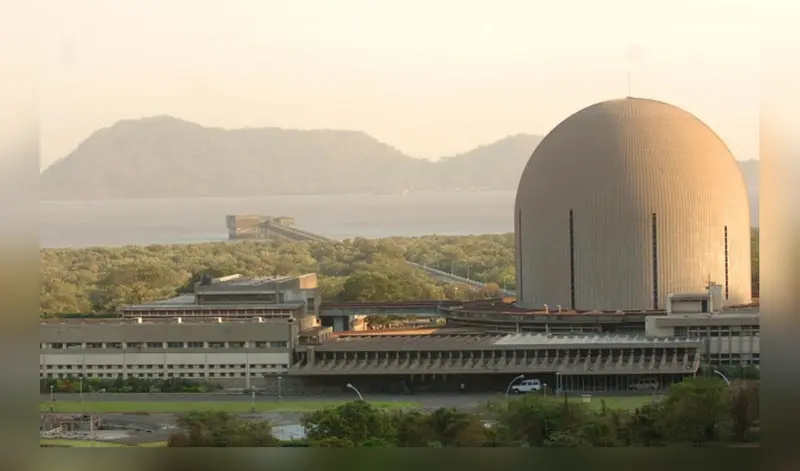
India’s main nuclear research centre, the Bhabha Atomic Research Centre (BARC) in Mumbai, is building a new reactor. This reactor is expected to produce 200 MWe (megawatt electric) and will be used in the next generation of Navy submarines. With this, submarines will be able to stay longer at sea without needing to return to base.
According to a Times of India report (September 21), a BARC scientist confirmed this “top-secret” project. The new reactor will be fitted on India’s upcoming S5 Nuclear Submarine and the six planned Nuclear Attack Submarines (Project 77).
Nuclear Submarines Explained

A nuclear submarine uses a nuclear reactor for power, which lets it stay underwater for months without refuelling. It is mainly about long endurance and silent movement. Such submarines may or may not carry nuclear weapons—some only carry torpedoes or conventional missiles for defence.
How the New Reactor Works
The new reactor is a pressurised light-water type that uses enriched uranium as fuel. Here, ordinary water is used to cool the reactor and control the heat, but it is kept under very high pressure so it does not boil, even at high temperatures. This matters because liquid water is much better than steam at carrying away heat. Using enriched uranium makes the reactor produce more energy than normal uranium, which helps the submarine remain powerful, efficient, safe, and stable while operating underwater for long periods.
Trending Stories
)
'Mumma’s boy from Gwalior who dared to dream': Kartik Aaryan pens long note after first National Award win
)
Oil slips to $98 as Saudi Arabia restarts East-West oil pipeline
)
Asian Games 2026: India women's cricket team beats Sri Lanka by 147 runs for first gold
)
Over 4,200 books withdrawn from circulation in J&K colleges, 94% from Kashmir
&im=FitAndFill=(700,400))
National Film Awards 2026: Kartik Aaryan, Mammootty, Yami Gautam, Randeep Hooda and other key winners
)
'This is normally what toddlers do': Why a psychiatrist is raising fresh questions about Trump’s recent behaviour
)
Trump-Xi state dinner 2026: Who is invited? Full guest list of tech CEOs, business leaders and officials
)
IND vs JPN, one-off T20I: Japan captain Kendel on pushing India to the brink - ‘It was special’
72nd National Film Awards: Kartik Aaryan receives Best Actor honour for Chandu Champion in Gujarat
)
Trump calls on nations to quit ‘rogue’ and ‘out-of-control’ International Criminal Court, rips UN
)
US and China vie for AI dominance as calls grow for regulation | Gravitas
)
Raaka creates history! Allu Arjun’s film secures Guinness World Record ahead of release
)
Glitch in the matrix caught on camera: Woman vanishes after talking to reporter
)
World leaders repeatedly call Gaza crisis ‘genocide’ as Israel’s war dominates opening sessions of UNGA
)
Ten days from Delhi to Washington: What Xi's BRICS-to-White-House sprint means for India
)
WION Iconic Tourism Summit and Iconic Awards 2026: India's travel economy leaders gather in Delhi
)
Cyclone Arnab: Landfall expected before midnight tomorrow as IMD issues orange alerts across six states
)
Mumbai: Gallops restaurant at Mahalaxmi Racecourse licence suspended over food safety violations
)
Trump’s China visa crackdown puts US universities, Chinese students in focus ahead of Trump- Xi summit
)
‘Shame on you’: Netanyahu vows to ‘tell the truth’ about Mamdani at UN ahead of New York visit
)
ICC plans T20I expansion and fewer ODIs in 2027–2031 FTP cycle: Report
)
‘Strike a deal or drive Iran into hell’: Trump issues fresh warning to Tehran at UNGA
)
Yemen clashes kill 154 people in two days as cornered Saudi battles Houthi offensive | Gravitas
)
Who is Clavicular? The 20-year-old controversial 'Looksmaxxing' influencer charged with rape allegations
)
Key accused in Bihar's Jamui molestation case, arrested after police shoot him in leg
)
Four decades after leaving Kolkata, the Birlas may be coming back for more
&im=FitAndFill=(700,400))
New OTT releases this week (September 21-27, 2026): Shaque: Trust No One, Hunkkaar, Don’t Be Shy- 5 new titles coming to Netflix, Prime Video and more
)
American manufacturing is reshoring faster than its factory floors can absorb
)
National Film Awards 2026: Yami Gautam wins Best Actress for Article 370
)
Rani Mukerji's mother Krishna Mukerji passes away; Karan Johar, Jaideep Ahlawat visit actress
)
'Our team opened the gate of gold medals': Harmanpreet Kaur on India’s Asian Games final win
)
Gravitas | Boosting NHS productivity could save 20,600 lives in UK annually: Report
)
The Verdict | Moral policing isn’t culture or discipline, it’s crime
)
'Needs time away from the international scene': England white-ball captain Brook on pacer Brydon Carse's future
)
Erdogan again raises Kashmir issue at UNGA, calls for dialogue under UN Charter
)
Saudi Arabia exits China-led mBridge digital currency platform amid Saudi-Houthi conflict
)
WION Iconic Tourism Summit and Awards 2026: Key voices to discuss India’s tourism future
)
Justice eludes Air India 1985 bombing victims as Canada probe goes 'inactive' | Gravitas
)
Explainer: Why rare-earth export licences and Board of Trade are US priorities ahead of Trump-Xi summit
)
Trump calls Cuba a ‘failed state’ at UN, Cuban delegation walks out
Enriched uranium means uranium that has been specially treated to increase the amount of a substance called U-235. Normal uranium found in nature has only a small amount of U-235, which is the part that gives energy in a reactor. By increasing (enriching) the U-235 level, the fuel becomes much more powerful and efficient, making it suitable for nuclear submarines and power plants.
Reactor Design Ready for Production
The reactor’s design and computer testing are finished, and now it is ready for production, according to a report by Defence.in.
The new reactor is highly fuel-efficient and can run for up to ten years before it needs refuelling. Here, the nuclear fuel is enriched uranium. So, refuelling means taking out the used enriched uranium from the reactor and putting in fresh enriched uranium to keep producing power. This process is rare because enriched uranium lasts for many years before it runs out.
This technological upgrade is a strategic step to strengthen India’s defences as China’s nuclear naval power continues to grow. India’s submarines INS Arihant and INS Arighaat use a small 83 MWe nuclear reactor. This limits how long they can stay underwater and also reduces mission duration. The 83 MWe nuclear reactors on INS Arihant and INS Arighaat were built by BARC.
The first design came with Russian help, and then BARC developed the small reactor under India’s Advanced Technology Vessel (ATV) project for nuclear submarines. The third submarine, INS Aridhaman, is now undergoing trials, and it also uses the same reactor type.
The new reactor will produce 200 MWe, making it almost twice as powerful and expected to double the submarine’s capabilities. This upgrade will let India’s next-generation submarines stay in the deep oceans for longer, with better operational strength and the ability to take on long, sustained missions.
The S5-class submarine is India’s next-generation ballistic missile submarine (SSBN) with a huge size of 13,000 tons. An SSBN is a nuclear-powered submarine that carries ballistic missiles with nuclear warheads. The letters mean: Ship, Submersible, Ballistic, Nuclear. These submarines can stay hidden deep underwater for long periods and are mainly used to give a country a strong second-strike ability in case of a nuclear attack. These powerful submarines will carry 12 to 16 K-5 submarine-launched ballistic missiles (SLBMs), each with a range of 5,000 km (3,106 miles), reports online publication Interesting Engineering.
India wants to protect its interests in the highly contested Indo-Pacific region. This development is a big step for India to match and counter China’s growing submarine fleet, which now has more advanced technologies. China’s submarine force is expected to become the largest in the world by 2030, even surpassing the United States in numbers.
The Indian government focuses on nuclear submarines because they are part of the nuclear triad. The nuclear triad means three ways to launch nuclear weapons — from the land (missiles), from the air (bombers), and from the sea (submarines). These submarines provide a survivable and mobile platform to launch a retaliatory or second-strike attack, which is a key part of nuclear deterrence. This sea-based part of the triad works along with the land-based missiles of the Army and the air-based weapons of the Air Force. It ensures a nuclear response can still be made even if one or two parts of the triad are destroyed in a first strike.
According to Atomic Energy Commission Chairman A. K. Mohanty at the 69th IAEA conference in Vienna, BARC is designing several other reactors, according to reports. This includes a larger 555 MWe nuclear reactor and a High Temperature Gas Cooled Reactor that can make clean hydrogen when linked to a thermochemical plant.
The Indian Navy plans to buy four large Landing Platform Dock (LPD) warships. These ships can launch fixed-wing naval drones and act as command-and-control centres for long offshore operations.
