Pakistan’s hunt for fulfilling twin goals is behind the terror in Kashmir

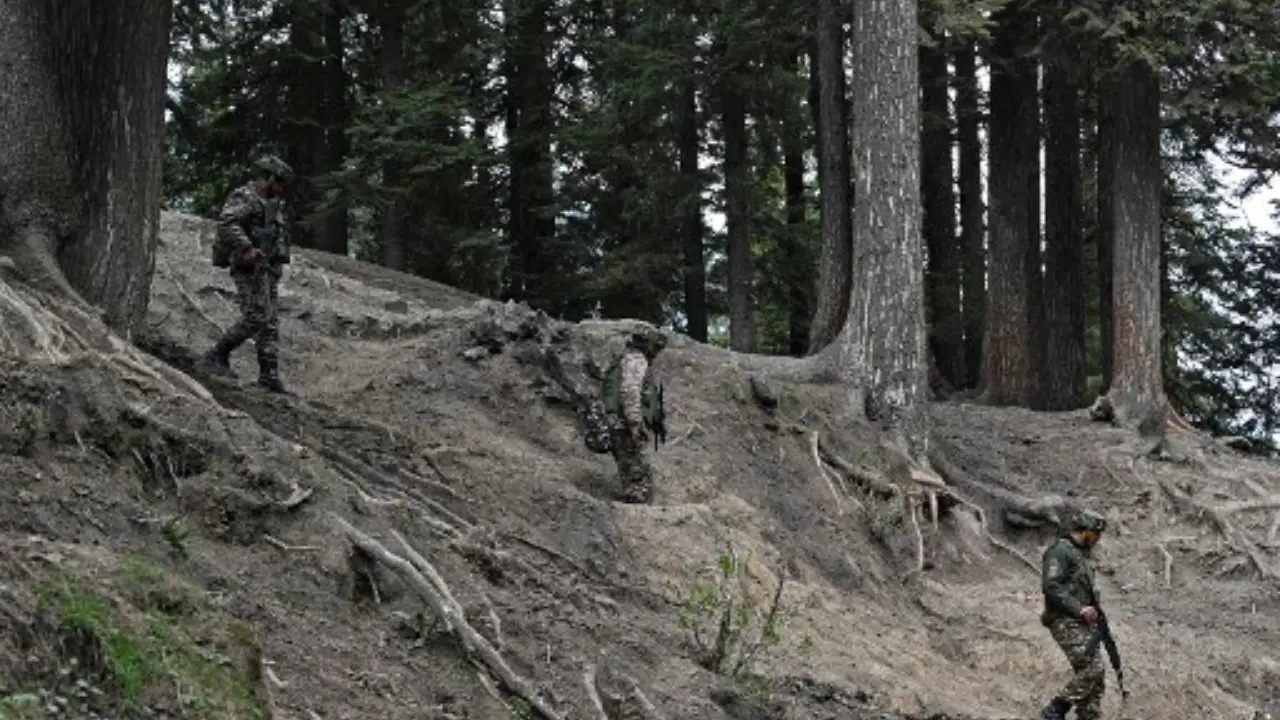
The Resistance Front (TRF), which claimed responsibility for the massacre, is a rebranded extension of LeT, created post-abrogation of Article 370 to mask its Pakistani origins under the illusion of “local” resistance.
The massacre in Pahalgam, South Kashmir, of at least 26 innocent tourists is a brazen, calculated strike bearing the unmistakable hallmarks of Pakistan.
For those of us who have watched the arc of terrorism in Kashmir bend and mutate over decades, this attack fits into a pattern: a convergence of diplomatic disruption, ideological provocation, and asymmetric warfare.
Pattern of provocative timing
Terror in Kashmir rarely occurs in a vacuum. It has historically been tethered to moments of geopolitical significance—precisely timed to undercut India’s diplomatic advances, Kashmir’s economic progress, or to create strategic diversions.
Before delving into what happened this week, a refresher from 2019 is needed.
Also Read | General Asim Munir’s radical agenda: Pakistan’s deep state terror nexus exposed in Pahalgam attack
Trending Stories
&im=FitAndFill=(700,400))
)
)
)
)
)
)
)
)
)
)
)
)
)
)
&im=FitAndFill=(700,400))
)
)
)
)
)
)
)
)
)
)
)
)
)
&im=FitAndFill=(700,400))
On February 14, 2019, as Saudi Crown Prince Mohammed bin Salman (MBS) was on a tour of Pakistan and scheduled to visit India, Pulwama was set ablaze—40 Indian paramilitary personnel were martyred in an attack by Jaish-e-Mohammed, a group long fostered by Pakistan’s Inter-Services Intelligence (ISI). The optics were unmistakable. MBS, who had called India a “strategic partner,” was compelled to truncate his trip.
Now, six years later, history appears to have repeated itself. On April 22, 2025, as Prime Minister Narendra Modi was visiting Riyadh to deepen strategic ties with Saudi Arabia—a country that is key to India’s West Asia outreach—gunfire once again echoed in the Kashmir Valley. PM Modi’s visit, like MBS’s in 2019, was abruptly cut short.
Coincidence? Hardly. These attacks are deliberate acts of political signalling.
Pakistan’s strategic messaging through violence
Just days before the Pahalgam massacre, Pakistan’s Army Chief General Asif Munir delivered a chilling address. He declared Kashmir to be Pakistan’s “jugular vein,” invoking the discredited Two-Nation Theory—an ideological relic from 1947 that still fuels Pakistan’s irredentist obsession with Kashmir. This speech, laced with jingoism and cloaked in religious zeal, ended up as a not-so-subtle rallying cry for jihadist proxies.
On the very same day, Lashkar-e-Taiba (LeT) commander Abu Musa echoed Munir’s call to arms. “Inshallah, we will shower bullets,” he warned in a video released widely across jihadist Telegram channels and WhatsApp groups. Five days later, bullets were indeed showered. And the LeT connection is as clear as day.
The Resistance Front (TRF), which claimed responsibility for the massacre, is a rebranded extension of LeT, created post-abrogation of Article 370 to mask its Pakistani origins under the illusion of “local” resistance.
But there is little local about it. Investigations now suggest that at least two of the terrorists involved were Kashmiris who had travelled to Pakistan in 2018—where they were radicalised and trained before being inserted back across the Line of Control. This isn’t insurgency; it’s infiltration.
Twin objectives: Undermining diplomacy and destabilising tourism
This attack, like others before it, serves twin objectives. First, it attempts to undermine India’s growing influence in West Asia. Saudi Arabia, once a dependable partner of Pakistan, has shifted its strategic calculus. With India emerging as a regional economic powerhouse and a partner in Gulf energy security, Riyadh has made a clear pivot.
Pakistan, whose relationship with the Gulf is increasingly transactional, views this with alarm. By orchestrating violence during an India-Gulf diplomatic engagement, Islamabad is attempting to tell India that if it deepens ties with Riyadh, the costs will be high.
Also Read |Terrorists covered rugged terrain from Kokernag to Pahalgam in 22 hours for attack: Source
Second, the attack is aimed at Kashmir’s economy, particularly tourism. Over the past two years, Kashmir has seen a dramatic revival in domestic and international tourist inflows—with 2 crore visitors in 2024 alone. Hotels are full, houseboats on Dal Lake are booked, and trekking trails are alive with activity. This economic upswing is a death knell to the separatist narrative. Terror groups thrive on despair, unemployment, and alienation. Tourism undermines all three. By targeting tourists—women, children, and the elderly—TRF hoped to scare away potential visitors and reignite economic stagnation. In doing so, it seeks to sabotage the gains of peace.
The global stakes
Pakistan’s use of terrorism is not new. But the Pahalgam attack adds a layer of global complexity. It is a direct challenge to the international community: to those in Riyadh, in Washington, in London, and in the United Nations, who continue to view terrorism in Kashmir through the obsolete lens of internal conflict.
The perpetrators of this attack are not rogue elements; they are instruments of a long-standing foreign policy playbook that Pakistan has never abandoned—export jihad, deflect blame, play the victim.
For India, this tragedy is not just a security failure—it is a call to reorient its counter-terror doctrine. We must widen the aperture of intelligence cooperation with Gulf partners, enhance surveillance along infiltration routes, and continue surgical precision operations against active terrorists. Equally important is our information warfare—naming and shaming Pakistan’s role at global forums, diplomatically isolating it, and exposing the terror-industrial complex it has built over decades.
A veteran’s reflection
As someone who has served in the Valley and seen both blood and hope etched into its landscape, I know that terrorism in Kashmir is never just about territory. It’s about narrative, leverage, and symbolism. The Pahalgam massacre is Pakistan’s way of asserting that the Kashmir file is still open, and that it will not fade quietly into irrelevance.
Also Read |After Indus Waters Treaty suspension, BJP MP calls for stopping water to Bangladesh
But Pakistan forgets one thing. Today, India is not the India it knew. Our will is firmer, our response is more calibrated, and our partnerships are deeper. Kashmiris, too, are stakeholders in peace, in progress, and in prosperity.
The bullets fired in Pahalgam will not silence the voice of Kashmir. But they must harden our resolve to completely destroy the possibility of any such attacks in the future.
(Col. Danvir Singh (Retd) is a military veteran who is now associated with different television and print media as a consultant on defence and strategic affairs. He follows developments in weapon systems closely and carries out analysis on matters of Defence, Strategy, & Foreign Affairs with a special focus on India’s neighbourhood. A prolific writer, Col. Danvir, is the author of the book Kashmir’s Death Trap: Tales of Perfidy and Valour.)
(Disclaimer: The views of the writer do not represent the views of WION or ZMCL. Nor does WION or ZMCL endorse the views of the writer.)