Opinion: Religious tolerance in an age of intolerance

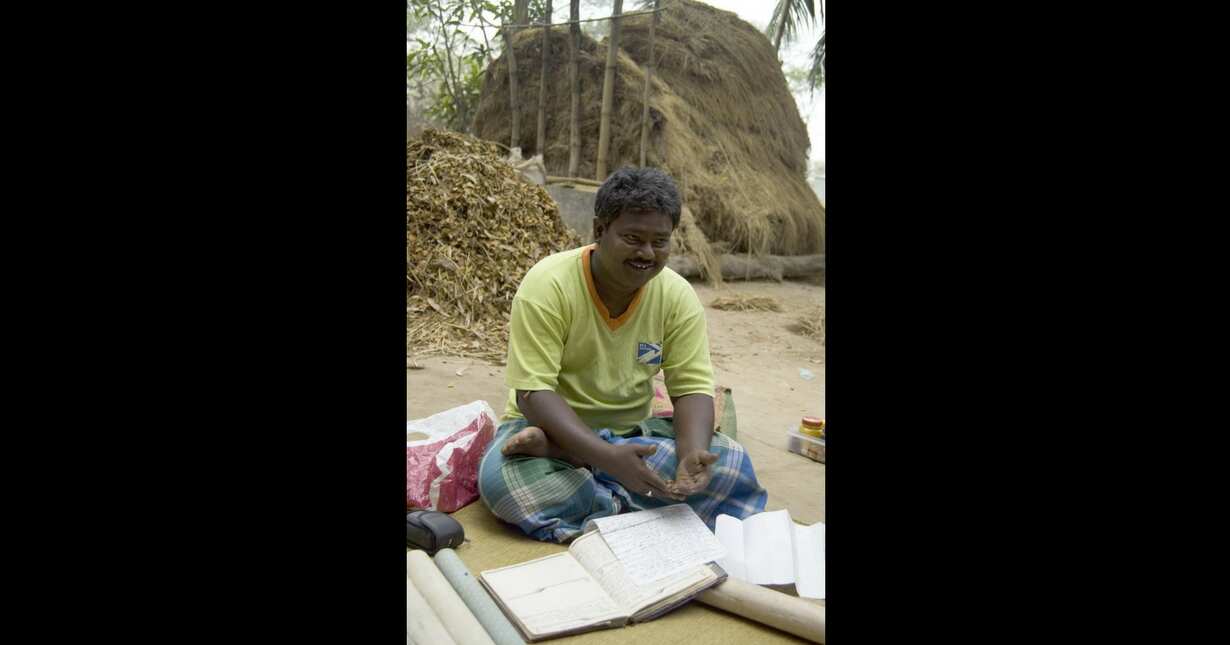
Gurupada Chitrakar
Let?s all remember our common source of humanity, and when spurred by anger to lash out at others who do not necessarily share our personal worldview, recall Gurupada?s chant: One mother?s offspring.
In this day and age, whenever we read the newspaper, turn on the radio or television, log on to the Internet, or simply open our eyes and look around, we are confronted with all sorts of evidence confirming ever-present religious intolerance, which certainly raises red flags concerning the age-old perennial idea of the oneness of all religious traditions.
If this were the case, we would not have wars fought over religion, hate crimes against members of other faiths, discrimination, and so on. Instead, we would all gather together holding hands to dance happily around the campfire. It is all too easy to ignore differences at the expense of claiming some sort of illusory oneness that unites human beings across, racial, national, ethnic, and linguistic lines.

Indeed the practices of a Roman Catholic parishioner in the Philippines or Sri Lanka might seem as alien to an Italian or American Catholic as an obscure ritual originating in the highlands of Papua New Guinea. Yet thankfully there still are some people in the world who advocate a liberal outlook on the interaction and interpenetration of religions.
India, for example, has seen its fair share of communal violence over the centuries, especially since the painful years of the Partition that led to the division of Bharat into two modern nation-states based precisely on religious orientation. Much of that animosity continues today on all sides of the Indian border and recent atrocities against the Muslim Rohingya in Buddhist Myanmar remind us that intolerance more often than not flares up into mass violence on unprecedented scales. Amidst the almost daily accounts of religious tension and conflict echoing throughout South Asia, it is sobering to escape the constant attack on the senses experienced in South Asian cities and retreat to the countryside, where life slows down just enough to become quiet and even tranquil at times.
&imwidth=180&imheight=135&format=webp&quality=medium)
Rahul Gandhi's plea against Election Commission delayed as Supreme Court registry flags 14 ‘defects’
&im=FitAndFill=(700,400)&imwidth=180&imheight=135&format=webp&quality=medium)
Navratri 2026: 9 days, 9 forms of Goddess Durga and 9 colours- Check the complete list
&imwidth=180&imheight=135&format=webp&quality=medium)
Korean peninsula tensions escalate as North Korea launches multiple ballistic missiles, PACOM says 'no threat to US personnel'
&imwidth=180&imheight=135&format=webp&quality=medium)
Trump weighs firing Kimberly Guilfoyle as US ambassador to Greece amid misconduct allegations: Report
&imwidth=180&imheight=135&format=webp&quality=medium)
Anti-SIR protest in Mumbai: Protestors wear black masks & ribbons in Mumbai
&imwidth=180&imheight=135&format=webp&quality=medium)
UK PM Andy Birnham renews claims of Russian meddling in Brexit vote
&imwidth=180&imheight=135&format=webp&quality=medium)
BCCI rejects venue shift reports, India vs Sri Lanka 1st ODI to remain in Delhi
&imwidth=180&imheight=135&format=webp&quality=medium)
'Absolutely disgusting': Australia slams US plan to livestream Nidal Hasan's execution; Mike Johnson raises concerns, warns of terrorist propaganda
&imwidth=180&imheight=135&format=webp&quality=medium)
1,500 drones illuminate Mumbai sky as Cordelia Cruises unveils second ship, Cordelia Sky
&imwidth=180&imheight=135&format=webp&quality=medium)
Houthis warns US of 'painful response' if Washington joins Saudi war in Yemen as airlines suspend flights to Saudi Arabia
&imwidth=180&imheight=135&format=webp&quality=medium)
Congress demands action against chief election commissioner
&imwidth=180&imheight=135&format=webp&quality=medium)
Robot gropes girl, makes thrusting movements in bizarre crime in Germany
&imwidth=180&imheight=135&format=webp&quality=medium)
'Turn approver, resign, we'll forgive you': Rahul Gandhi claims receiving messages from CEC Gyanesh Kumar
&imwidth=180&imheight=135&format=webp&quality=medium)
'I will not be silenced': Ilhan Omar alleges political intimidation after federal officers search her Washington home
&imwidth=180&imheight=135&format=webp&quality=medium)
Pakistan's government blames PTI for rise of terrorism in Khyber Pakhtunkhwa
&imwidth=180&imheight=135&format=webp&quality=medium)
‘This is just the start’: Maaya Rajeshwaran on historic ITF title, confidence boost and future goals
&imwidth=180&imheight=135&format=webp&quality=medium)
I.N.D.I.A. Bloc lists 10 requests to Supreme Court
&im=FitAndFill=(700,400)&imwidth=180&imheight=135&format=webp&quality=medium)
IMF World Economic Outlook: 10 economies to watch for growth in FY27 and FY28 - Where does India stand?
&im=FitAndFill=(700,400)&imwidth=180&imheight=135&format=webp&quality=medium)
How does a robot decide what to do next?
&imwidth=180&imheight=135&format=webp&quality=medium)
Is the AI chip boom already over? Global semiconductor stocks slide as investors question unbridled spending
&imwidth=180&imheight=135&format=webp&quality=medium)
L Murugan resigns as Union Minister, expresses wish to return to grassroots
&imwidth=180&imheight=135&format=webp&quality=medium)
Trump says he 'may' meet North Korean leader Kim Jong Un during upcoming Asia trip
&imwidth=180&imheight=135&format=webp&quality=medium)
'Ouch!!! That must hurt': Kangana Ranaut hails Kamal Haasan's sharp reply to Elon Musk over Starlink row
&imwidth=180&imheight=135&format=webp&quality=medium)
Sidhu Moose Wala’s younger brother wins hearts by recreating late singer’s signature move at Toronto Hologram Show
&imwidth=180&imheight=135&format=webp&quality=medium)
Girl 'dead' for 8 hours wakes up at her own funeral, dad insists she wasn't breathing
&imwidth=180&imheight=135&format=webp&quality=medium)
UK school ditches technology, shifts from screen to pen and paper for learning
&imwidth=180&imheight=135&format=webp&quality=medium)
Opposition’s 10 demands in Supreme Court petition range from stay on SIR to audit of voter rolls
&imwidth=180&imheight=135&format=webp&quality=medium)
'I am thoroughly unamused': Judge slams Trump administration after 400 trees cut at Washington golf course
&im=FitAndFill=(700,400)&imwidth=180&imheight=135&format=webp&quality=medium)
New OTT releases this week (October 12-18, 2026): Sacrifice, Koffee with Karan S9, Roadies Rebirth- 6 titles coming on Netflix, JioHotstar and more
&imwidth=180&imheight=135&format=webp&quality=medium)
China’s gold rush puts billion in focus
&imwidth=180&imheight=135&format=webp&quality=medium)
India's Ajit Doval, Iran's Mohsen Rezaei hold talks amid escalating West Asia tensions, discuss 'issues of mutual interest'
&imwidth=180&imheight=135&format=webp&quality=medium)
New Cold War: Why is China buying more gold? Explained
&imwidth=180&imheight=135&format=webp&quality=medium)
Anupam Kher joins Ranbir Kapoor's Ramayana as Jatayu, new poster unveiled
&imwidth=180&imheight=135&format=webp&quality=medium)
'Almost certainly': UK Prime Minister Andy Burnham says Iran's IRGC behind RAF Fairford threat
&imwidth=180&imheight=135&format=webp&quality=medium)
Elon Musk pumps $276 million into Republican campaigns ahead of US midterm elections
Roughly ninety kilometres south of Kolkata, lies a small, almost unnoticeable village called Naya, which is located in Medinipur District, West Bengal. I first went there in 2001, just a few months after the terrible attacks on the World Trade Center in New York City. There, in the middle of rice paddy fields, along a pockmarked asphalt road with a tea stall on each side, my overcrowded bus stopped.
I alighted and immediately met Gurupada Chitrakar, a member of a community known as Patuas because they paint pats, narrative scrolls that tell stories about ancient lore located in the Hindu epics and Puranas, but also some about Sufi saints. These have been supplemented in recent decades by narratives about secular topics, such as ecological issues, environmental tragedies, and the pros and cons of globalisation. Indeed, they now dare sing about once-taboo topics such as HIV/AIDS and dowry death. They even sing about 9/11, the late Osama Bin Laden, and other such pertinent matters of global import.
Gurupada became my guide, as I pursued my studies of this remarkable community during a Fulbright Fellowship year in 2004-2005, which resulted in a museum exhibition held during 2006 in the United States and my illustrated book titled Village of Painters that accompanied the display of scrolls that I organised at the Museum of International Folk Art in Santa Fe, New Mexico.
Gurupada introduced me to his teacher, the “guru” of the village whose poetic name was Dukhushyam Chitrakar, an individual who looked virtually twice his age but nevertheless beamed with charismatic authority. I spent many hours drinking tea and smoking bidies with him, as he told me about the Patuas’ unique position betwixt and between Hindus and Muslims, among whom his scroll-painting community lived side by side.
According to Dukhushyam, they are “na Hindu na Musalman,” neither Hindu nor Muslim. Instead, they inhabit a perpetual position between the two communities, acting as sorts of mediators between the two. I continuously learned about how they respected the customs of both Hindus and Muslims in their daily lives, respecting both mosque and temple. When communal violence would flare up, they would immediately take up the cause of tolerance. The best example of this that I encountered during my many stays in the village was their collective stance on the violence that surrounded the destruction of the Babri Masjid in Ayodhya.
Gurupada Chitrakar sang me the following song he composed to go along with the unravelling of a scroll about the tragic incident that pitted Hindus and Muslims against each other, mostly motivated by political concerns. The song that I have translated literally from Bengali into English here goes like this:
We are the human race, one mother’s offspring.
We are the human race, one mother’s offspring.
Some of us became Hindus.
Again, some became Muslims.
One mother’s offspring.
Adam’s wife became pregnant.
Sabil and Kabil took birth.
Sabil and Kabil took birth.
Those two brothers took two religions.
Those two brothers took two religions.
Look, look, there is proof in the scriptures!
One mother’s offspring.
We are the human race, one mother’s offspring.
Marang Burung, say the Santals.
And again the Christians say, they say God.
And again the Christians say, they say God.
Again, those Muslims say Allah.
Again, those Muslims say Allah.
Hindus say Bhagavan.
One mother’s offspring.
We are the human race, one mother’s offspring.
Usurping religion, politics wanders from place to place.
Abandoning all that, sir, everyone live in harmony.
Abandoning all that, sir, everyone live in harmony.
In the name of religion, fighting and killing place after place.
Abandoning all that, sir, everyone live in harmony.
That which is God (ishvar), is nature (prakriti) itself.
Today, though, science is giving proof.
One mother’s offspring.
We are the human race, one mother’s offspring.
Hindus and Muslims we’re all brothers, brothers.
But aside from human nature there is no other actual religion.
But aside from human nature there is no other actual religion.
How could we fight with these brothers, brothers.
We, that is, how could we fight with these brothers, brothers.
We are the human race, one mother’s offspring.
That’s why, everyone get together and worry.
Destroy this animosity encompassing castes.
That’s why we should all get together and move forward.
Destroy this caste animosity.
Lets’ go, we’ll all say it together.
We’ll all say the slogan.
One mother’s offspring.
We are the human race, one mother’s offspring.
The clever reference to the Adam and Eve creation story shared by the Abrahamic faiths here serves as a perfect vehicle to bring Hindus and Muslims together into the same parivar (family). By claiming that Hindus and Muslims both descended from Cain and Able (Qabil and Sabil in Arabic), Gurupada urges us to be sensible and humanistic; otherwise, we would be just like lower simians.
“How can one attack and kill one’s own brother or sexually violate one’s own sister,” he asked me? Gurupada and his extended Patua clan have a point. We are, indeed “one mother’s offspring,” ek mayer santan in Bengali, and could learn much from this simple wisdom. Feuding like the legendary Hatfields and McCoys of American folklore flies in the face of civility. Let’s all remember our common source of humanity, and when spurred by anger to lash out at others who do not necessarily share our personal worldview, recall Gurupada’s chant: One mother’s offspring.
(Disclaimer: The author writes here in a personal capacity).
Image Credit: Frank J. Korom