Operation Sindoor: PM Modi highlights KEY strategic shift in India's approach to Pakistan: Know what they are

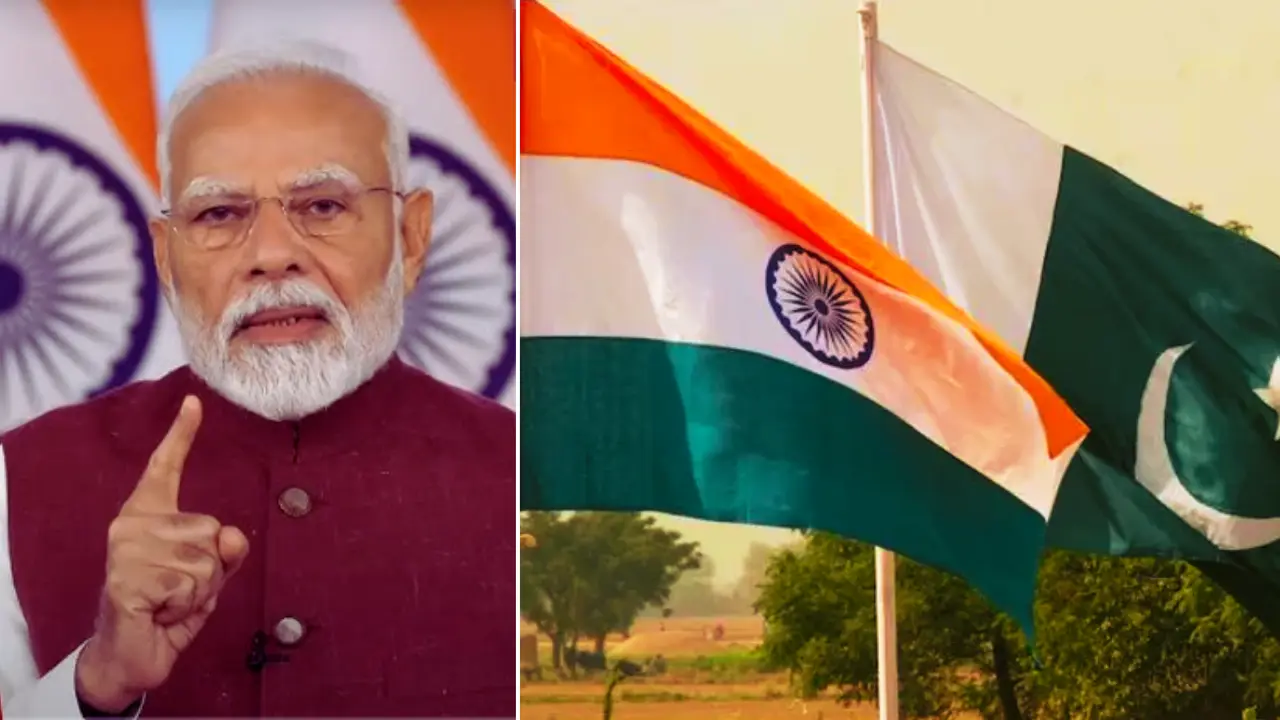
India News | PM Modi's address to the nation on Operation Sindoor marks a strategic shift in how India-Pakistan ties have progressed over the years. It is India's 'new normal' vis-a-vis Pak
Prime Minister Narendra Modi in his address to the nation on May 12 outlined that Operation Sindoor was not just a one-off exercise and is India’s new policy against terrorism. Now, it is for Pakistan to deal with this "new normal." In a direct warning to Pakistan, PM Modi said that India's fight against terrorism will now include the Pakistani Army as well if they defended Indian Forces' action against the terrorists. The PM called out Islamabad's nuclear blackmail and warned that New Delhi won't give heed to it anymore. Moreover, theArmy Commanders in the western borders have been given "full authority" to launch counteraction against Pakistan if they breach the understanding of the ceasefire.This marks a strategic shift in India's policies vis-a-vis Pakistan in general and terror in specific.
PM Modi's speech signifies a strategic shift
- No more nuclear blackmail: PM Modi in his speech said, "No nuclear blackmail will be tolerated anymore. Terrorist attacks on India will have to face a befitting reply, and the response will be on our terms." PM Modi's "the era of nuclear blackmail is over" is a big message to the Pakistani administration and Pakistani Army that has shielded terrorists and prevented India's action against them via nuclear shield.As per reports, Pakistan's doctrine on nuclear arms - establishment under General Zia-ul-Haq and articulated by Lieutenant General Khalid Kidwai - outlined four 'red lines' that would trigger nuclear retaliation: loss of territory, destruction of military infrastructure, economic strangulation, or internal destabilisation. It was intended to prevent India's action on cross-border provocations. With PM Modi's statement on Monday, it is clear India will no longer pay heed to Pakistan's nuclear bluff and will play the nuclear card as a strength, not a counterbalance.
- No Distinction Between Terror Sponsors and Terrorists: In a strong message to Pakistan, PM Modi said, "India will no longer see terrorist leaders and the governments sheltering them as separate entities." This shows that India, which has long been the victim of Pakistan-based terror groups and has taken legal and diplomatic ways to address the Pakistani army and its administration's support to terrorists will not do it anymore. The message is clear: For long, New Delhi took a legal route to bring the 26/11 Mumbai terror attack perpetrators to justice, but now India is going to hit the terrorists directly on the soil of Pakistan and if Pakistani administration fights for them: there will be no difference in the way both are treated by India.
Read More | Operation Sindoor: PM Modi says 'water and blood' can't flow together - The world must know India's Operation Sindoor has just been 'postponed': PM Modi highlighted that India has only postponed Operation Sindoor and will analyse every move by Pakistan. He reiterated that this suspension is not a conclusion—India will continue to assess Pakistan’s every move in the coming days, ensuring that its future actions align with its commitments. PM Modi also made sure that the international community knows that India's actions against terrorists included those who have planned and executed terror activities on their soil namely - 9/11 attacks of the US and the London Tube bombings, 2005. Modi also asserted that any talks with Pakistan will only be on Pakistan-occupied Kashmir (PoK) and terrorism and nothing else.
Read More |PM Narendra Modi declares Operation Sindoor as policy, lists 3 pillars of India's new anti-terrorism doctrine - Full authority to the army:Indian Army Chief General Upendra Dwivedi on May 12 gave full authority to all Army Commanders in the western borders to launch counteraction if the understanding reached between India and Pakistan's Director Generals of Military Operations (DGMOs) on May 10 is violated. PM Modi mentioned the same in his speech, saying that the government had given the armed forces full freedom to eliminate terrorists. This leaves no doubt that India's fight against terror has full political backing as well as preparedness. It is also a statement to the world which has long witnessed Pakistan's support to terror outfits and their leaders but has rarely raised questions, apart from the flimsy Financial Action Task Force (FATF) action. In fact, despite India's strong dissent amid escalating military tensions, the IMF granted$1 billion (around Rs 8,500 crore) to Pakistan. Moreover, there have not been many questions raised by Pakistani leadership over their continuous confessions of harbouring terrorists on public platforms. India is clear, it will now act on its own if Pak-based terror attacks the nation.
Operation Sindoor
Trending Stories
)
)
)
)
)
)
)
)
)
)
)
)
)
)
)
)
)
)
)
)
)
)
)
)
)
)
)
)
)
)
)
)
)
)
&im=FitAndFill=(700,400))
)
)
)
)
India launched Operation Sindoor on the intervening night of May 7-8 and hit nine terror camps located deep inside Pakistan and Pakistan-occupied Kashmir (PoK). India confirmed that its strikes have killed at least five dreaded terrorists from terror groups Jaish-e-Mohammed (JeM) and Lashkar-e-Taiba (LeT).
Tensions between the two nations rose after Pakistan retaliated on Indian villages, making civilians and military posts their targets of drone and air attacks. As many as 16 people including soldiers lost their lives in Pakistani shelling and drone attacks.
On May 10, India's Foreign Secretary Vikram Misri confirmed that India and Pakistan agreed to a ceasefire with immediate effect. India's External Affairs Minister S Jaishankar reiterated the same but also said that the country will continue its "uncompromising stance against terrorism in all its forms and manifestations." Pakistani drone attacks continued on the day of ceasefire as well, after which Misri issued a statement and told Pakistan to deal with the situation with “seriousness and responsibility”.

