Not just in 2024, Shah Jahan's Taj Mahal once leaked when monarch sat in Delhi centuries ago

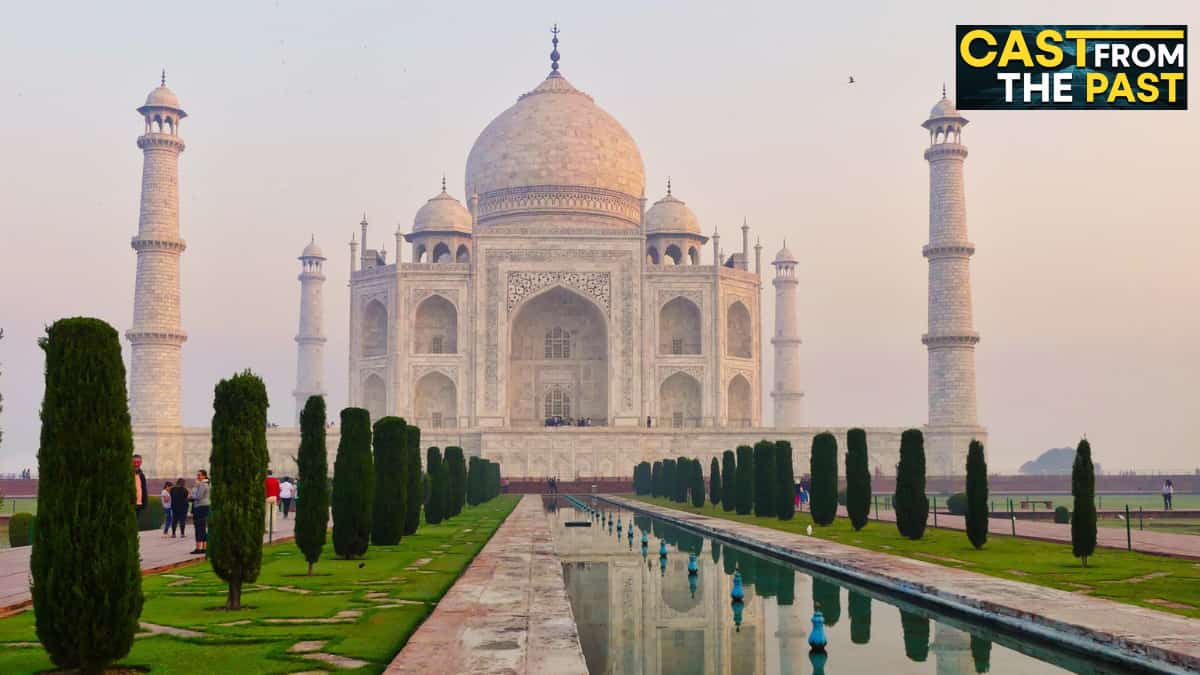
Image of the Taj Mahal which was commissioned by Mughal emperor Shah Jahan in 1631.
The Taj Mahal, one of the wonders of the world and the postcard tourist place of India, has been in the headlines for water leakage from its dome and adjacent gardens getting inundated because of heavy rainfall.
But this is not the first time the alluring Taj Mahal has faced water woes because of heavy downpours.
The tomb was in similar conditions centuries ago when Mughal emperor Shah Jahan had shifted his capital from Agra to Delhi and his visits to the tomb had somewhat declined.

The incident has been vividly captured by British author Fergus Nicoll in his book "Shah Jahan: The Rise And Fall Of The Mughal Emperor".
Shah Jahan's gaze shifts from Agra to Delhi
In his book, Nicoll explains that after "Agra was usurped as seat of the caliphate", the emperor made rare visits to the tomb.
)
Why asking questions could be more important than memorising answers
)
BRICS Summit 2026: Iran's Pezeshkian praises PM Modi at BRICS
)
Osama Bin Laden ‘planned’ to target India, CIA reveals dozens of declassified documents
)
'Iran won't surrender': Pezeshkian sends blunt message to US while attending BRICS Summit in India
)
BRICS Summit 2026: Global leaders of BRICS nations attend main open session
)
PM Modi and China's Xi offered to help resolve Russia-Ukraine war: Kremlin
)
Why dehydration is the hidden cause of travel fatigue on long flights
&im=FitAndFill=(700,400))
Meet top 5 batters fastest to 3000 runs in T20Is
)
Top 5 places to visit in Goa beyond its famous beaches
)
'He is popular...': Malaysian PM Anwar Ibrahim's praise for PM Modi during bilateral meeting | WATCH
)
BRICS Summit 2026: PM Modi, Xi reach key consensus on ties, China to assume BRICS chairmanship in 2027
)
BRICS Summit 2026: Consensus on joint declaration, diplomatic win for India
)
Trump says Canada eager to reach a deal, it could come ‘fairly soon’ if Ottawa treats US farmers better
)
‘Partners, not rivals’: Xi outlines four point plan for stronger India-China ties
&im=FitAndFill=(700,400))
Why Chinese PL-15 air-to-air missiles use dual-pulse motors compared to European interceptors
)
Could staying indoors all day affect your health?
)
BRICS Summit 2026: PM Modi addresses Day 2 of 18th BRICS summit
)
Who is the smiling man beside Modi, Putin and Xi at BRICS Summit 2026?
)
800 million years old - Scientists discover 'fingerprints' of supercontinent Gondwana in ancient rocks
)
Why going digital does not always mean becoming more efficient
&im=FitAndFill=(700,400))
Why do air defence missiles explode near their target instead of hitting it?
)
War is making Russia stronger? How Ukraine is shaping Moscow’s next generation of weapons
)
From severe mobility problems to recovery: Madhuri the elephant’s journey of wildlife care
)
BRICS Summit day 1: New Delhi declaration adopted with full consensus, big diplomatic win for India
)
Did Iran President Pezeshkian touch feet of Hindu spiritual leader at Delhi event as shown in viral video?
)
9-year-old Chennai prodigy clears Cambridge IGCSE grade 10 exams
)
Why does your body need time to adjust after a long journey?
)
BRICS Summit 2026: PM Modi to hold bilateral with leaders of seven countries
)
Ramanathaswamy temple takes centre stage as PM Modi welcomes world leaders at BRICS
)
Houthis launch cross-border strike on Saudi Arabia as Yemen war escalates
)
BRICS Summit 2026: Chinese president Xi Jinping departs from New Delhi after attending BRICS summit
)
Why does your skin need protection from UV rays?
)
How does the loss of forests affect the way wildlife lives and moves?
)
IND vs AFG, 1st T20I: When and where to watch live streaming in India?
)
Why do wild animals need quiet places to survive?
)
Bigg Boss 20: Qazi Touqeer gets a special ‘rockstar’ moment from Salman Khan
)
Humans may lose control of AI: Anthropic CEO calls for slowdown, Altman, Musk back him
Because of this, the tomb did not go through even basic maintenance. The dilapidated condition of the entire tomb complex was discovered by the then Mughal prince Aurangzeb - who was en route to the Deccan states in December 1652.
Also Read:Agra: Water leakage in Taj Mahal's main dome after heavy rain lashes North India
The prince had decided to halt in Agra and pay respect to the cenotaph of his mother but was shocked to see the Taj Mahal in bad condition less than 10 years after it was completed, as narrated by Nicoll in his book.
The prince is said to have noticed water leakage and cracks on the walls of the revered tomb and also inundation of the Mehtab Garden because of the flooding in the Yamuna River.
Aurangzeb's letter to Shah Jahan about the Taj Mahal's adverse conditions
Seeing the condition of the revered Taj Mahal, which once was his father's most cherished monument, the prince wrote a letter to the emperor informing him about the damage.
The buildings of this shrine enclosure of holy foundation are still firm and strong...except that the dome over the fragrant sepulchre leaks during the rainy season in two places on the north side. Likewise the four arched portals, several of the recessed alcoves on the second storey, the four small domes...have become dampened. The marble-covered terrace of the large dome has leaked in two or three places during this past rainy season and has been repaired. Let us see what happens in the coming rainy season...
Long-living protector! An extraordinary evil eye has struck this model of lofty buildings. If the rays of your august attention fall on the remedy to ward it off, it will be proper...
May the world-illuminating Sun of the Caliphate [Shah-Jahan] remain shining upon the heads of the people of the world!
This letter, which is dated December 9, 1652, was recorded in Ruka'at-i-Alamgiri. The last time Shah Jahan visited the tomb was on December 27, 1654, and he was accompanied by his son and heir apparent, Dara Shikoh.
Confirming this event to WION, professor Syed Ali Nadeem Rezavi, the author of Fathpur Sikri Revisited, said, "In the initial years after the building of the Taj, there were some leakages reported which find mention in the records. The problem was rectified and it never occurred again."