

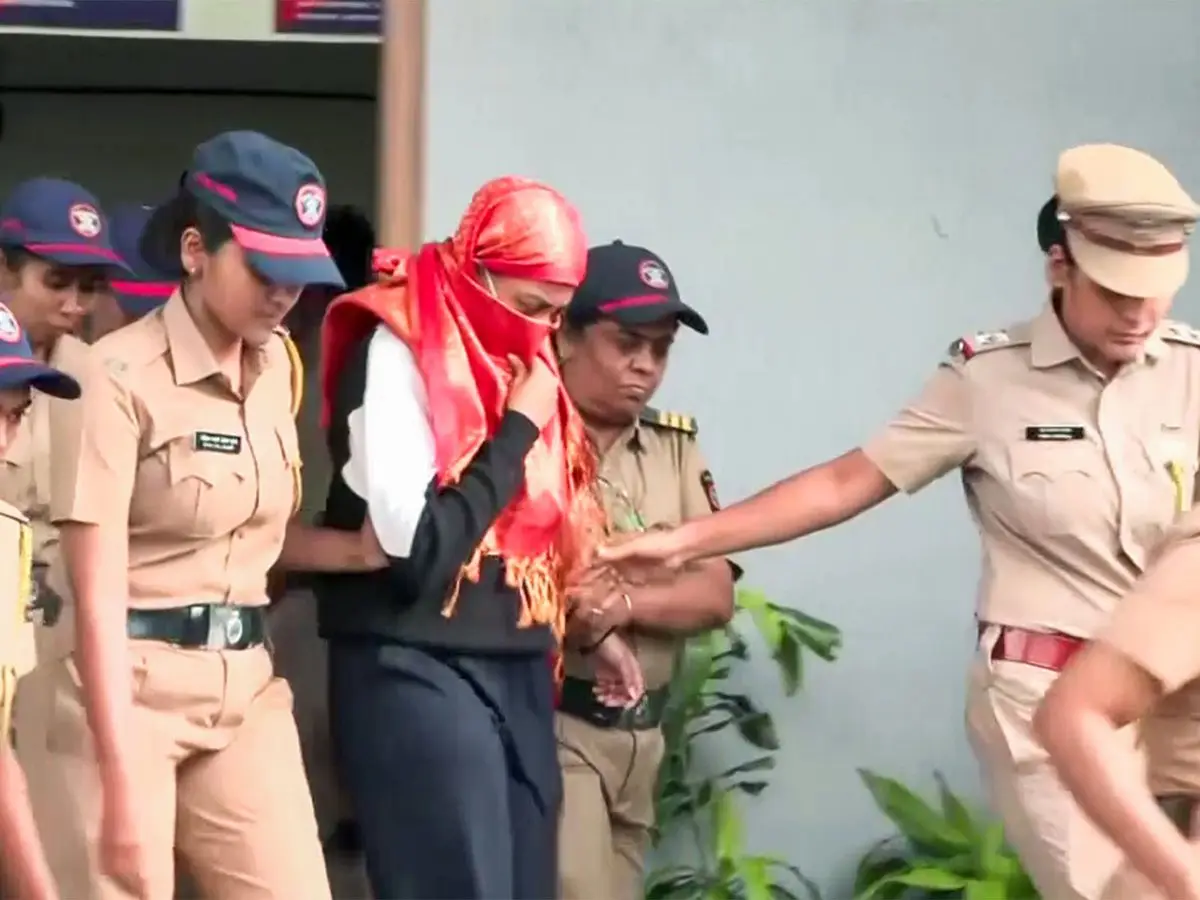
&imwidth=800&imheight=600&format=webp&quality=medium "Ketan Agarwal murder case: What is considered strong circumstantial evidence under Indian criminal law? Legal expert explains")
As the probe into the Ketan Agarwal murder case continues, questions have resurfaced over what qualifies as "strong circumstantial evidence" under Indian criminal law. Under Indian law, circumstantial evidence can form the sole basis of a criminal conviction, provided it satisfies the strict legal standards laid down by the courts. While direct evidence is generally preferred, the Supreme Court has repeatedly upheld convictions based entirely on a chain of circumstances that conclusively points to the guilt of the accused.
The Supreme Court's 5 principles
Mohd Arsalan Pasha, Advocate and Member of the Delhi High Court, while talking to WION, said, "Strong circumstantial evidence is that which satisfies the Panchsheel standard laid down in Sharad Birdhichand Sarda v State of Maharashtra, forming a complete, unbroken chain excluding every hypothesis of innocence. Last seen, weapon recovery, forensic proof, electronic records, and proved motive, when cumulatively established, constitute strong circumstantial evidence."
These require that the circumstances relied upon by the prosecution are fully established, consistent only with the guilt of the accused, conclusive in nature, exclude every reasonable hypothesis except guilt, and form a complete chain that leaves no doubt that the offence was committed by the accused and no one else.
What is circumstantial evidence?
Trending Stories
&imwidth=180&imheight=135&format=webp&quality=medium)
Brendan Taylor overtakes Andy Flower to become Zimbabwe’s leading ODI run-scorer
&im=FitAndFill=(700,400)&imwidth=180&imheight=135&format=webp&quality=medium)
What is the real meaning behind Pete Hegseth's tattoos?
&imwidth=180&imheight=135&format=webp&quality=medium)
Kenyan cult leader found guilty over starvation deaths of nearly 200 children
&imwidth=180&imheight=135&format=webp&quality=medium)
France is burning. Trump blames immigrants. But who is answering Europe's real questions? | The Verdict
&imwidth=180&imheight=135&format=webp&quality=medium)
Shastri backs Shami comeback; lauds Bhuvi and warns Bumrah on format workload ahead of World Cup
&imwidth=180&imheight=135&format=webp&quality=medium)
Netanyahu rival Benny Gantz quits Israel election race, vows to push for unity government
&imwidth=180&imheight=135&format=webp&quality=medium)
US Midterm 2026: What do opinion polls and prediction markets say less than two weeks before voting
&imwidth=180&imheight=135&format=webp&quality=medium)
WATCH | Albania protesters set Supreme Court on fire as anti-Rama riots escalate
&imwidth=180&imheight=135&format=webp&quality=medium)
Trump Commerce Secretary Howard Lutnick’s family fortune more than doubles to $7.3 billion, outpacing his boss
&im=FitAndFill=(700,400)&imwidth=180&imheight=135&format=webp&quality=medium)
Ghaziabad is world's fastest-growing city; Surat, Patna, Rajkot also feature on list
&imwidth=180&imheight=135&format=webp&quality=medium)
‘Spare India from anarchy’: Over 400 Indian-origin academics from MIT, Oxford condemn anti-CEC protests
&imwidth=180&imheight=135&format=webp&quality=medium)
Haunting of a New York brewery: Apparition caught on camera at 160-year-old establishment
&imwidth=180&imheight=135&format=webp&quality=medium)
Pakistan betrays Iran, shuts border, trade as Trump moves towards new war
&imwidth=180&imheight=135&format=webp&quality=medium)
PCB omits Atherton, Hussain from tri-series commentary panel over Imran Khan interview row
&imwidth=180&imheight=135&format=webp&quality=medium)
US Congressman Raja Krishnamoorthi describes foiled temple attack as ‘divine intervention’, criticises Vance and MAGA rhetoric
&imwidth=180&imheight=135&format=webp&quality=medium)
9/11 case: US Supreme Court rejects plea deal appeal by alleged mastermind Khalid Sheikh Mohammed
&imwidth=180&imheight=135&format=webp&quality=medium)
Girl 'dead' for 8 hours wakes up at her own funeral, dad insists she wasn't breathing
&imwidth=180&imheight=135&format=webp&quality=medium)
Pujara says 'Samson and Vaibhav cannot be in Playing XI' for India on NZ tour
&imwidth=180&imheight=135&format=webp&quality=medium)
One dead after shooting near mosque in Columbus, Ohio. Here's what we know so far
&imwidth=180&imheight=135&format=webp&quality=medium)
Watch: Trump predicts Netanyahu’s victory, says ‘You’re the man I want by my side’
&im=FitAndFill=(700,400)&imwidth=180&imheight=135&format=webp&quality=medium)
New OTT releases this week (October 19-25, 2026): Gajab Raat to Chaar Yaar-8 titles to watch during Dussehra week on Netflix, Prime Video and more
&imwidth=180&imheight=135&format=webp&quality=medium)
Baby orangutan rescued in India returns to Indonesia
&imwidth=180&imheight=135&format=webp&quality=medium)
India moves to buy 10,000 more AI chips for a national compute pool open to startups
&imwidth=180&imheight=135&format=webp&quality=medium)
'Whatever I can do to end this war': Trump floats China Summit with Putin and Xi, questions Zelensky's role in peace talks
&imwidth=180&imheight=135&format=webp&quality=medium)
WATCH | Viral video shows woman jogging past burning barricade amid Paris unrest, sparks online debate
&imwidth=180&imheight=135&format=webp&quality=medium)
'Paris is going to be a Muslim city very soon': Trump blames immigration for France unrest, urges Macron to tighten border policies
&imwidth=180&imheight=135&format=webp&quality=medium)
'We feel like Mr India': Gujarat’s undercover SHE team guard garba nights at Navratri
&imwidth=180&imheight=135&format=webp&quality=medium)
Cattle-feed bran in biscuits, detergent in milk: FSSAI acts against 3 companies
&imwidth=180&imheight=135&format=webp&quality=medium)
'It's a joy to see the makers bring it on such a grand scale': SS Rajamouli on Ramayana
&imwidth=180&imheight=135&format=webp&quality=medium)
Priest dies after crucifix falls on his head during livestreamed Mass in Ecuador | VIDEO
&imwidth=180&imheight=135&format=webp&quality=medium)
Ramayana advance booking: Ranbir Kapoor, Yash's film cross $500K ahead of Diwali release
&imwidth=180&imheight=135&format=webp&quality=medium)
US midterm elections 2026: Early voting picks up pace ahead of November 3 polls
‘Last seen' theory
Indian courts have recognised several categories of circumstantial evidence that may collectively establish guilt. One of the most commonly relied upon is the "last seen" theory. If the accused was last seen with the deceased shortly before the death and fails to provide a satisfactory explanation of what happened thereafter, courts may draw an adverse inference, Pasha said, adding that the closer the time gap between the two events, the stronger the evidentiary value.
Recovery of a weapon
Another important category is the recovery of a weapon or incriminating article. Under Section 23 of the Bharatiya Sakshya Adhiniyam, 2023, information provided by an accused in police custody that leads to the discovery of a weapon, bloodstained article or other incriminating material may be admissible, subject to the conditions prescribed by law.
Forensic evidence
Scientific and forensic evidence also plays a significant role. DNA profiling, fingerprint analysis, ballistic examination, post-mortem findings and serological reports have all been recognised by courts as reliable forms of circumstantial evidence, particularly when corroborated by other material on record.
Electronic evidence
Electronic evidence has become increasingly important in criminal investigations. Call Detail Records (CDRs), mobile tower location data, CCTV footage and digital payment trails, including UPI transactions, are now routinely used to establish links between suspects, victims and crime scenes. However, such electronic records must comply with the certification requirements under Section 63 of the Bharatiya Sakshya Adhiniyam, 2023, before they can be admitted in court.
Motive
Motive is another relevant circumstance. Although proving motive is not legally mandatory for securing a conviction, courts have consistently held that when motive, opportunity and the alleged act are established together, they strengthen the overall chain of circumstantial evidence.
Pasha said that these five conditions must be read together. Failure to satisfy even one of them can weaken the prosecution's case. He also emphasised that no single circumstance is ordinarily sufficient on its own. Instead, courts examine whether all the evidence, taken together, forms a continuous and unbroken chain pointing exclusively towards the guilt of the accused.

