ISRO to buy Semi-cryogenic engines to enhance LVM3 rocket; Funds allocated

&imwidth=600&imheight=450&format=webp&quality=medium "ISRO to buy Semi-cryogenic engines to enhance LVM3 rocket; Funds allocated")
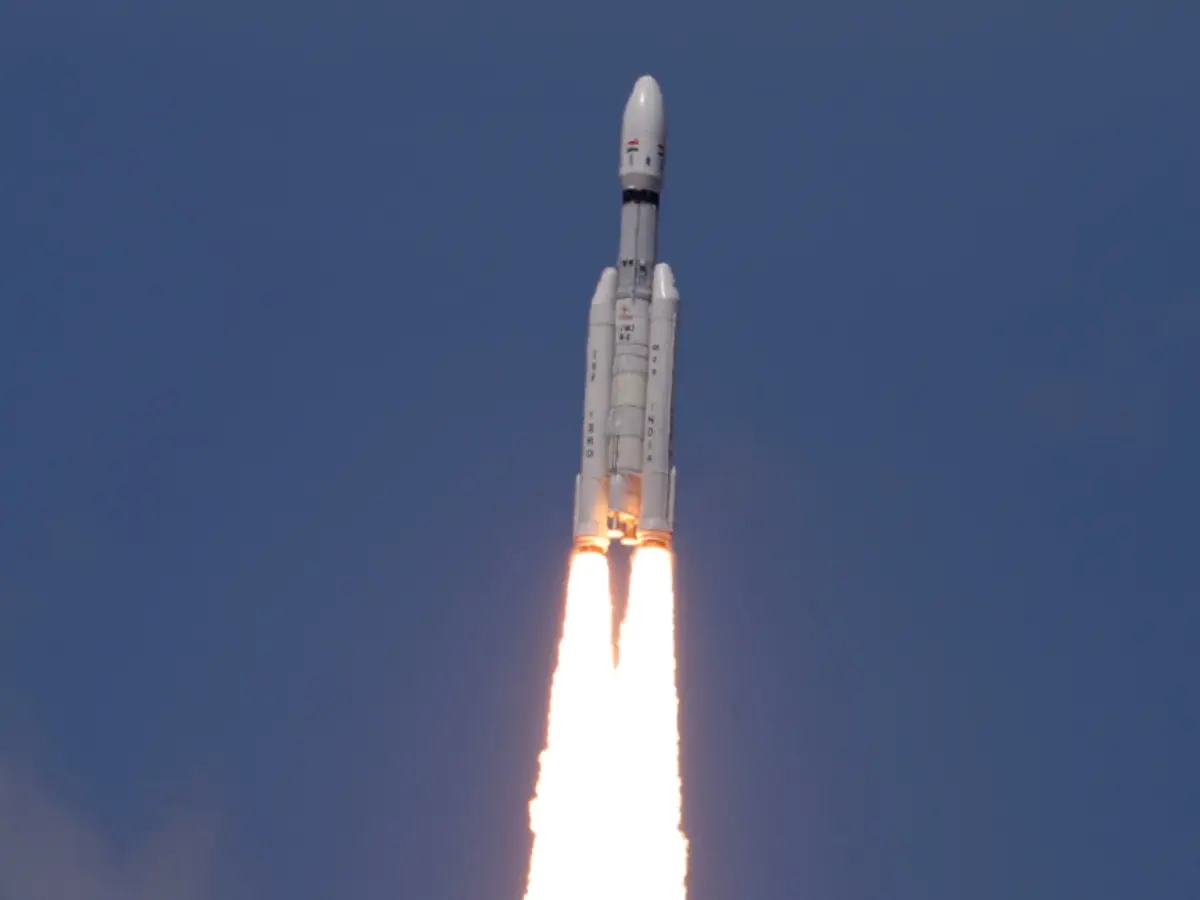
India's most capable spacefaring rocket, ISRO's LVM3 in flight Photograph: (ISRO)
For the year 2026-27, Indian Space agency ISRO has been allocated a budget estimate of ₹10,397 crores(approx $1.09bn) for various missions and developmental activities that are categorized 'Space Technology'.
Indian Space agency ISRO will be buying and inducting Semi-cryogenic rocket engines to enhance the rocketry muscle power and lifting capability of its largest rocket, the Launch Vehicle Mark 3(LVM3). India is going for purchase, as its national space agency does not possess proven and flight-ready semi-cryogenic rocket engines, which burn a combination of rocket-grade kerosene and super cooled liquid oxygen. A report by India's Parliamentary Standing Committee on Science and Technology mentions that ISRO has been allocated funds in 2026-27 for the "Induction of procured Semi-cryogenic engine towards expediting the enhancement of LVM3 launch vehicle payload capability."
For the year 2026-27, Indian Space agency ISRO has been allocated a budget estimate of ₹10,397 crores(approx $1.09bn) for various missions and developmental activities that are categorized 'Space Technology'. In the Parliamentary report that spans over 60pages, the procurement and induction of the Semi-cryogenic engine finds mention a few times.
Since the year 2023, this author has been reporting about the possibility of India procuring the 'RD-191' Semi-cryogenic engines from Russia, a longstanding strategic partner in sectors ranging from defence, nuclear energy, space technology, among others. The latest Indian Parliamentary report does not specify which Semi-cryogenic engine variant would be purchased, and its country of its origin. However, this Parliamentary report is the first publicly available Indian government document that specifically mentions about budget allocation for ISRO's semi-cryogenic engine procurement, a move that is crucial to the future of India's space programme.
About the'RD-191' rocket engine
The 'RD-191' is a high-performance rocket engine fuelled by Kerosene and Liquid oxygen. It falls under the categorySemi-cryogenic, as its fuel rocket-grade Kerosene can be stored at room temperature; and the oxidizer liquid oxygen has to be stored at super-cooledcryogenic temperatures(below -150degrees Centigrade).
India's existing rockets are powered by engines that burn: solid-fuel, liquid-fuel, andcryogenic fuel (where liquid hydrogen and liquid oxygen are stored at super-cooled temperatures). Though efforts have been underway to develop asemi-cryogenic engine dubbed 'SE-2000', India does not possess a proven, flight-ready engine as of now. India may need years more to have its homegrown semi-cryogenic engine, 'SE-2000'.
Trending Stories
&imwidth=280&imheight=210&format=webp&quality=medium)
&imwidth=280&imheight=210&format=webp&quality=medium)
&imwidth=280&imheight=210&format=webp&quality=medium)
&imwidth=280&imheight=210&format=webp&quality=medium)
&imwidth=280&imheight=210&format=webp&quality=medium)
&imwidth=280&imheight=210&format=webp&quality=medium)
&im=FitAndFill=(700,400)&imwidth=280&imheight=210&format=webp&quality=medium)
&imwidth=280&imheight=210&format=webp&quality=medium)
&imwidth=280&imheight=210&format=webp&quality=medium)
&imwidth=280&imheight=210&format=webp&quality=medium)
&imwidth=280&imheight=210&format=webp&quality=medium)
&im=FitAndFill=(700,400)&imwidth=280&imheight=210&format=webp&quality=medium)
&imwidth=280&imheight=210&format=webp&quality=medium)
&imwidth=280&imheight=210&format=webp&quality=medium)
&imwidth=280&imheight=210&format=webp&quality=medium)
&imwidth=280&imheight=210&format=webp&quality=medium)
&imwidth=280&imheight=210&format=webp&quality=medium)
&im=FitAndFill=(700,400)&imwidth=280&imheight=210&format=webp&quality=medium)
&im=FitAndFill=(700,400)&imwidth=280&imheight=210&format=webp&quality=medium)
&imwidth=280&imheight=210&format=webp&quality=medium)
&imwidth=280&imheight=210&format=webp&quality=medium)
&imwidth=280&imheight=210&format=webp&quality=medium)
&imwidth=280&imheight=210&format=webp&quality=medium)
&imwidth=280&imheight=210&format=webp&quality=medium)
&imwidth=280&imheight=210&format=webp&quality=medium)
&im=FitAndFill=(700,400)&imwidth=280&imheight=210&format=webp&quality=medium)
&imwidth=280&imheight=210&format=webp&quality=medium)
&imwidth=280&imheight=210&format=webp&quality=medium)
&imwidth=280&imheight=210&format=webp&quality=medium)
&imwidth=280&imheight=210&format=webp&quality=medium)
&imwidth=280&imheight=210&format=webp&quality=medium)
&imwidth=280&imheight=210&format=webp&quality=medium)
&imwidth=280&imheight=210&format=webp&quality=medium)
&imwidth=280&imheight=210&format=webp&quality=medium)
Developed by NPO Energomash, the 'RD-191' is a workhorse engine used in Russia's Angara series of rockets. 'RD-191' is also a throttleable engine, which means that it can significantly reduce or increase its thrust mid-flight, a crucial capability that enables precise flight control, recovery and re-use of rocket stages. While Russia itself does not possesses reusable/vertical landing rockets, 'RD-191' offers some of the basic capabilities required in that regard.
The RD-191 is approximately two-and-a-half times more powerful thanISRO's workhorse Indo-French Vikas engine. While the Vikas engine delivers about 60-80tons of thrust, the 'RD-191' is known to deliver between 200-220 tons of thrust. First flown by India in 1993, the Vikas engine is the mainstay engine used in India's PSLV, GSLV, and LVM3 rockets. The Vikas engine is based on the French Viking-3 engine of the 1980s.
Why does India need the 'RD-191'?
Indian space agencyISRO's largest and most powerful homegrown rocket LVM3 can lift only 4,000kg to the Geosynchronous transfer orbit, which is a higher orbit into which communication satellites are launched. Likewise, the LVM3 is said to be capable of lifting around 8,000-10,000kg to Low earth orbit, which is about 500kms above the earth's surface. India's most powerful rocket LVM3 has a very modest lift capability, when compared to its global peers operated by Government-run space agencies or private firms.
India's rocketry muscle power deficiency has been evident on multiple occasions. In recent years, despite having its own rockets, India has had to pay foreign entities like Europe's Arianegroup and America's SpaceX to launch heavy satellites built in India. This was done because the satellites weighed much more than 4,000kg, which is the maximum lifting capability of India's LVM3 rocket.
As India's growing space ambitions include the Gaganyaan human spaceflight programme(astronaut mission), proposed Bharatiya Antariksh Station(Indian crewed space station), envisioned crewed moon landing, the country is in dire need of more rocketry muscle power. Designing and developing all-new rockets and rocket engines could take decades or longer, which is why India is looking to purchase the powerful 'RD-191' engine from Russia.
How would India utilize the 'RD-191' engines?
While the Indian Space Research Organization(ISRO) wishes to design and develop powerful rockets for the future, India's immediate priority is to enhance the lifting capability of the LVM3. To accomplish this,ISROcan use the Russian 'RD-191' engine and associated systems to replace the existing L110 or second stage of the three-stage LVM3 rocket. This is one step towards significantly enhancing the lifting power of the LVM3 rocket.
The LVM3's lifting power can be further bolstered by using a more capable C32Cryogenic upper stage developed in-house byISRO. This would helpISROto launch satellites weighing around 4,500-5,000kg from home soil on its own rocket, while reducing dependence on foreign rockets.
In the foreseeable future, the LVM3 rocket powered by the RussianSemiCryogenic engine and the Indian C32Cryogenic stage could be used for various missions that were earlier not possible forISROdue to the rocketry muscle power deficiency.
ISRO's future rockets can be designed and developed based on the capabilities offered by the 'RD-191' engine. In heavy-lift rocketry, multiple engines are used in a cluster to deliver high amounts of lifting power. Therefore, a single rocket would require a dozen or more engines. In such cases, production of the engine in India under licence would be a necessity. India and Russia have also been exploring the possibility of making the 'RD-191' in India, in partnership with industry.
