INS Jatayu: Possibilities and challenges for India’s Naval airbase in Minicoy, Lakshadweep

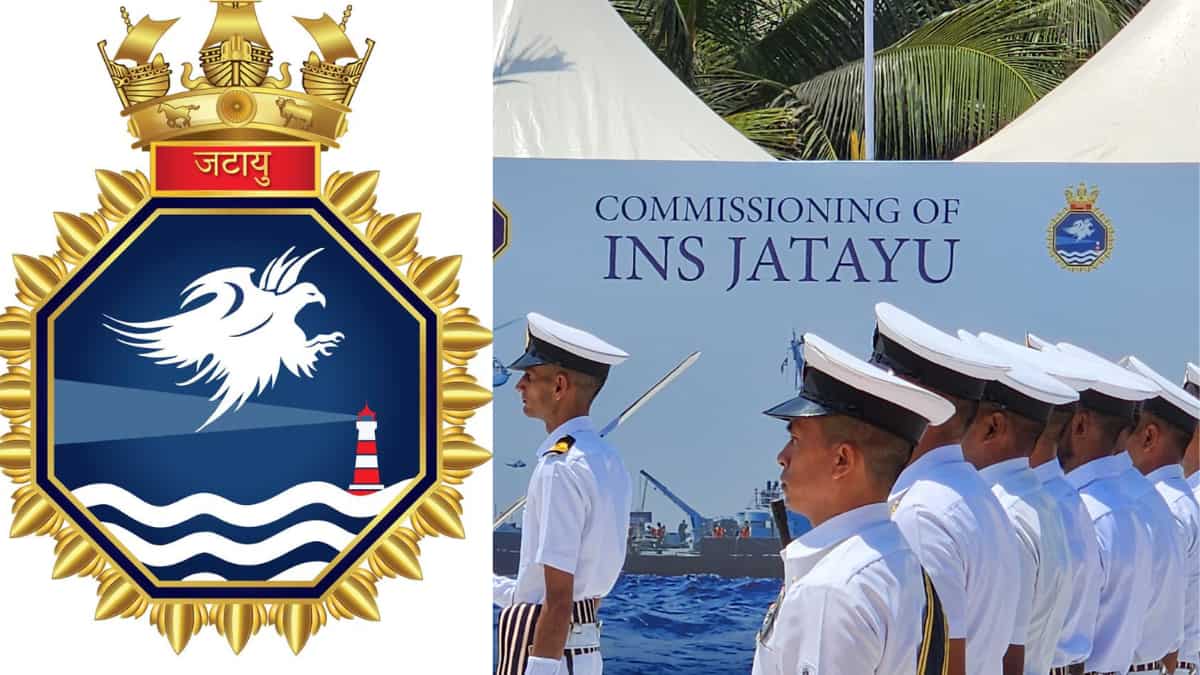
INS Jatayu
At the strategically important Minicoy island, the southernmost among the Lakshadweep archipelago, the Indian Navy has commissioned INS Jatayu, the country's newest naval base. In the long run, this facility is meant to enhance the operational reach of the Indian Navy and facilitate the Navy's anti-piracy, anti-narcotics operations in the region.
Also read:Indian Navy to boost security, commission INS Jatayu at Lakshadweep's Minicoy islands amid Male row
Interestingly, by naming the base after a bird (Jatayu - a reference to the vulture from the Ramayana epic), the Indian establishment has clearly indicated that it intends to eventually operate air assets from this location, which is barely 150kmaway from Maldivian islands. The commissioning of INS Jatayu comes shortly after the inauguration of an airstrip and jetty that India built at Agalega, Mauritius.

The Indian Navy's presence at Minicoy, which straddles the vital Sea Lanes of Communication (SLOCs) or busy maritime highways, is not a recent development. Naval Detachment Minicoy was setup in the early 1980s.
However, with INS Jatayu being commissioned, more infrastructure, personnel and resources are to be added. Jatayu will be the Indian Navy's second base in the Lakshadweep archipelago, where the force already operates the base INS Dweeprakshak at Kavaratti, approximately 250kmnorth of INS Jatayu at Minicoy.
Indian Naval Aviation and the legacy of naming Naval air bases after birds
&imwidth=180&imheight=135&format=webp&quality=medium)
‘Don’t blame SIR, Congress will lose 2029 too’: Amit Shah tells Rahul Gandhi after Gujarat local poll results
&imwidth=180&imheight=135&format=webp&quality=medium)
Out on bail in fatal Mercedes crash, 20-year-old arrested again for allegedly trying to run over people in Odisha
&im=FitAndFill=(700,400)&imwidth=180&imheight=135&format=webp&quality=medium)
Navratri 2026: 9 days, 9 forms of Goddess Durga and 9 colours- Check the complete list
&imwidth=180&imheight=135&format=webp&quality=medium)
'Turn approver, resign, we'll forgive you': Rahul Gandhi claims receiving messages from CEC Gyanesh Kumar
&imwidth=180&imheight=135&format=webp&quality=medium)
Robot gropes girl, makes thrusting movements in bizarre crime in Germany
&imwidth=180&imheight=135&format=webp&quality=medium)
Anupam Kher joins Ranbir Kapoor's Ramayana as Jatayu, new poster unveiled
&imwidth=180&imheight=135&format=webp&quality=medium)
Trump warns Houthis, says Erdogan would do as asked on Saudi Arabia
&imwidth=180&imheight=135&format=webp&quality=medium)
Cornell University suspends fraternity parties over 2024 gang rape allegations
&imwidth=180&imheight=135&format=webp&quality=medium)
Trump accuses Houthis of driving up oil prices before US midterms, warns of consequences
&imwidth=180&imheight=135&format=webp&quality=medium)
1,500 drones illuminate Mumbai sky as Cordelia Cruises unveils second ship, Cordelia Sky
&im=FitAndFill=(700,400)&imwidth=180&imheight=135&format=webp&quality=medium)
IMF World Economic Outlook: 10 economies to watch for growth in FY27 and FY28 - Where does India stand?
&imwidth=180&imheight=135&format=webp&quality=medium)
CMs Vijay-Naidu meet in Vijayawada, discuss water sharing, river-linking
&imwidth=180&imheight=135&format=webp&quality=medium)
MI5 chief warns Russia is UK’s ‘aggressor number one’ as Iran and AI threats grow
&imwidth=180&imheight=135&format=webp&quality=medium)
Mundhe: Fight against unsafe food goes on
&imwidth=180&imheight=135&format=webp&quality=medium)
France accuses Musk of ‘online harassment’ of European leaders, warns of poll interference
&imwidth=180&imheight=135&format=webp&quality=medium)
Rahul Gandhi speaks on Anti-CeC protests: Gathering over tea after Supreme Court rally
&im=FitAndFill=(700,400)&imwidth=180&imheight=135&format=webp&quality=medium)
New OTT releases this week (October 12-18, 2026): Sacrifice, Koffee with Karan S9, Roadies Rebirth- 6 titles coming on Netflix, JioHotstar and more
&imwidth=180&imheight=135&format=webp&quality=medium)
Measles kills again: 6 dead in Pennsylvania as America faces its worst outbreak in decades | Gravitas
&imwidth=180&imheight=135&format=webp&quality=medium)
Blasts heard in Sanaa as Saudi-led coalition warns civilians to evacuate; Houthis vow retaliation
&imwidth=180&imheight=135&format=webp&quality=medium)
Suicidal man survives jump from 11th floor in Japan, could now be tried for murder
&imwidth=180&imheight=135&format=webp&quality=medium)
'Ouch!!! That must hurt': Kangana Ranaut hails Kamal Haasan's sharp reply to Elon Musk over Starlink row
&imwidth=180&imheight=135&format=webp&quality=medium)
Pakistan to chair UN-backed global Borrowers’ Platform as its own debt burden mounts, triggers sarcastic reactions on social media
&imwidth=180&imheight=135&format=webp&quality=medium)
UK school ditches technology, shifts from screen to pen and paper for learning
&imwidth=180&imheight=135&format=webp&quality=medium)
New Delhi rejects Beijing’s claims and remarks on Ladakh location naming exercise
&imwidth=180&imheight=135&format=webp&quality=medium)
Trump says Republicans face equally tough fight in House and Senate midterms
&imwidth=180&imheight=135&format=webp&quality=medium)
Sidhu Moose Wala’s younger brother wins hearts by recreating late singer’s signature move at Toronto Hologram Show
&imwidth=180&imheight=135&format=webp&quality=medium)
Man dies at Six Flags Georgia: Past accidents at Six Flags amusement parks across US
&imwidth=180&imheight=135&format=webp&quality=medium)
OpenAI employee arrested by FBI after allegedly hiding recording device in office
&imwidth=180&imheight=135&format=webp&quality=medium)
‘My president, I mean my husband’: Trump's new press secretary Katie Zacharia's first briefing goes off the rails in 14 minutes
&imwidth=180&imheight=135&format=webp&quality=medium)
Girl 'dead' for 8 hours wakes up at her own funeral, dad insists she wasn't breathing
&imwidth=180&imheight=135&format=webp&quality=medium)
Inside the alleged drug-money trail behind a Mumbai couple’s properties
&imwidth=180&imheight=135&format=webp&quality=medium)
L Murugan resigns as Union Minister, expresses wish to return to grassroots
For more than seven decades, the Indian Navy has been operating air assets and the country's first Naval Air Station (meant for stationing aerial assets) was established at Kochi, Kerala in 1953. Known as INS Garuda, it is the Navy's oldest air station and continues to be in active use.
The US-origin 'MH-60R' multi-role maritime helicopters procured from America will also be operating from Garuda, thereby enhancing the anti-submarine warfare, anti-surface warfare, search and rescue medical evacuation, maritime surveillance capabilities of the Indian Navy. Overall, it is a platform that can be used for both benign and offensive roles.
An interesting pattern can be observed in the naming of Indian Naval Air Stations - all of them are named after birds. 'Garuda', 'Parundu', 'Rajali', 'Dega', 'Hansa', 'Baaz', 'Shikra', 'Jatayu' etc. are all words from various Indian languages and each one of them refers to a bird species. Prefix INS to each one of them and we get the names of the Indian Naval air stations that dot the country's east and west coasts, the island territories.
Typically,different classes of aircraft with varying capabilities are stationed at naval air stations. For example, INS Hansa, in Dabolim, Goa, which is India's largest Naval Air station houses multiple variants - the Mig-29K deck-based fighter jets, Kamov-31 airborne early warning helicopters, P8I 'Poseidon' long range maritime reconnaissance and anti-submarine warfare planes, the Dornier-228 Maritime surveillance planes, Chetak and Dhruv helicopters.
INS Jatayu - the possibilities and challenges
By naming the base as INS Jatayu, the Indian Navy has made it obvious that the facility would be eventually used as a Naval Air Station. However, there are constraints in establishing a large and full-fledged air station in this small island, which is densely populated on one side and has very little land available for such a military aviation facility.
"I see INS Jatayu opening up possibilities in terms of Command, Control, Communications, Computers (C4) Intelligence, Surveillance and Reconnaissance (ISR) and increasing our Maritime Domain Awareness (MDA), at a time when there are increased Chinese forays in the region. Not every airfield is initially meant for large planes like the P8I and fighters like the Russian-origin Mig-29K. We must think in terms of operating helicopters, drones, unmanned surface vehicles, and even hovercrafts(given the shallow waters there)." Commodore Vasan (Retd), Director General of the Chennai Centre for China Studies (C3S) told WION. He has served both the Indian Navy and Indian Coast guard in various roles, and had been the commissioning commanding officer of the Indian Naval Air Station INS Rajali.
According to Commodore Vasan, the long-range planes could continue to operate from the bases on the Indian mainland and the smaller, newer platforms could operate from such island bases till they are capable of operating as full fledged air bases for both the Navy and Air Force.
He says that INS Jatayu would offer considerable coverage of the key Sea Lanes of Communications around the eight degree channel and ten degree channel (a reference to the 8th and 10th latitude and the shipping lanes along them, respectively) which witness dense traffic.
Mentioning the recent attacks by pirates and the Houthis, he says there is a need for better surveillance and response in the region. Referring to INS Jatayu in Minicoy and INS Dweeprakshak in Kavaratti, he says that the Indian Navy's reach and flexibility would be augmented, even with limited initial investments.
Watch:INS Jatayu: Indian Navy commission new naval base
He adds that the entire Arabian sea region is a contested one, with China delivering four frigate-class warships and eight diesel-electric submarines to the Pakistani Navy, and Turkish-origin drones that would become a part of Maldives' inventory.
Notably, Maldives has taken a blatantly pro-China stance since President Muizzu came to power last year. Amid such a rivalry in the region, India is looking to make the most of the Lakshadweep and Minicoy islands on the west and the Andaman and Nicobar islands on the east, he opines.
Rear Admiral Sudhir Pillai (Retd), who served as the Flag Officer Naval Aviation (FONA), Indian Navy, is of the opinion that INS Jatayu is a welcome step by the Indian Navy as Naval Aviation infrastructure is further built up.
However, he highlighted that it would be extremely challenging to base aircraft on a permanent basis at an island base that will need to contend with the vagaries of southwest monsoon, the associated harsh weather conditions, and the inevitable dependence on intermediate level support infrastructure that require vast tracts of land.
"I doubt if naval aircraft that are maintenance intensive would be stationed permanently at INS Jatayu. Such basing requires infrastructure built not just to brave storms and harsh weather, but to manage the complexity that causes corrosion, etc. India does have an airstrip at Agatti, further North in the Lakshadweep islands, but is it used to permanently base aircraft?," he asks.
He believes that INS Jatayu would serve well as an Advanced Landing Ground or forward base with facilities for aircraft turnaround, servicing and related support facilities. "Essentially Jatayu would in this capacity provide for air traffic control and other basic frontline support infrastructure,"he concluded.
