

&imwidth=800&imheight=600&format=webp&quality=medium "India’s big relief amid LPG crisis fears: Commercial LPG allocation raised to 50% — What it means")
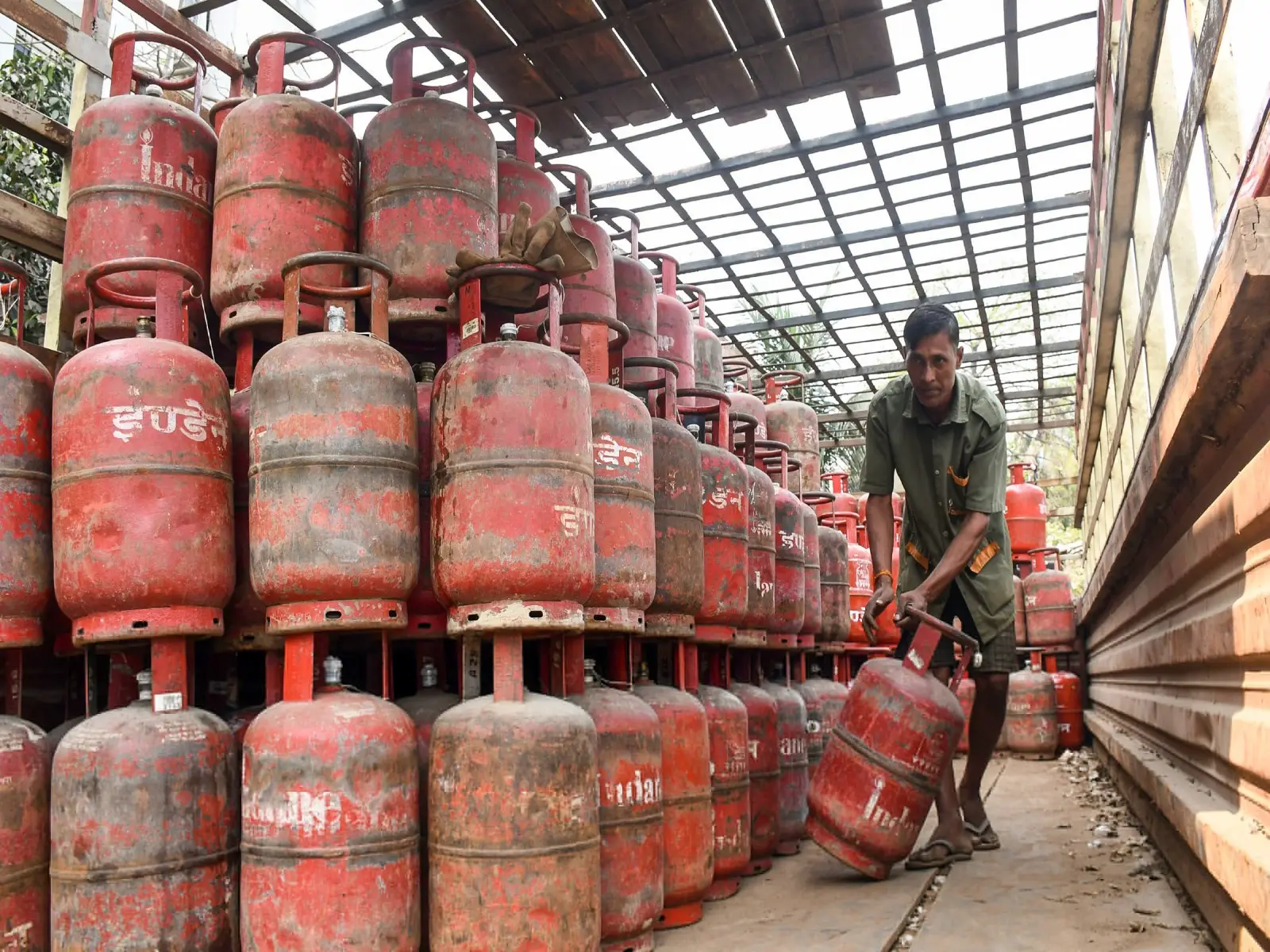
The Indian government has increased gas allocation to states and Union Territories to 50 per cent of pre-crisis levels, with an additional 20 per cent supply to be implemented from March 23, according to a communication from the Ministry of Petroleum and Natural Gas. In a letter to all State and UT Chief Secretaries, Petroleum Secretary Dr Neeraj Mittal said that the enhanced allocation aims to support key sectors, particularly those linked to food supply and public welfare. Offering further respite to commercial establishments running short of liquified petroleum gas (LPG) cylinders, the Ministry of Petroleum and Natural Gas (MoPNG) has decided to allocate States an additional 20 per cent of their average monthly requirement of commercial LPG. In simple terms, the government is releasing more cooking gas for businesses (like restaurants and hotels) because the supply shortage is easing up. With more gas available, eateries can operate normally without worrying as much about running out or relying on expensive alternatives. To get this extra gas, businesses are being told they eventually need to switch to piped gas (PNG) instead of relying only on cylinders.
In a notice on Saturday (March 22), Mittal said, “The supply of LPG continues to be a concern in view of prevailing geopolitical situation. Despite this war situation, Government has given highest priority to Domestic LPG and PNG, along with high priority to hospitals and educational institutions.” The war in West Asia has triggered fears of LPG shortage and disrupted global energy supply chains. “I wish to now inform you that w.e.f 23.3.26 till further notification, another 20% is being allotted to the State, which would take the overall allocation to 50% of the pre-crisis level. The additional allocation of 20% shall be given on priority to the following sectors: restaurants, dhabas, hotels, industrial canteens, food processing/dairy, subsidised canteens/outlets run by state governments or local bodies for food, community kitchens, 5kg FTL for migrant labourers, along with measures to ensure no diversion. The additional quantum is to be allocated on priority basis to restaurants, dhabas, hotels, industrial canteens, food processing units and dairies, subsidised canteens and outlets run privately or by State governments, and community kitchens, as well as 5 kg free trade LPG for migrant labourers,” the notice added. The Ministry also directed placing measures to ensure there are no diversions.
Push towards PNG to ease pressure
The Union government has recently begun encouraging a transition to PNG, seeking to alleviate some pressure from LPG supplies mired in the Persian Gulf amidst escalating tensions in West Asia. India imports 60 per cent of its overall LPG requirements, of which 90 per cent is routed through the blockaded Strait of Hormuz. Earlier, on March 18, the government had pledged to allocate an extra 10 per cent of commercial LPG requirements to States and Union Territories provided they help with the transition to PNG. City gas distributors have also offered to incentivise the move by waiving security deposits and registration charges, or even promising ₹500-worth of free gas to consumers. According to government data from Friday, the domestic production of LPG by refineries has risen about 40 per cent compared to their production levels before the crisis, ever since supply maintenance orders mandated that refineries use propane, butene and other relevant streams to produce cooking gas, instead of petrochemicals.
Trending Stories
&imwidth=180&imheight=135&format=webp&quality=medium)
Blasts heard in Sanaa as Saudi-led coalition warns civilians to evacuate; Houthis vow retaliation
&imwidth=180&imheight=135&format=webp&quality=medium)
Saudi Arabia strikes Yemen oil sites as Houthi missiles target Riyadh; 'limited fire' breaks out at Aramco
&im=FitAndFill=(700,400)&imwidth=180&imheight=135&format=webp&quality=medium)
Navratri 2026: 9 days, 9 forms of Goddess Durga and 9 colours- Check the complete list
&imwidth=180&imheight=135&format=webp&quality=medium)
Trump accuses Houthis of driving up oil prices before US midterms, warns of consequences
&imwidth=180&imheight=135&format=webp&quality=medium)
‘Don’t blame SIR, Congress will lose 2029 too’: Amit Shah tells Rahul Gandhi after Gujarat local poll results
&imwidth=180&imheight=135&format=webp&quality=medium)
New Delhi rejects Beijing’s claims and remarks on Ladakh location naming exercise
&imwidth=180&imheight=135&format=webp&quality=medium)
CMs Vijay-Naidu meet in Vijayawada, discuss water sharing, river-linking
&imwidth=180&imheight=135&format=webp&quality=medium)
US Midterms 2026: In Alaska, cost-of-living anxiety meets strangest ballot in high-stakes Senate race
&imwidth=180&imheight=135&format=webp&quality=medium)
OpenAI employee arrested by FBI after allegedly hiding recording device in office
&imwidth=180&imheight=135&format=webp&quality=medium)
Man dies at Six Flags Georgia: Past accidents at Six Flags amusement parks across US
&imwidth=180&imheight=135&format=webp&quality=medium)
1,500 drones illuminate Mumbai sky as Cordelia Cruises unveils second ship, Cordelia Sky
&imwidth=180&imheight=135&format=webp&quality=medium)
Pope Leo XIV diagnosed with lung cancer after surgery, Vatican says 'successful surgery and recovering'
&imwidth=180&imheight=135&format=webp&quality=medium)
Pakistan to chair UN-backed global Borrowers’ Platform as its own debt burden mounts, triggers sarcastic reactions on social media
&imwidth=180&imheight=135&format=webp&quality=medium)
Suicidal man survives jump from 11th floor in Japan, could now be tried for murder
&imwidth=180&imheight=135&format=webp&quality=medium)
Robot gropes girl, makes thrusting movements in bizarre crime in Germany
&imwidth=180&imheight=135&format=webp&quality=medium)
Trump says Republicans face equally tough fight in House and Senate midterms
&imwidth=180&imheight=135&format=webp&quality=medium)
France accuses Musk of ‘online harassment’ of European leaders, warns of poll interference
&imwidth=180&imheight=135&format=webp&quality=medium)
MI5 chief warns Russia is UK’s ‘aggressor number one’ as Iran and AI threats grow
&imwidth=180&imheight=135&format=webp&quality=medium)
'Turn approver, resign, we'll forgive you': Rahul Gandhi claims receiving messages from CEC Gyanesh Kumar
&imwidth=180&imheight=135&format=webp&quality=medium)
Inside the alleged drug-money trail behind a Mumbai couple’s properties
&imwidth=180&imheight=135&format=webp&quality=medium)
‘My president, I mean my husband’: Trump's new press secretary Katie Zacharia's first briefing goes off the rails in 14 minutes
&im=FitAndFill=(700,400)&imwidth=180&imheight=135&format=webp&quality=medium)
IMF World Economic Outlook: 10 economies to watch for growth in FY27 and FY28 - Where does India stand?
&imwidth=180&imheight=135&format=webp&quality=medium)
L Murugan resigns as Union Minister, expresses wish to return to grassroots
&imwidth=180&imheight=135&format=webp&quality=medium)
'Ouch!!! That must hurt': Kangana Ranaut hails Kamal Haasan's sharp reply to Elon Musk over Starlink row
&imwidth=180&imheight=135&format=webp&quality=medium)
Sidhu Moose Wala’s younger brother wins hearts by recreating late singer’s signature move at Toronto Hologram Show
&imwidth=180&imheight=135&format=webp&quality=medium)
Girl 'dead' for 8 hours wakes up at her own funeral, dad insists she wasn't breathing
&imwidth=180&imheight=135&format=webp&quality=medium)
UK school ditches technology, shifts from screen to pen and paper for learning
&im=FitAndFill=(700,400)&imwidth=180&imheight=135&format=webp&quality=medium)
New OTT releases this week (October 12-18, 2026): Sacrifice, Koffee with Karan S9, Roadies Rebirth- 6 titles coming on Netflix, JioHotstar and more
&imwidth=180&imheight=135&format=webp&quality=medium)
Rahul Gandhi speaks on Anti-CeC protests: Gathering over tea after Supreme Court rally
&imwidth=180&imheight=135&format=webp&quality=medium)
Anupam Kher joins Ranbir Kapoor's Ramayana as Jatayu, new poster unveiled
&imwidth=180&imheight=135&format=webp&quality=medium)
Measles kills again: 6 dead in Pennsylvania as America faces its worst outbreak in decades | Gravitas
&imwidth=180&imheight=135&format=webp&quality=medium)
Ken Paxton's Dubai night out with two US fugitives sparks political storm as Texas Senate race tightens
&imwidth=180&imheight=135&format=webp&quality=medium)
Mundhe: Fight against unsafe food goes on
&imwidth=180&imheight=135&format=webp&quality=medium)
Cornell University suspends fraternity parties over 2024 gang rape allegations
Meanwhile, a total of two Indian-flagged LPG ships have successfully entered India from the conflict zone since the start of the war. These vessels, owned by the Shipping Corporation of India (SCI), were part of a larger group of ships stranded in the Strait of Hormuz after regional tensions escalated on February 28, 2026.

