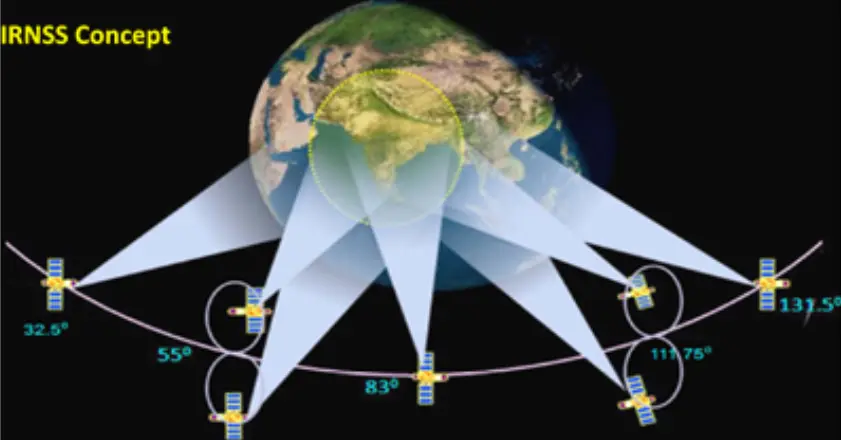
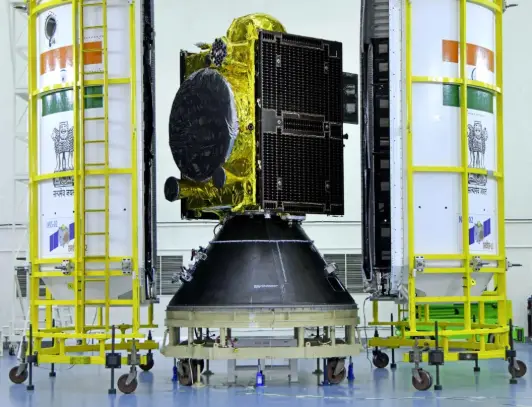
India's strategic NAVIC (Navigation with Indian Constellation) series of satellites, designed, built and maintained by the national Space agency ISRO, have gone defunct. The NAVIC series of satellites is meant to provide Position, Navigation & Timing services for civilian and military users within India and 1,500 km beyond the country's borders. To resuscitate its regional navigation system and gain sovereign strategic capabilities, India must accelerate the production and launch of its NAVIC satellite fleet. To enable rapid replenishment, India might have to even consider launching pairs of NAVIC satellites using foreign rockets that have heavy-lift capability.
The present condition of NAVIC
Theoretically, a bare minimum of four satellites is required for the functioning of NAVIC. At present, barely 3 of 11 NAVIC satellites are fulfilling their core purpose, information shared by the Indian Government reveals.

There are three NAVIC satellites believed to be capable of providing Positioning, Navigation & Timing services: first-generation satellites IRNSS-1B, IRNSS-1I and second-generation satellite NVS-01. Of these three, IRNSS-1B has lived longer than its expected life of 10 years, and could fail anytime. If all goes well, IRNSS-1I could potentially function till 2028. NVS-01 has at least a decade of life ahead of it, if it functions as designed.
Considering long-term functionality, only the NVS-01 satellite can be deemed truly operational.
How many satellites are needed to revive NAVIC?
Trending Stories
)
What’s in a name? Trump’s 'Lake America' move gets a tit-for-tat response from Canada
)
Trump gifts Xi a bald eagle sculpture at White House dinner: Here’s what it symbolises
)
‘Not just a local tragedy’: Nepal PM Shah warns UN of growing climate threat, says Nepal floods were 'a warning to the world'
)
CNN, Politico and MS NOW back in White House after judge blocks Trump’s media ban
)
Farhan, who went viral for AK47 celebration vs India in Asia Cup, hopes to lead Pakistan beyond Asian Games
)
US judge questions Trump’s decision to ban CNN, MS NOW and Politico from White House
)
'We would all be dead': Netanyahu defends decision to strike Iran's nuclear facilities in his UN speech
)
IIT Bombay CCTV footage emerges: Sahil Wakode seen looking at phone in examination hall
)
Welcome actor Mushtaq Khan dies at 56 after battling cancer
)
Trump's welcome to Xi demonstrates 'attraction' to dictators: Chuck Schumer
)
Nations League: Germany draw on Klopp debut; Portugal, Norway win
)
WION Iconic Tourism Summit 2026: Union Minister Shekhawat on 'experiential travel', peace diplomacy
)
Scientists detect first radio signals directly from faraway planet
)
A seven-day roadmap? Iran proposes plan to end war, reopen Strait of Hormuz and resume nuclear talks
)
China to test supersonic jet that moves at Mach 2, double the speed of sound
)
Xi Jinping's 'special plane' vs Trump's Air Force One: What's the difference?
)
UNGA 2026: Israeli PM attacks Britain, France for past colonialism
)
West Indies coach Sammy looking at India series as opportunity to finetune ahead of ODI World Cup 2027 qualifiers
)
‘We’ve never gotten along better’: Trump praises Xi, jokes about White House ballroom at high-stakes state dinner
)
Nearly half of young people trust AI over humans to check facts, major study finds
)
'Partners rather than rivals': Xi Jinping's first message after landing in US for Trump summit
)
Yemen called Trump for US military support in fight against Houthis: Official
)
2,000-foot tube, laser tests and more: China builds towns to expand nuclear arsenal, satellite images show
)
Meet Adrian Abraham: 9-year-old Indian-origin guitar prodigy aiming for a Guinness World Record
)
US faces fresh cost crunch as mortgage rates hit 7%, oil tops $107 and gas prices surge
)
Trump-Xi state dinner 2026: Who is invited? Full guest list of tech CEOs, business leaders and officials
)
'Blockbuster' nor'easter develops an eye similar to hurricanes as warnings are issued
)
Alarming video emerges as landslide damages houses in Sikkim’s Rimbi village. Watch
)
'Making history': Xi Jinping praises Trump as US-China leaders dine at White House
)
Australian PM Anthony Albanese calls OpenAI AI incident 'unacceptable' after restricted data access
)
'What kind of confession is this?': Pakistan PM Shehbaz Sharif’s 'terrorists would be roaming New York' remark goes viral, raises alarm online. Watch
&im=FitAndFill=(700,400))
Netanyahu at UN: Mass walkout, attack on Mamdani and Iran threats | In Pics
)
'We do not wish to continue. It's America that must choose': Iran president Pezeshkian calls on US to end war
)
WION Iconic Tourism Summit: How local tourism MSMEs must upskill for AI integration
)
Bollywood mourns Mushtaq Khan: Sunny Deol, Rajpal Yadav and others pay tribute
)
EC appointment law: Why is the 2023 act controversial, and what happens next? WION explains
)
Who is Lt-Gen Nauman Mahmood, Pakistan's first secretary general of Makkah Defence Alliance?
)
Israeli envoy to US Yechiel Leiter’s son critically injured in West Bank ramming attack
)
'Fund people, not bombs': Hundreds take to New York streets as Netanyahu delivers speech at UN; dozens arrested
If the Indian Government wishes to revive and sustain NAVIC in its basic form, it must have a total of four satellites. For this, the Indian Space Agency ISRO must urgently launch three satellites: NVS-03, NVS-04 and NVS-05, which can work together with the existing NVS-01. Launched in the year 2025, the NVS-02 satellite has been stuck in its initial orbit and is unable to fulfil its core purpose.
Having a fleet of four operational satellites (NVS-01, 03, 04, 05) is just the basic requirement. For higher reliability and coverage, India would have to build and launch backup satellites in the NVS-series. Eventually, a fleet of six or seven NVS-series satellites would have to be maintained to reliably operate a regional Navigation system such as NAVIC.
For context, the American Global Positioning System(GPS), which supports trillion-dollar civilian and military applications worldwide, requires a fleet of 24 satellites in orbit for optimum performance and round-the-clock global coverage. Considering how crucial GPS is to the global economy, the US Government maintains at least 30 GPS satellites in orbit at any given point of time. The six additional satellites are meant to ensure that the service remains reliable and robust, even when a few satellites fail or encounter unexpected glitches.
To meet its own national requirements, China operates a fleet of Beidou satellites, which serve as an alternative to America's GPS. While Beidou's global network requires a fleet of 30 satellites in orbit, around 35 satellites are believed to be in orbit.
Likewise, India too must have a proportional number of satellites.
Can ISRO execute missions at an unprecedented pace?
If ISRO is truly looking to launch three NAVIC satellites in quick succession, it must build and assemble GSLV (formerly known as GSLV Mk2) rockets accordingly. The 52-meter-tall GSLV rocket is the preferred vehicle for carrying the 2,250kg NVS-series satellites. However, it must be noted that only one satellite can be carried per rocket, due to the rocket's lifting power limitations. Going by the recent record, ISRO has done only one or two GSLV launches in a year. If ISRO were to launch multiple NVS-series missions in quick succession, it would affect the schedules of other launches that are in the pipeline. It must be remembered that ISRO does around five or seven launches from home soil in a year.
Alternatively, ISRO could consider launching two NVS-series satellites on a single LVM3 rocket, which is India's most capable launch vehicle. However, due to lifting power limitations while launching to higher orbits, the LVM3 rocket cannot carry two NVS satellites, which weigh a total of 4,500kg. Even if the LVM3 can be optimised to carry two NVS-series satellites to a lower orbit, satellite fuel must be spent to push the satellites to their destination orbit. Spending precious satellite fuel for orbit raising would reduce the planned lifetime of the satellite.
ISRO builds and assembles most of its satellites, including the NVS-series, at its own facilities. Therefore, ISRO would have to re-allocate its human resources to work on three NVS-series satellites, while prioritising various missions that are in different stages of implementation. ISRO must also carry out parallel design, development, and testing of its ambitious scientific and exploratory satellite-specific missions such as Chandrayaan-4(to bring back samples from the moon) and Chandrayaan-5(also called LUPEX, which is being developed with Japan's JAXA).
NVS-series and the pace of launches so far
ISRO launched NVS-01 in May 2023; NVS-02 was launched in January 2025, which is after a gap of 19 months. It has been more than a year since the NVS-02 failure in February 2025, and its successor, NVS-03, has not been launched.
In mid-2025, the Indian Government had revealed in Parliament that an NVS-series satellite was planned to be launched by end of the year. Subsequently, with a gap of six months, NVS-04 & NVS-05 are planned to be launched, it was announced. However, none of these satellites has been launched so far. This amply indicates the wide gulf between the announcement and implementation.
ISRO also faced three failures in six missions executed from home soil between January 2025 and January 2026, further slowing down the overall pace of activity and affecting morale.
Could ISRO consider launching on a foreign rocket?
On many instances, ISRO has paid foreign rocket operators such as Europe's Ariane group and Elon Musk's SpaceX to carry its heavy satellites(weighing above 4 tons) to space. To speed up the process of replacing the defunct NAVIC satellites, ISRO could consider this option yet again. Rockets such as Europe's Ariane 6 and America's Falcon 9 can ferry at least two NVS satellites to space in a single launch.
Launching on such foreign rockets could potentially reduce the burden on India's launch schedule from home soil, and ensure that the NAVIC fleet is replenished faster. Given that India needs to launch multiple NVS-series satellites urgently, it remains to be seen if the Government-run space agency might opt for the foreign route.